









11 May 2026 - 10:00am
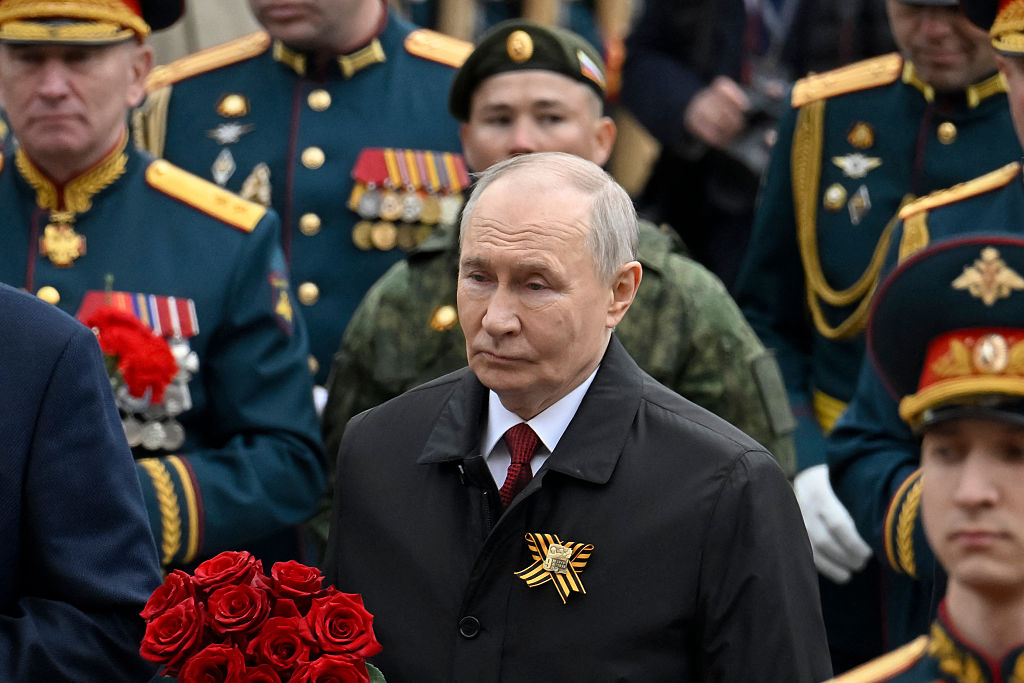
After commemorating the conclusion of one war, Vladimir Putin spoke of the end of another. Following the 9 May Victory Day celebrations in Moscow, marking Soviet triumph in the Second World War, the Russian leader remarked on the ongoing Ukraine conflict: “I think that the matter is coming to an end.” It was an oddly passive, distant and uncertain statement from the man who launched the war and could end it immediately, should he so choose. So why say it?
The occasion itself may have added a degree of pressure. Having just addressed grieving families of soldiers lost to the war and an anxious wider population, Putin may have felt the need to reassure them that this situation will not endure forever. The parade itself did little to inspire domestic confidence: no tanks, missiles or other heavy military equipment were on display. Meanwhile, Ukrainian President Volodymyr Zelensky issued a mocking “decree” permitting the event to go ahead amid Russian fears of Kyiv ruining it.
Putin needs to placate his citizens in other respects, too. With the Russian economy contracting at the start of this year and significant pressure on public finances, the President last month admitted that the economic situation is worse than predicted. Under such circumstances, his remarks may have served to reassure worried consumers, workers and oligarchs alike that the hardships of war will eventually ease.
He may also have been looking further afield. Following a stalled US-led negotiation process, American President Donald Trump last week had a sudden burst of interest in a three-day ceasefire and prisoner swap, urging that this be extended to form “the beginning of the end of a very long, deadly and hard-fought war”. As such, Putin’s statement likely constituted one of his customary bids to convince Washington of his commitment to peace, which, as of yet, has come to naught.
That said, the wording of Putin’s statement warrants closer attention. The Russian President spoke as if the conflict was coming to a natural end, almost as though its conclusion would not require a formal negotiating process. With talks having stagnated when Trump’s attention shifted to Iran, Putin is hoping to encourage the US to focus on the Middle East under the impression that the Ukraine war is gradually resolving itself with no need for American involvement.
Yet, in one sense, Putin is correct in implying that the conflict is drawing to a halt. Russian advances have slowed since November due to issues with Telegram, Starlink and personnel losses, along with Ukrainian ground counter-attacks. Last month, Moscow also lost control of 116 square kilometres of territory. In such a stalemate, with Russia under pressure but neither side able to break through, a tactical pause to regroup and restock may appeal to the Kremlin.
Putin has signalled willingness to negotiate with Europe. However, as is typical of the Russian leader, he agrees in principle while simultaneously introducing obstacles that undermine implementation. In this instance, it was a stated preference for former German chancellor and long-term ally Gerhard Schröder to mediate. Berlin has dismissed the proposal, allowing Moscow to complain that it tried to engage but Germany would not play ball.
Moreover, for a leader who exercises total control over his government’s messaging, the signals from other Kremlin officials have differed from Putin’s own statement. Kremlin spokesman Dmitri Peskov has been discussing the “very long path” to a peace agreement, while Kremlin aide Yuri Ushakov said negotiations will “probably resume” but did not indicate when.
Putin’s remarks were aimed at shaping the narrative rather than the course of the war. Though a tactical pause could be attractive, the Kremlin shows no genuine intention of moving towards a formal and enduring settlement. While Putin may have spoken of peace, his actions have demonstrated a relentless focus on war, with Moscow launching deadly strikes and breaking the three-day ceasefire. If the Ukraine conflict is coming to an end, Putin is doing nothing to assist it.
