









26 May 2026 - 4:15pm
The tech scholar Lee Vinsel has a useful term: “criti-hype”. It refers to the dire warnings about some new technology which instead serve as PR. The phrase comes to mind every time an AI executive frets that his product will throw everyone out of work and create a terrifying robot totalitarianism. It’s a kind of corporate humblebrag. Unfortunately, it exemplifies the fact that discussion of AI, positive and negative, has been largely defined by the people selling the stuff.
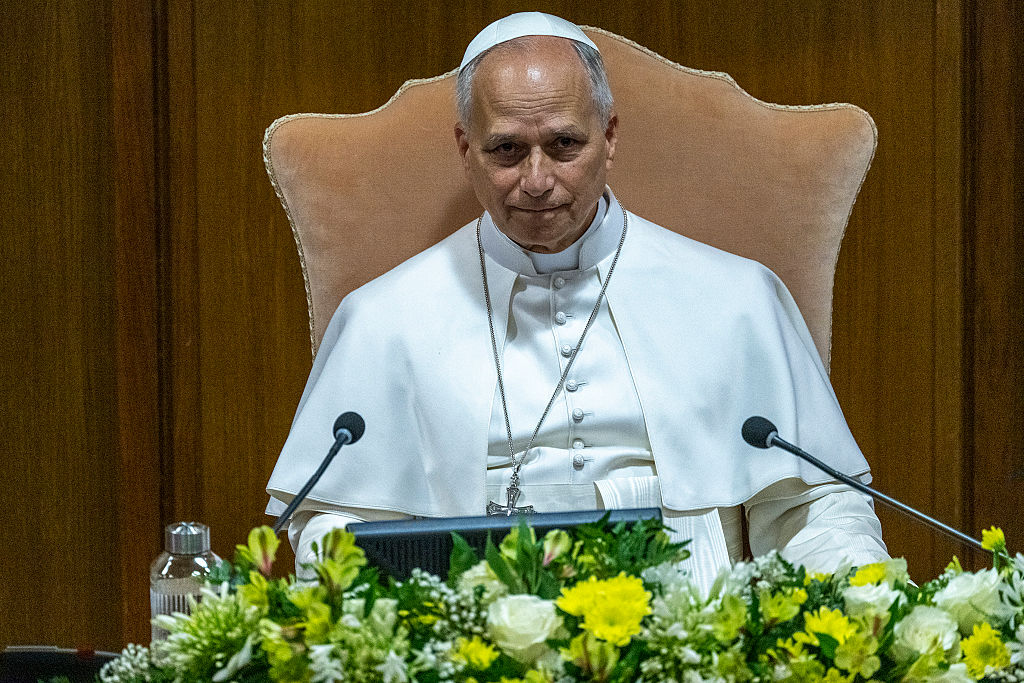
Until now, that is. Pope Leo XIV’s landmark first encyclical Magnifica Humanitas, which was published yesterday, is a timely, bold and extremely sensible take on artificial intelligence. One statement after another hits the mark. The technology, however effective, does not have “intelligence” in the human sense; and while it offers thrilling opportunities, many of those may be captured by a few giant monopolies. Efficiency is a boon, so long as it doesn’t become a convenient excuse for mass unemployment.
The document’s central Biblical image, the Tower of Babel, is well-chosen. It was a sophisticated technological project whose vaulting ambition led to disaster. But Leo is no doomer, and he repeatedly appeals to the better instincts of the coders, executives, investors and politicians who will shape the future of the technology.
Why, then, does the document not have me punching the air with glee? Why would I hesitate to recommend it to the AI-curious as the first thing to read on the subject?
For one thing, it is 40,000 words long: a lot to ask even if it were as beguiling as a Sam Kriss post. Instead, it is a forbidding length for a document containing sentences like “For this reason it is necessary to begin a shared discernment process for identifying the spiritual and cultural roots of ongoing transformations.” At one point, the reader is treated to a 3500-word summary of the last 135 years of papal encyclicals.
This seems more the result of bashfulness than self-importance. Magnifica Humanitas takes great pains to convince the reader that the Church has the right to say something about AI. It digresses at length about clerical abuse and the Church’s complicity in slavery, as though pleading with us not to write off the document simply because it is published by the Vatican. It also repeatedly reassures us that the Church’s role is one of “listening and dialogue”.
The Church does not need to be this apologetic. In the last century, it has maintained an exceptional record of shaping political life for the better. One explanation for the three decades of peace and prosperity after the Second World War is that so many national leaders had been affected, directly or indirectly, by Catholic social thought, such as former French prime minister Robert Schuman and former German chancellor Konrad Adenauer.
Perhaps the greatest papal pronouncements on politics made savage, even satirical, attacks on the “small number of very rich men” (Leo XIII, 1891) who exercised a “despotic economic dictatorship” (Pius XI, 1931). Magnifica Humanitas adopts a more decorous tone on such matters, another reason it feels more like a beginning than a definitive statement.
The philosophical critique could also have been stronger. Catholic tradition has a great deal to say about non-artificial intelligence: about how the human intellect grasps the essence of things, rather than — like even the most advanced versions of AI — jamming together one piece of data after another. The encyclical touches on this, but too briefly and hazily to really affect the debate over AI “consciousness”.
At the press conference launching Magnifica Humanitas, Anthropic’s co-founder Chris Olah read out a statement in which he claimed that AI models were showing “evidence of introspection”. It would have been nice if, having consulted the encyclical, he had been so embarrassed that he felt the need to cut that bit out.
Dan Hitchens is Senior Editor of First Things and co-author of the forthcoming Cambridge Introduction to Samuel Johnson.
 ddhitchens