









27 May 2026 - 6:50pm
When Thomas Massie lost Kentucky’s GOP primary last week, I remembered what the congressman told me in 2017. Describing GOP voters who supported Ron Paul and Rand Paul, Massie said: “I thought they were voting for libertarian Republicans. But after some soul-searching I realised when they voted for Rand and Ron and me in these primaries, they weren’t voting for libertarian ideas — they were voting for the craziest son of a bitch in the race.” In Kentucky, that man is still Donald Trump, who supported Massie’s primary opponent. In Texas, it’s Ken Paxton.
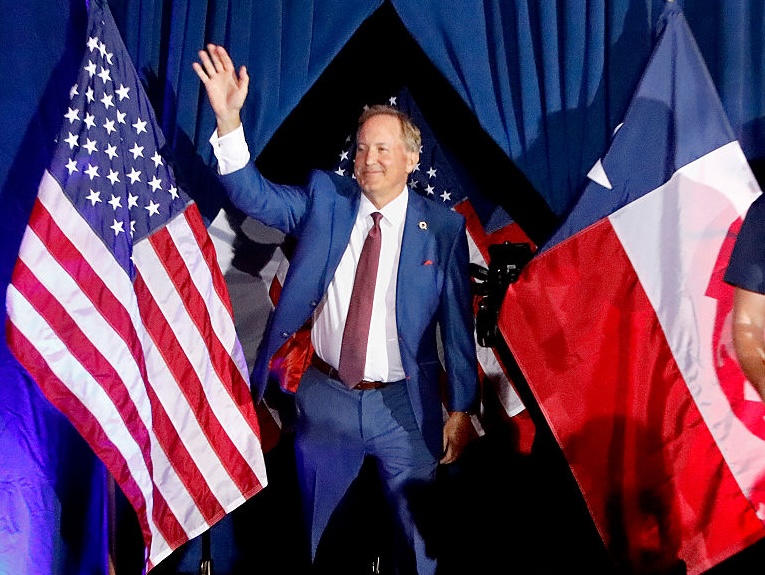
Paxton is not what any consultant would call an ideal candidate in a general election, even in a red state like Texas. His record is marred by sensational charges of personal and professional corruption, from alleged affairs to bribery. But Paxton took on the political establishment as attorney general, challenged moderate GOP incumbent John Cornyn, secured Trump’s endorsement, and won.
Paxton even offered to bow out of the primary if Cornyn and Republican senators lifted the filibuster and passed the grassroots’ beloved SAVE Act. As attorney general of Texas, Paxton aggressively targeted Big Tech companies for anti-conservative bias. He even attacked Cornyn as a “RINO” for criticising Trump and supporting the President’s “deep state” enemies.
The Heritage Foundation’s political arm, Heritage for America, which ranks senators’ voting records on conservative priorities, scores Cornyn abysmally low at 35% for this current session. Despite enjoying a gargantuan financial advantage — nearly $100 million in ad spending to Paxton’s $29 million — he is clearly out of touch with GOP primary voters. Cornyn ultimately lost by an eye-popping 28-point margin, as of Wednesday afternoon’s count.
Interestingly, Rep. Chip Roy, who received a 100% from Heritage Action, lost his Texas attorney general primary in a race defined by loyalty to MAGA. Though Roy is much more conservative than Paxton, and had long been a grassroots favourite, his occasional breaks with Trump and support for Ron DeSantis in 2024 doomed the bid.
Republican voters trust Trump more than they trust Trump’s critics. GOP litmus tests are borne of a well-founded paranoia that emerged during the President’s first term, when top advisors were discovered to be undermining his leadership. They also stem from a binary calculation many Republicans make in the Trump era: the DC establishment is intolerably corrupt, so Trump is the only option to shake it up.
If Trump gives his stamp of approval, whether to Katie Britt or Ken Paxton or Ed Gallrein, Republican voters may not love their choices, but they stick with the President. They simply trust his instincts more than they trust his opponents’.
When Trump defenestrated the full lineup of GOP heavyweights in 2016, then toppled Hillary Clinton, he did it by correctly telling voters that everyone else was failing them. So they took a chance on the person who’d at least made an accurate diagnosis. For some Republicans, this gives Trump a built-in credibility over anyone who challenges him. For others, it’s merely the broader lesser-of-two-evils calculation that covers dubious candidates like Paxton and Kentucky’s Ed Gallrein too.
A similar dynamic is at work in Maine: grassroots voters see Platner as preferable to the establishment, so they may overlook his indiscretions when forced to choose. In both states, the question is whether enough independent voters view either Susan Collins or James Talarico as objectionable enough to back a candidate whose record they may not fully embrace.
So long as the country suffers from low institutional trust, this dynamic will haunt American elections for many years to come.
