









2 August 2026 - 4:00pm
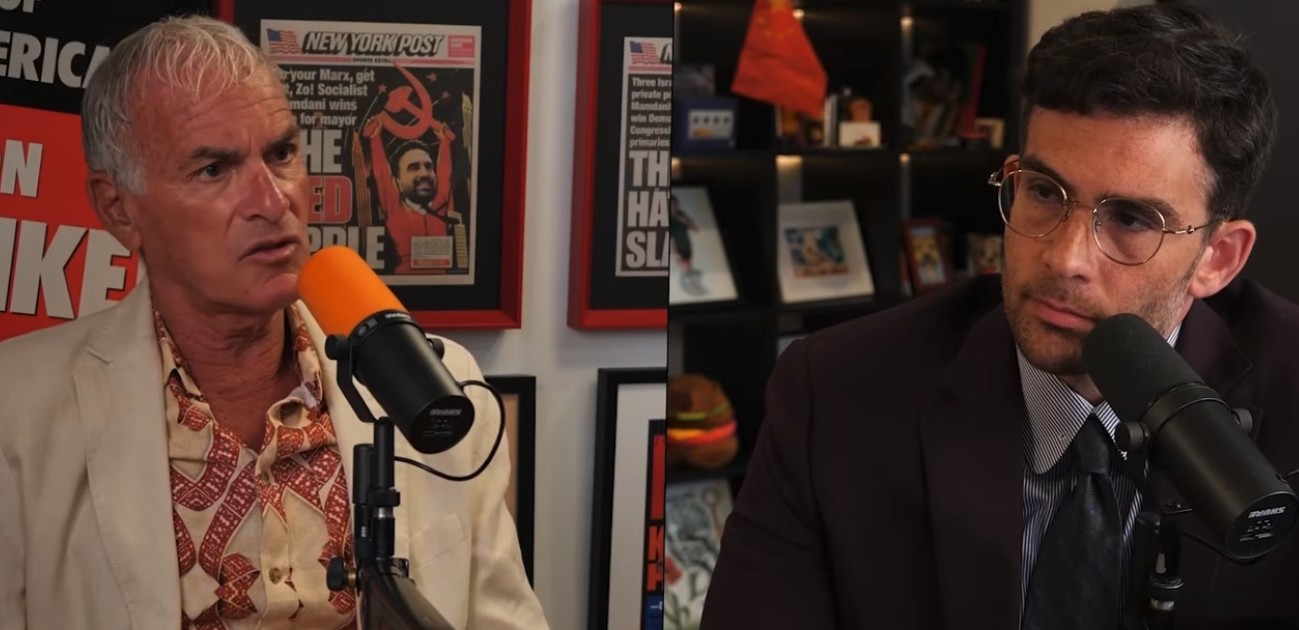
Listening to the recent podcast featuring Norman Finkelstein and Hasan Piker, I was struck by a tension within the progressive pro-Palestine movement. On the one hand, there is a righteous indignation at Israel’s oppression of the Palestinians. On the other, there is sometimes an impulse to write off Israelis as irredeemable racists and genocidaires.
The contradiction is that this seems difficult to reconcile with a progressive principle of refusing to generalise about entire groups based on the actions of a minority within them or of their government.
For example, Finkelstein declared that he was no longer interested in speaking to Israelis. Though he confesses he isn’t “happy” with this stance, he justified it by saying that “95% of Israelis support genocide. A citizen army committing genocide is representative of the population. It’s not an unfair generalisation to say that it is a nation of child killers, that’s a fact.” Piker replied: “I’m too woke for this”, implying that Finkelstein’s stance was too much, even for him.
Furthermore, Finkelstein said that he won’t argue with those “who reach the wrong conclusions”. He used the example of his parents who were Holocaust survivors but held a grudge against all Germans. Even though he didn’t like it, he didn’t condemn them because he understood why that hatred was generated by their experience. Therefore, one should understand Palestinian hostility to Jews as having a rational basis, rather than being simply an irrational bloodlust.
In any long-running ethnic or sectarian conflict, it is expected that there will be prejudice and hatred for the “other side”, especially when one side feels like the aggrieved party. So yes, there are Palestinians who hate Jews. And one can even empathise (though not sympathise) with them, even if defenders of Israel will try to pathologise all Palestinians as genocidal. If Israel bombed your whole family in Gaza, then why wouldn’t you resent “Al-Yahud” or feel vindicated in your pre-existing suspicion that “the Zionists” are all greedy bandits who will stop at nothing until all Palestinians are gone?
But the same argument can be applied to Israelis who hate and demonise Palestinians as terrorists. After experiencing suicide bombings during the Second Intifada, it is not difficult to understand why some Israelis would want to build a wall to keep Palestinians out. Nor is it difficult to see how Hamas, October 7 and other terrorist attacks could lead Israelis to generalise about Palestinians as a whole. They, too, can point to polling showing substantial Palestinian support for October 7.
From that perspective, it is understandable that some Israelis might begin to wonder whether Palestinians are “civilisationally” like them at all, or whether coexistence is even possible. The question, however, is whether such a conclusion is any more defensible when reached by Israelis than when it is reached by Palestinians about Israelis.
The conversation between Piker and Finkelstein reveals a broader struggle within the progressive sphere over how to grapple with antisemitism in the context of Israel-Palestine, and whether hostility towards Israel can become hostility towards Israelis as a whole.
There is, however, a direction of travel on the progressive Left in which Israelis appear to be the one exception to the principle that entire groups should not be treated as irreconcilable. Finkelstein’s loose talk of “an ethnic group using their power and privilege to advance Jewish supremacism” is a revealing example. It risks treating figures such as Bill Ackman as an authentic expression of the general will of the Jewish community, rather than as an individual whose views and actions should be judged on their own merits.
This demonstrates how October 7 and the subsequent war have radicalised some people to the point of abandoning basic standards of judgement. That is why arguments over which side is more justified in its prejudices are ultimately beside the point, and by now rather tiresome. It is one thing for an individual civilian to express a prejudice that others may find uncomfortable. It is quite another when such views are expressed by political actors with power and influence or amplified by activists and public intellectuals.
Israel-Palestine is, above all, a political conflict, driven by political actors while civilians bear the consequences. Political criticism must therefore apply to them accordingly. Those who reach destructive or unjustifiable conclusions should be challenged, particularly when they are in positions to shape policy or public opinion. They are, after all, among those driving the conflict and making it so intractable, while civilians on both sides ultimately bear the cost.
Ralph Leonard is a British-Nigerian writer on international politics, religion, culture and humanism.
 buffsoldier_96