









8 July 2026 - 12:45pm
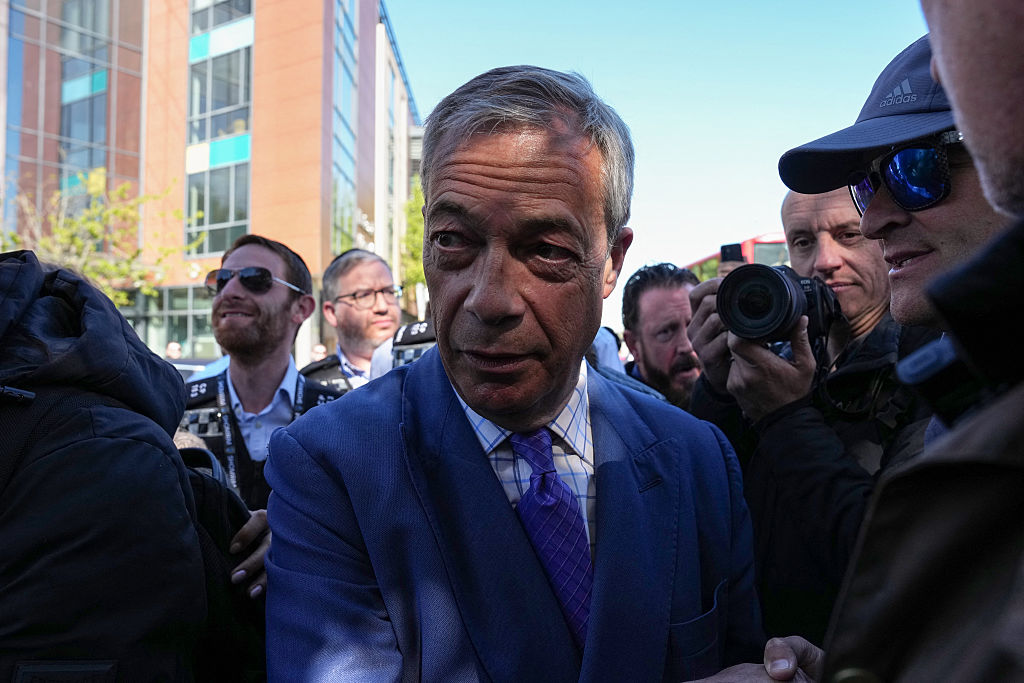
Reform UK leader Nigel Farage MP, addressing concerns over his personal wealth, yesterday cited safety concerns as a primary reason for the donations he has received from millionaires. “I am going to need security for the rest of my life,” he argued.
Physical attacks on Farage are a matter of public record, yet during his latest broadcast the Reform UK leader went further than usual: “Over the last year it’s got worse, with an attack on my home… and literally daily online calls for me to be murdered. For some reason, that doesn’t seem to worry the police.” Appeals to the Home Secretary, he claimed, were “rejected again and again”.
What, then, is the truth around Farage’s security? Has he really been abandoned by the police and parliamentary authorities, or does the Clacton MP simply prefer the convenience of private security? The way politicians are protected has become complicated, often for budgetary reasons. Several grey areas do exist, which raise legitimate questions about Farage’s situation.
First, though, the Reform leader’s claims about the exorbitant cost of bodyguards is certainly true. Corporate, around-the-clock close protection is eye-wateringly expensive. Former police protection officers working for high-net-worth individuals, or HNWIs, are well-remunerated for their services — and Farage appears to be accompanied by at least three or four operatives at all times. Add the cost of vehicles, equipment, risk assessment services, physical and online security measures (Farage owns multiple properties), and it’s easy to imagine a blue-chip private security provider charging upwards of £60,000 a month.
Then there’s the issue of publicly-funded security. During the 2024 general election, Farage was reportedly offered police protection. What form that took is unknown, as is whether the Reform leader accepted the offer. While, for obvious reasons, operational details of protection arrangements are kept confidential, all politicians are offered the services of an initiative called Operation Ford. Providing security and “target-hardening” advice to all MPs, along with dedicated police liaison officers, Ford was a response to the murders of MPs David Amess and Jo Cox.
Next, depending on the level of threat identified, MPs might be offered physical protection, namely bodyguards. Provided by a security contractor, Mitie, trained — but unarmed — close protection officers are deployed on a case-by-case basis. Mitie’s £31 million contract has attracted controversy over quality control and vetting. If Farage were offered this company’s services, might he have declined them over such concerns? There will be a paper trail. No doubt the Standards Committee will discover what was — and wasn’t — offered or declined.
The final tier of this multi-tiered system — to use a term unpopular with chief constables — involves deploying 24/7 armed protection officers provided by the Metropolitan Police Royalty and Specialist Protection Command. RaSP, as it’s known, faces personnel problems of its own, with over 60 officers currently facing redeployment due to a restructuring programme: armed protection is a precious and carefully-rationed resource.
What’s more, the Royalty and VIP Executive Committee, RAVEC, is notoriously opaque in its decision-making. Made up of Civil Service, police and security service representatives, it is RAVEC which ultimately decides who is allocated armed police protection. And, as Prince Harry has discovered, RAVEC very much has a mind of its own.
Whether Farage’s circumstances were ever put in front of RAVEC is a fair question. Even without access to the full intelligence picture, I would put the threat against Farage on a par with that against London Mayor Sadiq Khan, who receives a full RaSP protection package. The details, though, will be shrouded in secrecy. The sanctity of intelligence products will no doubt be cited during any examination of RAVEC’s decision-making.
These, then, are the grey areas in which Farage’s argument exists. No doubt, all parties concerned “have the receipts” around their actions and decision-making. Nonetheless, the Reform leader’s narrative — that of a plucky insurgent denied security by the “Deep State” — has traction. Will that same Deep State offer up evidence to contradict his account? Mandarins, politicians and their advisers might well be having such conversations today, as will, one imagines, Daniel Greenberg CB, the Commissioner for Parliamentary Standards.