









10 June 2026 - 1:00pm
Yesterday the Government introduced the National Security (State Threats) Bill, which is described as a law to give “the Home Secretary new counter terrorism-style powers to stand up to foreign state organisations” and “proxy groups acting on their behalf”. The law could come into force as early as next month, but questions remain about how effective it will be.
The law will allow Home Secretary Shabana Mahmood to “designate bodies… if they reasonably believe a body is, or has been, involved in foreign power threat activity” which is “equivalent to proscription under the Terrorism Act 2000”. The law also creates three new offences: inviting or expressing support for, materially assisting, and obtaining material benefits from a designated body. Those convicted can receive up to 14 years in prison.
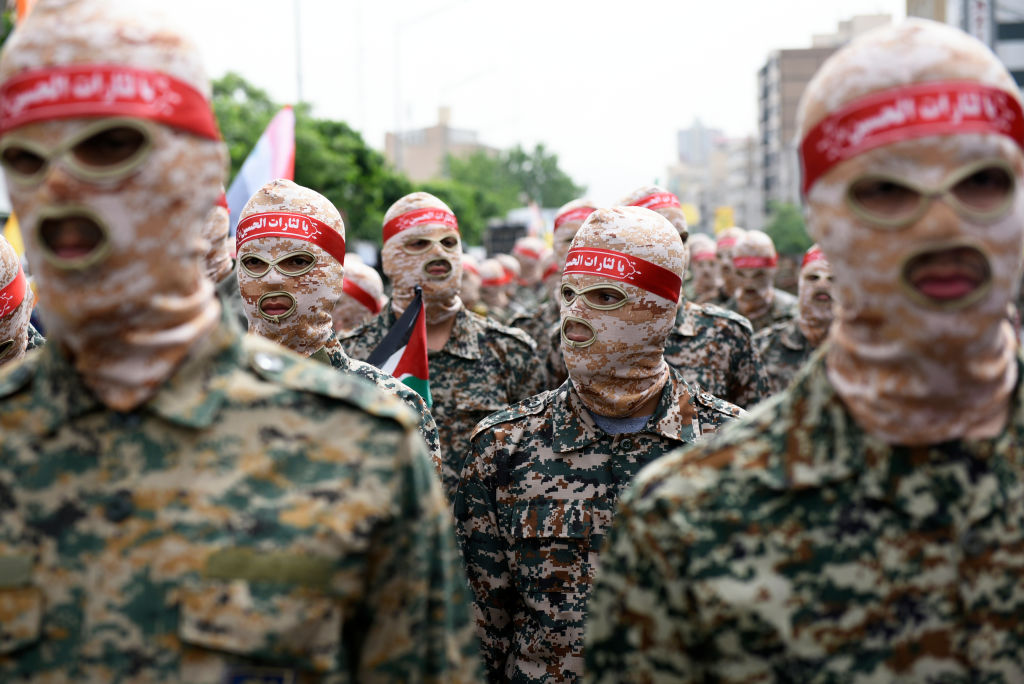
Keir Starmer explicitly cited the recent wave of Iranian-sponsored terrorism in Britain, which largely targeted Jews, as the trigger for this bill. Working through the Islamic Revolutionary Guard Corps (IRGC) — the backbone of the Iranian regime and the principal vehicle for exporting its Islamist ideology abroad — Tehran recruited criminals, ranging from petty offenders to organised gangs, as intermediaries to carry out what the Prime Minister described as its “dirty work”.
Russia has employed similar tactics, but Moscow generally does so in an effort to conceal its involvement. Iran, by contrast, seeks to have it both ways. While preserving a measure of formal deniability, it simultaneously advertises its role. In the wave of antisemitic attacks in north London earlier this year, for example, responsibility was claimed through Harakat Ashab al-Yamin al-Islamiyya (Hayi), an online group widely suspected of serving as an IRGC proxy.
Iran was driven to rely on criminal proxies after Israel crippled its foreign terrorist apparatus. In doing so, the IRGC has ended up with a cast of misfits who have consistently abysmal operational security and a comically poor record overall, including a case in Australia last year where proxies burned down the wrong building twice. Nonetheless, with enough attempts, something truly awful is bound to happen sooner or later. The Government’s new law could have a deterrent effect, by highlighting the seriousness of acting as a foreign agent to commit domestic terrorism.
However, there is an obvious caveat. In Britain, prison sentences are routinely cut short, meaning the bill’s headline maximum of 14 years could in practice amount to a fraction of that sentence. It is far from clear that this is sufficient to deter those prepared to carry out terrorist missions, especially as judges may end up not imposing the maximum sentence as a matter of course.
Where the bill is most encouraging is in setting out an approach — without using the term — of counter-subversion by attempting to infiltrate potential terrorist cells. It speaks, for instance, of treating designated bodies like adversarial foreign intelligence agencies. In theory, this would allow the Government to override the liberal sensitivities about religious freedom that the IRGC exploits, working from a network of mosques and Islamic institutions to incite and recruit for violence. The question of enforcement arises again, though. Will the Government actually follow through to close down these centres of IRGC activity?
Labour returned to power with a manifesto commitment to proscribe the IRGC, and has spent the two years since finding legal and political excuses for not doing so. The test of this new law’s worth is whether the IRGC now becomes a designated body, and whether IRGC agents are treated as equivalent to members of al-Qaeda, Islamic State, and other groups proscribed by the Terrorism Act.