









17 October 2026 - 4:00pm
Netflix laid off around 1,000 employees on Wednesday, 6% of the total staff and its largest cut since 2022. The following day, the streaming company announced that Bela Bajaria, chief content officer since January 2023 and the public face of its programming for a decade, would be leaving. This year, Netflix stock has lost about a quarter of its value.
Wall Street’s complaints are real, but they are symptoms. The underlying problem is that Netflix has stopped producing culture-defining content. Its most-watched series of 2026, His & Hers and Harlan Coben’s I Will Find You, drew millions of views but made little in the way of wider impact. The last American show from the platform anyone discussed around the proverbial water cooler was Stranger Things, which ended on New Year’s Eve. Netflix, one might recall, tried to buy HBO for over $80 billion last December. Trump ally David Ellison’s Paramount Skydance outbid it and finally closed the deal last week.
The hits Netflix has managed in recent years all came from third parties. Its most-watched film ever, KPop Demon Hunters, was made by Sony Pictures Animation. Adolescence, its most-watched show of early 2025, came from Britain, while Squid Game and the extraordinary Physical 100 originated in South Korea. CEO Ted Sarandos conceded as much in the statement announcing Bajaria’s exit, in which he described an opportunity to improve the slate of homegrown shows in the US and Canada, “where we have an outsize impact in creating big, buzzy hits”.
At the height of the culture wars, Netflix spent years being shelled from both flanks. Its own staff walked out over Dave Chappelle’s trans jokes in 2021, conservatives attacked its gay-coded Alexander the Great production in 2024, and a year ago Elon Musk told his X followers to “Cancel Netflix for the health of your kids” over a cartoon featuring a trans protagonist. That last campaign knocked 2% off the shares in a day. The company’s answer appears to have been to stop making anything worth attacking: the “dad TV” of The Night Agent and The Lincoln Lawyer, Harlan Coben adaptations, and a true-crime line led by The Crash.
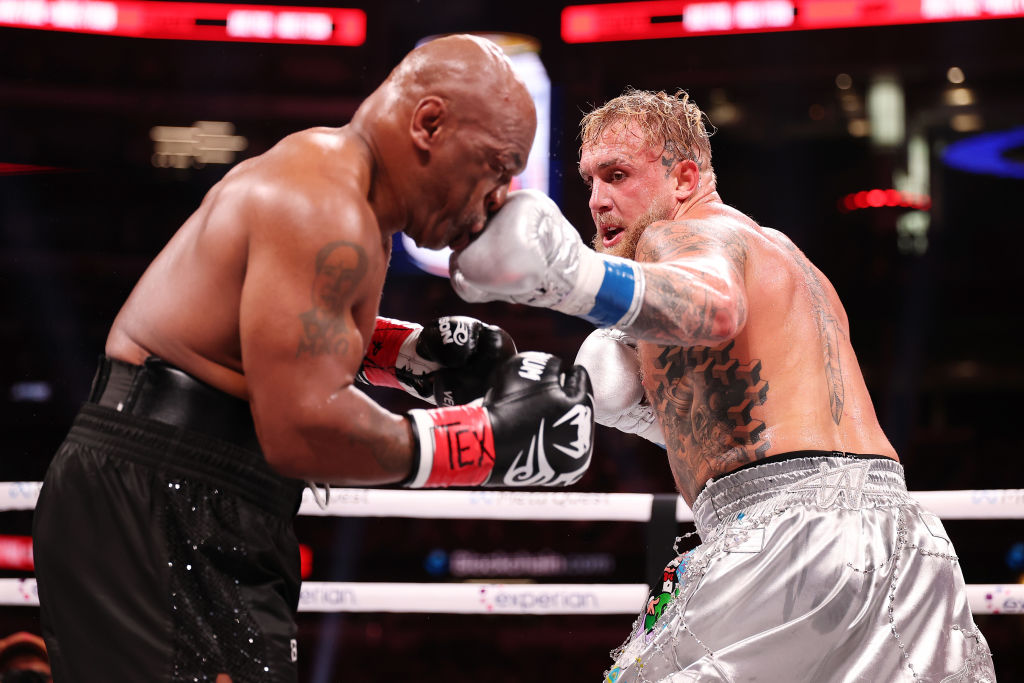
Sport initially appeared to be a panacea. Jake Paul’s boxing match against Mike Tyson drew a reported 108 million curious viewers in 2024, while the two Christmas Day NFL games that followed averaged more than 30 million pairs of eyes. This didn’t last, however. Bajaria leant into the live sport strategy, which accounted for 5% of content spending but only 1% of viewing hours. She never built a schedule around any of it, and stayed noncommittal on bidding for Sunday Night Football.
Given that Netflix used generative AI on roughly 300 titles this year, perhaps the future is AI slop at scale. Sarandos boasted that producing 17 minutes of one documentary took ‘half the time and half the cost’, and the company paid close to $600 million for Ben Affleck’s AI studio InterPositive in March.
The rest of what replaces Bajaria’s slate is licensed. There’s Bill Simmons’s Ringer podcasts, which are free on Spotify, as well as Ms Rachel and Mark Rober, another case of paying for programming that stays free on the juggernaut that is YouTube. It’s worth adding that YouTube claimed 14.2% of American television time in July, against Netflix’s 7.8%. Viewing hours grew 2% in the first half of 2026, while content spending rose 10% towards $20 billion. “Overall, we’re not growing as fast as I want us to,” Sarandos admitted at Bloomberg’s Screentime conference last month.
Incoming content boss Peter Rice previously built Fox Searchlight into a scrappy Oscar machine with Sideways, Little Miss Sunshine and Slumdog Millionaire. He then ran Fox’s television networks while FX was making The Americans and Atlanta on modest budgets that peak-era Netflix would’ve treated as rounding errors. Indeed, Netflix once sought to put that kind of television out of business. It has now hired one of its executives to teach the algorithm what a conversation piece looks like. The only thing most of us are still talking about, though, is how there’s nothing worth watching on Netflix anymore.
Oliver Bateman is a historian and journalist based in Pittsburgh. He blogs, vlogs, and podcasts at his Substack, Oliver Bateman Does the Work
 MoustacheClubUS