









7 May 2026 - 6:55am
In a review last week of several recent books about Britain’s decline, the economist Diane Coyle asks a simple question: when did it begin? One author traces it back to the 19th century. Another blames Margaret Thatcher. A third, more predictably, points to the 2008 financial crisis. But, ahead of today’s elections, we do not need to examine the longue durée for local authorities. The rupture is more recent: it began in 2010.
Following reforms introduced under the Coalition government, local authorities in England have experienced one of the most sustained contractions. An estimated £15 billion worth of public assets have been sold, with this trend showing no sign of stopping. Nearly a million staff have left the sector, many of them made redundant. Services have been pared back or closed altogether: green spaces, libraries, community centres and even town halls.
Spending on adult social care now consumes the largest share of council coffers. Costs for children’s services have risen sharply, but not before private equity has taken its cut. Temporary accommodation placements have reached record highs, to the point that tracking deaths within them has, over the past three years, become an industry in its own right. Public services are now characterised by doing what they must, and little else.
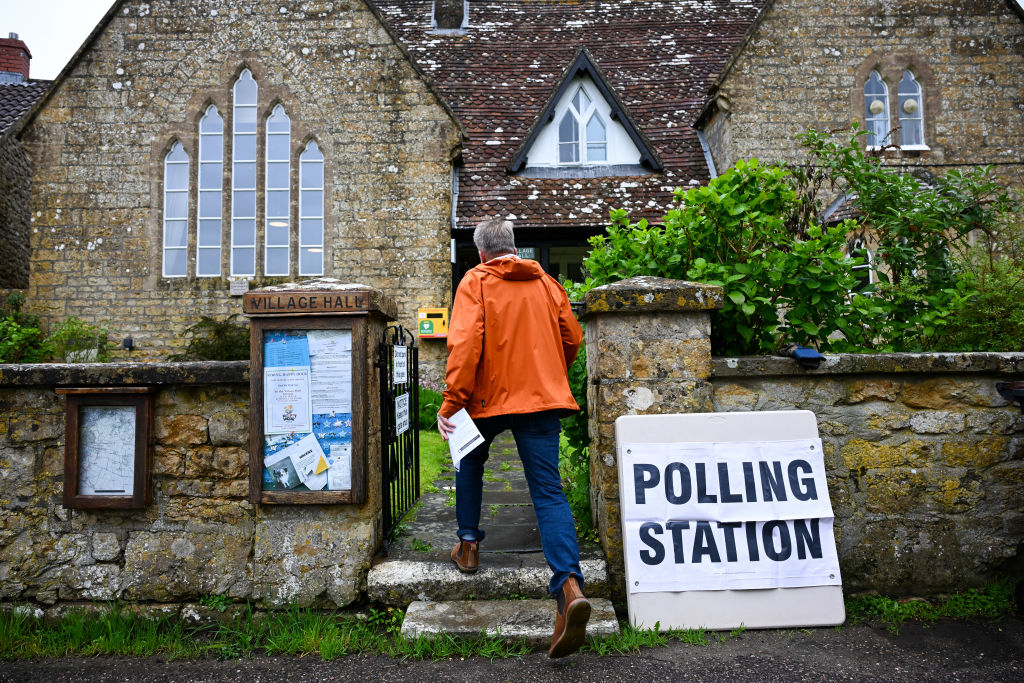
This is the context in which today’s local elections will take place, and it is difficult not to adopt a declinist view. There is no shortage of commentary on what the elections will tell us about political momentum — insurgent parties and the fragmentation of the two-party duopoly. But will the winners arrest decline, or deepen fragmentation and leave local politicians governing in quicksand?
Beneath that noise lies a more stubborn reality: local elections may change who manages decline, but not whether decline occurs, at least in the short term. That’s because the space for political choice has been radically constrained.
Take Reform UK. Its rhetoric is insurgent, but its offer is marginal: slightly lower council tax increases and a familiar emphasis on efficiency, which has long been wrung from the system. There is no hidden reservoir of waste large enough to close the financial deficits facing public services.
The Green Party, by contrast, offers a vision of community ownership and more local engagement. But participation does not fund placements for vulnerable families and the notion that scrutiny alone can transform Britain’s high streets, or its waste collections, misunderstands the scale of the challenge.
In different ways, both approaches echo the orthodoxy long promoted by the Coalition government — that better management or discipline can compensate for fewer resources. In reality, they cannot. Reform’s war on diversity and inclusion — a supposedly totemic form of liberal “woke” management in councils — turns out to be nothing of the sort, saving only an estimated 0.003% of the combined budget of councils controlled by the party.
The long tail of austerity also has a deeper legacy. It has not simply undermined services, but redefined what is thinkable. This “austerity of the imagination” explains why politicians are flogging policies that don’t address the root causes of the challenges communities face. Beautifying the high street is important, but it does little to address its ongoing decline. For the most part, candidates are no longer choosing between competing visions of place, but instead between different ways of managing scarcity.
Though central government has sought to stabilise the system in recent years, the trajectory has not been reversed. According to the Institute for Government, local authorities will remain financially weaker at the end of this parliament than it was at the beginning of the last decade. By failing to articulate how they will turn around public services, Reform and the Greens have demonstrated that they are not the antidote to the current problem.