









19 June 2026 - 10:00am
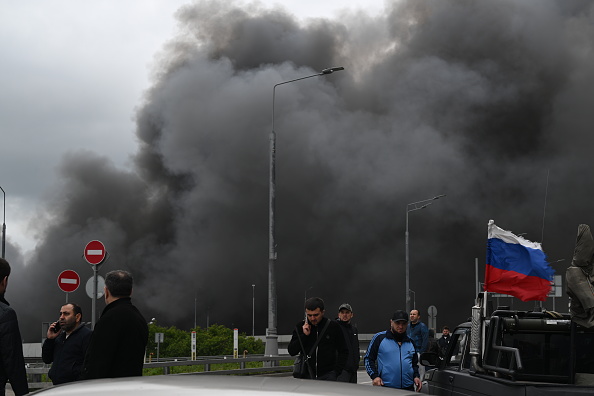
“If Ukraine burns, your Moscow will burn,” crowed Ukrainian President Volodymyr Zelensky yesterday. And burn she did. Smoke billowed over the Russian capital after Kyiv launched its largest drone attack since the start of the war. Dramatic images showed the roof of a crucial oil refinery blown apart, wrecking infrastructure that supplies up to 40% of the city’s petrol.
The assault appeared to be swift retribution for this week’s deadly Russian strikes that set a Kyiv cathedral ablaze. Yet, while that may have been the immediate catalyst, it was also a reflection of longer-term confidence on Ukraine’s part, both in the strength of its weaponry and in its diplomatic position. The Bars hybrid drone-cruise missiles used were believed to have a range of between 600 km and 800 km. Yesterday’s strikes on Moscow suggest their capabilities extend beyond that.
Meanwhile, at this week’s G7 summit, Donald Trump signed onto a statement that upped Ukraine’s air defence capabilities and committed to strengthening sanctions on Russia. He met Zelensky for the first time in over four months and — according to French President Emmanuel Macron — acknowledged that the Kremlin is not truly interested in peace.
Zelensky can feel secure in the knowledge that, for now, his friends are behind him. But what about the enemy in front of him? Russian President Vladimir Putin will be embarrassed by the attack, not least since it occurred while he was hosting an Association of Southeast Asian Nations (ASEAN) summit in Kazan, and because it sparked widespread disruption as well as online panic. Amid a lack of sirens and warnings, Muscovites have posted that they intend to depart the city or “just didn’t think the war would affect us like this”.
Ukraine’s strategy hinges in part on bringing the war home to ordinary Russians, eroding public support for the conflict by shattering the sense of distance that has long insulated Moscow from most consequences. As strikes hit the capital, Ukrainian Foreign Minister Andrii Sybiha urged denizens to direct their complaints towards the Kremlin: “Now that you know what’s going on, ask Putin when he is planning to end it.”
The strategy rests on a dubious assumption, namely that public frustration can translate into political pressure. There is little evidence that even Russia’s most powerful business figures possess any leverage to alter the Kremlin’s course, let alone ordinary citizens constrained by pervasive restrictions on freedom of speech. Kyiv also assumes that shock and fear will fuel demands to end the war, rather than harden public attitudes and strengthen calls for retaliation against those responsible for bringing the conflict to Moscow’s door and endangering civilian lives.
On the one hand, the attack has undermined Russians’ confidence in the government’s capabilities. One milblogger, known as “Fighterbomber”, criticised the authorities, writing that “the enemy has correctly calculated the forces and assets needed to hit the target. But you haven’t.” Rather than demanding a Russian withdrawal from Ukraine, however, he stressed that “no one in the country gives a damn how [Ukrainians] are suffering” and hoped for “wonder weapons” to appear. Other military bloggers rallied against Russia’s “weakness”, demanding the use of nuclear weapons and proposing that the Office of the Ukrainian President be “razed”.
The Kremlin can, of course, arrest milbloggers who step too far out of line — and has already done so. But their criticism points to a broader reality. Muscovites are just as likely to rally around the flag as hope for an end to the war, and are more likely to blame attacks on the Ukrainians who launched them than the Russians who started the war.
Putin is unlikely to let this cycle of escalation end here. An Oreshnik strike or the targeting of a symbolic Ukrainian landmark could be his next move. Within Russia, such a response would likely be welcomed by segments of the public as justified retaliation. Exposing weakness can often harden resolve rather than diminish it. The problem with revealing someone as weak is that they become determined to prove you wrong. As Zelensky watches Moscow burn, he must remember that fire spreads.
