









27 February 2026 - 6:15pm
Matt Walsh wants to educate you “on what they don’t teach in school”. To do so, the Daily Wire firebrand has launched Real History with Matt Walsh, with the latest instalment, “The Real History of the American Indians”, released this week. In the episode, viewers learn that “Indians” understood property rights “like any toddler” and made “war their business and the pastime of their lives”. In other words, Walsh, like any Leftist professor worth their tofu, mixes a main course of fact with a side of polemic.
In the documentary, Walsh aims to dismantle a series of myths surrounding Native American history. From “stolen land” and peaceable Indians to the federal Indian Reservation System, “The Real History of the American Indians” debunks “comforting” progressive mythology. At the start, Walsh tells us that “historical narratives matter”, adding: “who we [Americans] look up to matters.” In this, he certainly has a point, given that the progressive Left has captured much of the American academy.
Progressive mythology of Native Americans has escaped the lab through the gateway drugs that are NPR and the New York Times. Transmitted to the professional middle class, they in turn forced the ever-performative “land acknowledgement” as the lead plank in the 2024 Democratic Party platform. In mainstream politics, the ideal of an American Indian in harmony with nature is in the Green New Deal’s DNA.
In the past, conservative revisionism was a chivalrous enterprise carried out by gentlemen in tweed and elbow patches. The likes of Ron Chernow or Richard Brookhiser looked to the Founders, admitting their faults while celebrating their achievements. It was Chernow’s 2004 biography of a forgotten Founder that inspired Lin-Manuel Miranda’s multi-racial musical of American ideals, Hamilton. Walsh and the Daily Wire’s revisionism, by contrast, is a rough-hewn, blunt reflection of a changed conservative electorate that mainlines history straight into the veins of the culture wars.
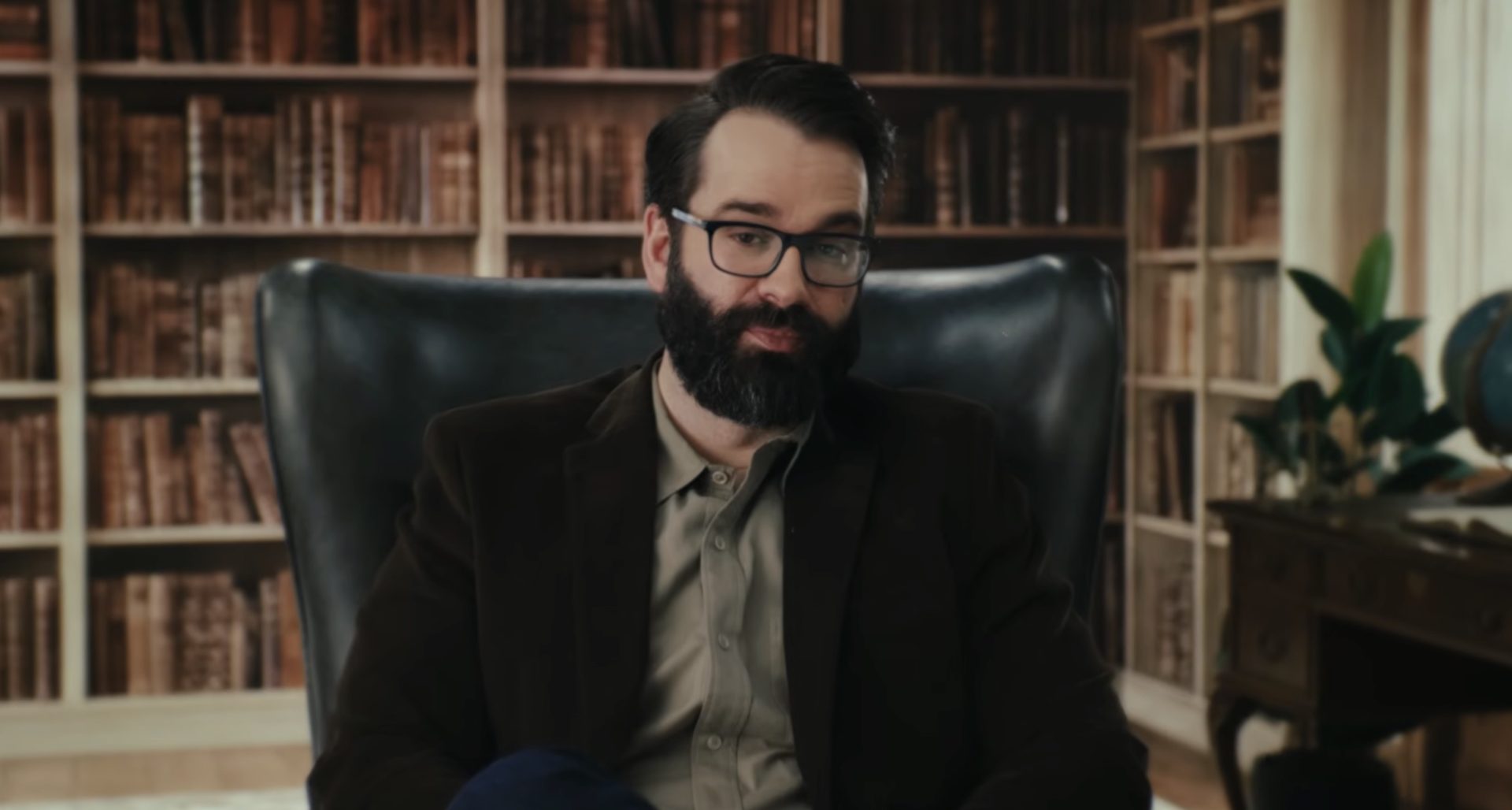
Sadly, “The Real History of the American Indians” only seeks to discredit the straw man of dated Leftist hooey. Walsh takes direct aim at the “central, load-bearing myth that supports all the others”: the noble savage. In this, he offers factual and proper history that shows pre-colonial American Indians behaving badly, as humans are wont to do. Ritual torture and cannibalism were accepted norms of war. Seated in a wingback chair flanked by bookshelves, Walsh narrates a smooth and compelling, if snarky, narrative.
Rejecting the “stolen land” narrative is central to Walsh’s programme. He sees “stolen land” as “a form of intellectual warfare designed to dishonour our ancestors and undermine our confidence and sense of unity”. In this, he is directionally correct. That 45% of American high school students were taught they live on “stolen land” demonstrates the reach of the progressive worldview.
To disprove the idea of “stolen land”, Walsh points to the 1830 Indian Removal Act, which permitted treaty “negotiations” not forced displacement. From that fact, he trumpets the $5 million “deal” the Cherokee received for their land. In his telling, this was the moral equivalent of the Louisiana Purchase — not negotiation at the point of a gun. Walsh states a true fact and then makes gigantic interpretive leaps based upon it. This is what makes this documentary so alluring and dangerous: there is plenty of truth, but it is used to coat a political agenda.
Walsh concludes with a telling — and true — line: “Life on the Reservations was never perfect, but it was better than what would have happened if they had lost a war to a rival tribe.” The Aztecs forced their vassals to submit adolescents for ritual sacrifice to their bloodthirsty, grumpy frump of a god, Huitzilopochtli. By comparison, American Indian towns such as Many Farms in Arizona or Anadarko in Oklahoma are a sun-kissed paradise. But the Aztecs are not the standard for what Abraham Lincoln and Ronald Reagan termed “the last, best hope of Earth”.
There is a space between progressive moral paroxysms and national conservative might-makes-right. Using history as a cudgel, the progressives and Walsh both create an intellectual wasteland, one that leaves no room for a history that provokes authentic introspection or inspiration.
Jeff Bloodworth is a writer and professor of American political history at Gannon University
 jhueybloodworth