









14 July 2026 - 12:45pm
Manhattan
On the far West Side of Manhattan, in the Hudson River, floats the Intrepid, a Second World War aircraft carrier which survived four Japanese kamikaze attacks. Now a museum, it attracts over a million visitors a year.
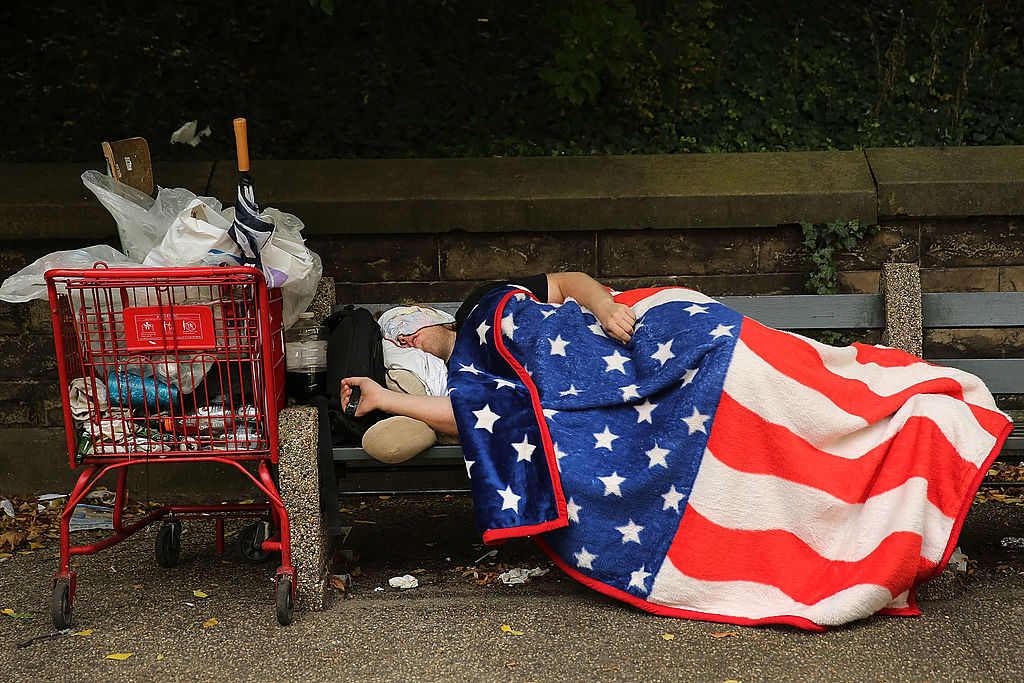
At present, tourists approaching the Intrepid along West 45th Street must run the gauntlet through a homeless encampment. Though modest in size, the accompanying filth, smell and drug activity have taken over sections of the sidewalk, forcing pedestrians into the street. Conditions are troublingly reminiscent of the tent cities that made Southern California notorious. This encampment poses a challenge — if not quite yet a crisis — for New York City’s socialist Mayor, Zohran Mamdani.
Is there a socialist way to clean up homeless encampments? Very early on in his mayoralty, Mamdani seemed to believe there wasn’t. Faced with brutally cold conditions last winter, and the deaths of several rough-sleeping New Yorkers, he walked back a previous promise to leave encampments intact. He calculated that he’d more likely enjoy latitude on his priority issues if he kept crime and disorder under control. The same calculation motivated Mamdani to retain Jessica Tisch, the police commissioner employed by his more strident law-and-order predecessor Eric Adams.
Socialist intellectuals advertise their doctrine as a theory of everything. Socialist politicians in the 21st century follow that guidance by trying to keep everyone’s focus on economics. Mamdani has done this through promising and delivering a rent freeze and engaging in class warfare, all of which he thinks plays to his electoral strengths.
But the encampment challenge — much like the spate of mental illness-related violence New York has witnessed since Mamdani’s inauguration — illustrates that no politician can control the agenda forever. When new and non-economic challenges arise, a socialist mayor has two choices. He can ask voters to trust the theory and wait for the eradication of the economic injustice which supposedly lies behind every social problem. Or he can respond pragmatically.
Riding high after a series of primary wins by his socialist allies, Mamdani would be wise to spend political capital to dismantle the West Side encampment before it swells or results in sexual assaults, public health emergencies or any of the other harms distinctive to tent culture. If there’s any social problem best dealt with on a preventative basis, it’s street homelessness. Socialists might try to argue that, actually, Mamdani’s rent freeze is the most preventative approach to take with homelessness. But the public won’t buy it. Native New Yorkers and tourists don’t want the streets colonised by people reportedly involved in theft and prostitution. And they don’t want to wait decades for a solution to a problem cops and sanitation workers could clean up in hours.
Mamdani has tried to promote a “sewer socialist” brand that’s ostentatiously responsive to unglamourous problems such as potholes and snow removal. Encampment-free streets and sidewalks are a similarly legitimate quality of life demand. That goes double in the case of New York City, which provides homeless shelter to all as a matter of right.
No one should have an excuse for sleeping on New York’s streets. Social services outreach workers, whose efforts to make tent dwellers aware of available services precede formal dismantling operations, have been on the scene near the Intrepid. Of course, progressive cities have a curious habit of getting their act together on homelessness prior to major sporting events and visits by foreign dignitaries. The World Cup final will be played on Sunday in the nearby MetLife Stadium. There’s therefore reason to be optimistic that the West Side encampment is not long for this world.