









24 October 2026 - 7:00am
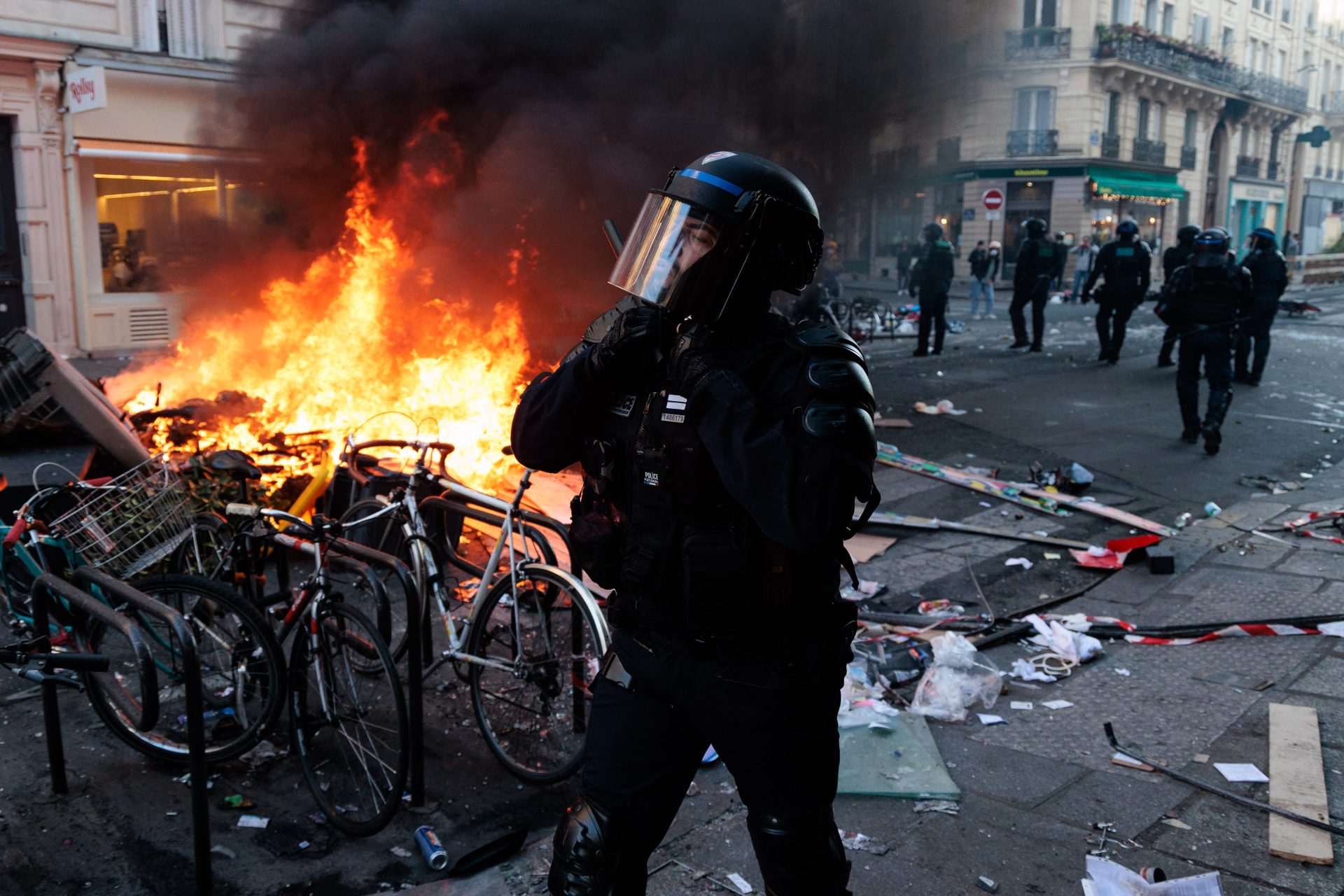
Maintaining public order is one of the main functions of the state. It needs to be demonstrated in times of crisis to prevent escalation and future unrest. Giorgia Meloni is sending the military into Milan ahead of fresh demonstrations this weekend. Emmanuel Macron and his government are on the offensive to take back control of France’s streets, after weeks of civil disorder. Another Saturday like the last would be disastrous.
In France, there will be a large police presence, elite forces, heavy equipment, curfews, and bans that are intended to present the opposite image of what was seen last weekend. Local authorities are instructed to ban protests except those organised by trade unions. Protests by individuals or groups with no legitimate authority should not be allowed, according to Macron. This may be challenged by administrative courts, which may overrule this ban.
Will this message of firmness work? The government’s law enforcement strategy may keep moderate protesters away from the streets. But it will also galvanise those who seek a fight and see violence as a legitimate means of action against a failing state.
There are distinct groups in French society that are completely disjointed: those who feel the Republic and its institutions are attacking them and those who feel that the Republic is under attack. These groups live in completely different information worlds. A heavy-handed response from the state may ultimately not achieve the goal of defending the Republic if those who feel attacked strike back. It could set off a vicious cycle: the more the state ramps up its arsenal, the more extremists could push back against it, making the state look increasingly powerless.
We may have thought that violence as a means for political ends is a thing of the past. The latest barometer by ObSoCo, though, suggests a rise in ideological tensions within French society. About 57% of French people interviewed believe that violent militant actions are necessary to succeed in making themselves heard. The poll suggests that there is a growing acceptance of violence as a form of political expression.
The results seem to contradict those from the most recent Elabe poll, which showed 91% of French people condemning the violence and the looting that happened last weekend. Only 24% said they understood the violence, rising to 39% among those aged 25–34 and 51% among those aged 18–24. So ObSoCo results are most closely aligned with those of the very young in the Elabe poll.
It also could reflect the difference between ideological undercurrents and the concrete violence of last Saturday. Even if people may agree with violent actions as a means to get attention, that does not mean they go out and participate in looting and damaging buildings during protests. This talk about embryonic civil war, a term coined by the philosopher Pierre-Henri Tavoillot, seems premature to us.
Politically, Marine Le Pen seems to benefit. She remains defiant in the face of security threats to her party conference in Orléans today. The Interior Minister warned that tens of thousands of protesters could show up against the Rassemblement National. The mayor of Orléans is worried. But not Le Pen. The suggestions to cancel the event or find accommodation outside of Orléans were dismissed. She mocks the far-Left more than she targets them. Nor does she compete in this current contest about who has more to show when it comes to law-and-order measures. She does not have to exaggerate to become the primary beneficiary of this, and she absolutely rejects the idea that this is just a dress rehearsal for the evening of the presidential elections.
The worst outcome is if Le Pen were to end up in the second round against Leftist candidate Jean-Luc Mélenchon. It is a trap for all voters who value order. With two divides in society, voting for one means strengthening the other side of this polarity too. On election day, Le Pen voters may face a dilemma: if they vote for her, there will be more riots from the Left. There goes the social peace. So far, Le Pen shows no sign of literally wanting to become another Joan of Arc, leading an army to drive out the enemy. She sits comfortably in her polling position, blaming others for the chaos.