









2 August 2026 - 8:00am
So it turns out Andy Burnham is not Labour’s first female PM. A month after a party insider’s failed attempt to declare him a woman in all but sex, the search continues. Not to worry, though. Former deputy and interim leader Harriet Harman has an idea.
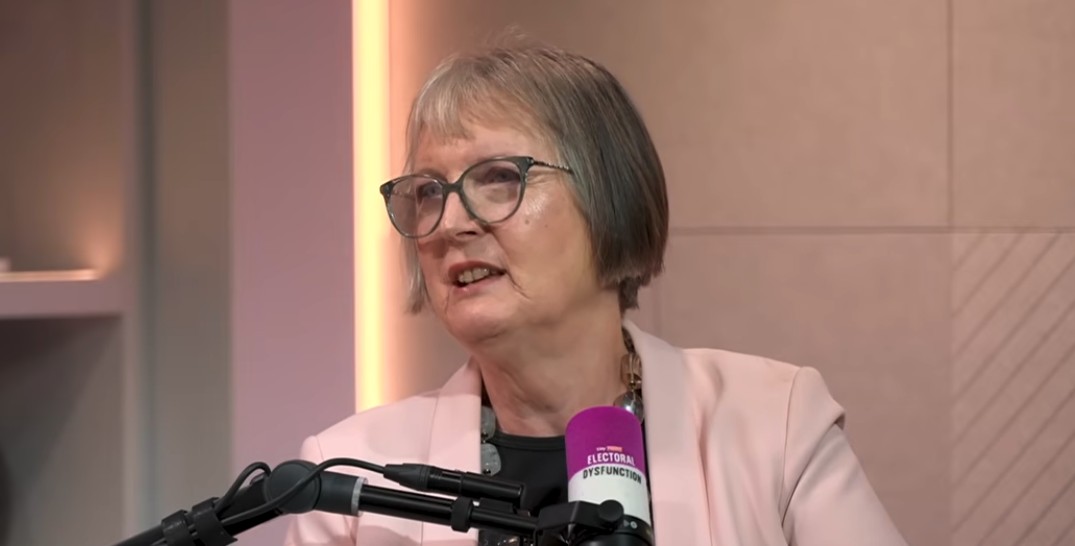
Speaking on the Electoral Dysfunction podcast, Harman claims to have “worked out that the only way we’ll have a woman leader of the Labour Party next time, is if we start a conversation now where we say that, actually, men cannot stand for the leadership”. The only thing I find surprising here is the idea that any “working out” was required. It is obvious that this is the case. One does not need to have Harman’s decades of experience of Labour as a boys’ club to see just how bad things are. It still doesn’t make this a good solution.
What does it mean to suggest that the only way for a woman to lead is for men to stand aside? Either it says something about women’s ability to compete with men on equal terms, or it says something about attitudes towards women within the party itself. A male-exclusionary leadership race would be a gift to anyone who sees politics as an area in which men excel, with women only succeeding if they are given a category all to themselves. It would imply there are essential differences between men and women which any self-respecting feminist, Harman included, would surely deny.
Of course, it would be ironic if a party that has been resistant to protecting women’s rights where sex differences do matter were to decide that this is the one place where exclusion is acceptable. What are the safety and dignity of women in general compared to the personal ambitions of a small clutch of female MPs? I am guessing that for Harman, this is one of the few areas where knowing what a woman is does not “detract from” one’s feminism.
I write this not because I consider female leadership to be an irrelevant luxury. I, too, would like to see a female Labour leader one day. Left-leaning women have had decades of being told that what matters is not the sex of the person at the top but what this person’s politics mean for women as a class. We have been told that the right pays for female leaders with anti-feminist policies. There is some truth in this, but it’s a truth that wears thin. If women cannot naturally rise to the top within Labour, it is surely a symptom of beliefs and behaviours which exist at all levels. What Harman proposes is not a way of solving the problem, but of masking this particular symptom. A female Labour leader should indicate that the culture has changed. That is the only reason to want one, yet Harman seems to have given up and decided to skip that stage entirely.
Right now, multiple major unions are planning to boycott the Labour Women’s Conference. This is in protest at trans-identified male party members not being permitted to participate in woman-only events. Last year, Labour cancelled the conference while claiming to be “awaiting guidance” from the EHRC on whether “woman-only” really needed to mean just that. Harman has shown little interest in starting a conversation where we say that, actually, men should not muscle in on events to promote female participation in politics. The boys’ club is bad when it stops a minority of women reaching the very top, but beyond criticism when it demonises women in general for wanting any resources of their own.
If this is the kind of party where a female leader is dropped in, it will not be one where she will be supported in promoting women’s interests. On the contrary, with such attitudes towards female self-assertion, it is no doubt true that Burnham will find it easier to sneak in female-friendly policies. It remains to be seen whether or not he will do so, but for now, women will just have to be patient. Much as I hate to say it, it’s still not our time.
