









8 October 2026 - 7:00am
Birmingham
“There are two kinds of people in politics,” former Conservative minister Eric Pickles told a reception at the party’s annual conference this week. “Those who regularly quote The Godfather, and those who don’t.” But a more apt mobster line for the Tories might be found in The Sopranos: “Some people are so far behind in a race that they actually believe they’re leading.”
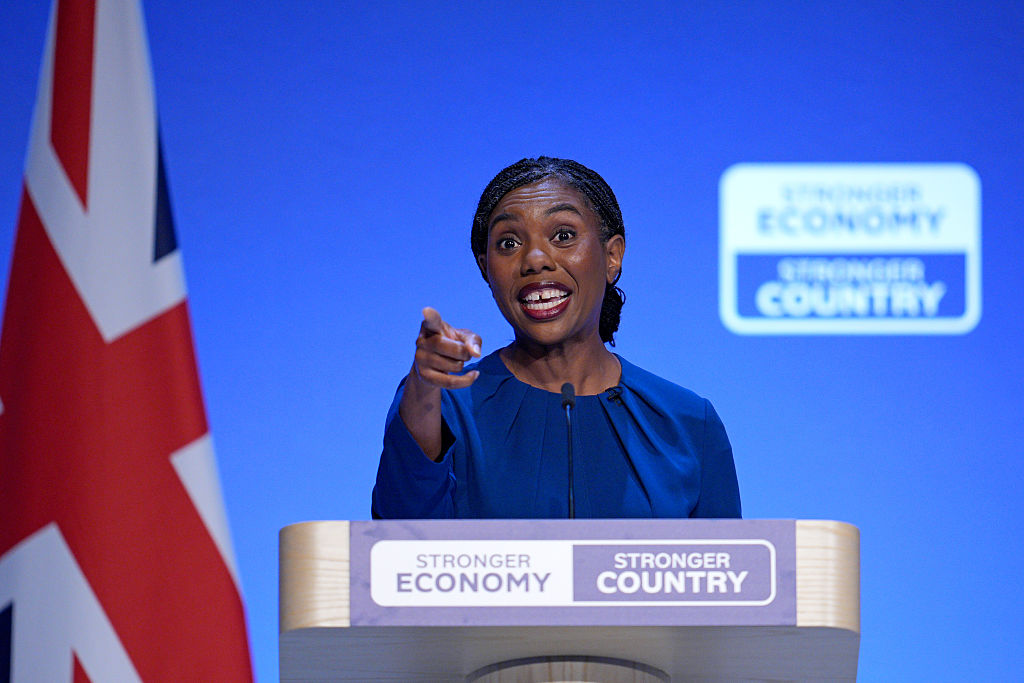
The four-day event in Birmingham has now ended on a high note, with leader Kemi Badenoch’s closing speech well-received by members and a wider feeling of party unity replacing the brutal factionalism of recent years. Outside the conference bubble, however, the picture doesn’t look as rosy. According to the latest polling, the Tories are still hovering below 20% in voting intention, putting them even lower than they were at the time of their 2024 electoral drubbing. Despite recent Reform UK scandals over donations and transparency, Nigel Farage’s party remains second, four points ahead of the Conservatives.
An interesting data point that has emerged, though, is that Badenoch’s personal popularity is markedly higher than her party’s. Research from More in Common presented at the conference this week found that the Tory leader’s personal approval rating is 13 points ahead of overall support for the Conservatives. One focus-group member who spoke to the pollster said that while Badenoch is “fantastic”, she is “head of an empty party”, adding that the Tories “found a good leader, but need to reinvent themselves”.
According to the More in Common research, Badenoch’s relative popularity stems largely from a series of Prime Minister’s Questions appearances and social media videos that have cut through from Westminster to the rest of the country. In these clips, the Tory leader alternately slaps down, makes fun of, and even flirts with her opposite number, Andy Burnham. It feels like a return to the David Cameron years, when Tory shortcomings could be waved away with a “thug life” compilation of the PM dunking on Ed Miliband in the chamber. Indeed, a very similar video, showcasing Badenoch’s best PMQs moments, was played in the main hall before Wednesday’s speech.
But while these videos may be making a splash online, they don’t signal widespread backing for the Conservatives’ main policy proposals. Badenoch’s pledge on Wednesday to get rid of inheritance tax on family homes amounts to an admission that her party is chasing after wealthy voters rather than the “red wall” residents who moved back to Labour in 2024. In this vein, she has also said she will expand free childcare to those earning over £100,000, as well as vowing to repeal the mansion tax.
Therein lies the problem. When asked why they would be reluctant to vote Tory, Britons frequently bring up the party’s economic record, as well as its broken promises in government. Offering the same policies again will only alienate those who’ve been burnt before. Badenoch said on Wednesday that “many Reform voters are our people […] we want them to come home”, yet her ideas are more geared towards winning back affluent, centre-right rural voters who have moved over to the Liberal Democrats. The post-2019 coalition has decisively crumbled, and her focus now appears to be shoring up her true-blue base.
In an attempt to detoxify the Tory brand, Badenoch has refreshed her top team, but this has resulted in a shadow front bench which is short on names familiar to the public. Even many Conservative members would be stumped if tested on the subject: Who is Helen Whateley? What does Mims Davies do? Draw Andrew Bowie from memory.
Speaking in Birmingham on Wednesday, Badenoch insisted: “We are a team, we are a family, and we are going to do this together.” Yet one of the main takeaways from the conference is just how much the party image and messaging revolves around her. While she reiterated that she wouldn’t do a deal with Reform, the parallel of a leader who has become bigger than their party may prove an uncomfortable one. The Tories have previously prided themselves on being a broad church. Presently, as the pollster Luke Tryl put it, there’s a “charismatic vicar but the church roof [is] collapsing”.
