









10 June 2026 - 7:00am
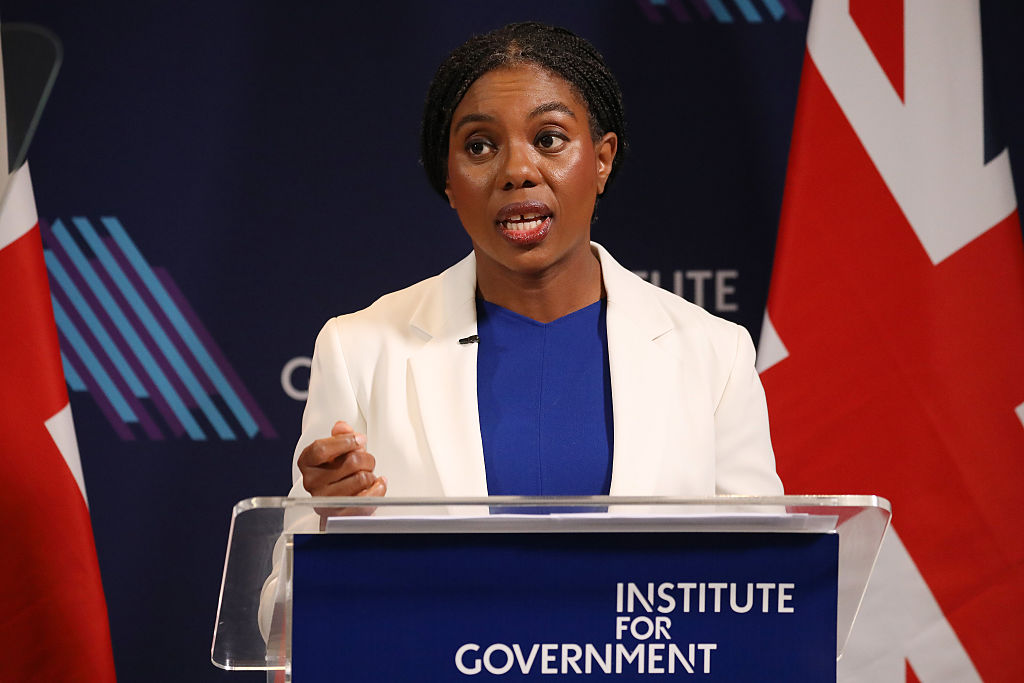
On one level, Kemi Badenoch’s speech at the Institute for Government yesterday was a straightforward policy announcement. She’s promising to abolish the Public Sector Equality Duty — a provision under the 2010 Equality Act that requires state bodies to proactively eliminate discrimination and advance equality of opportunity.
It sounds well-intentioned but, as Badenoch argues, the expansive language has left British institutions, including the police, vulnerable to constant legal challenge. As a result, the “shield” of equality law — an essential safeguard against specific acts of discrimination — has become a “sword”: a tool used to impose a broader culture of box-ticking at the expense of common sense. Hence the warped sense of policing priorities on show in the Henry Nowak case and many others. The case for abolition is clear.
However, it wasn’t just a policy fix that the Conservative leader unveiled yesterday, but her entire political strategy. Like Bill Clinton in the Nineties, she’s triangulating. More than merely splitting the difference between her opponents to the Left and to the Right, she’s attempting to rise above both with a distinctive position of her own.
So, against Labour, she’s out to dismantle what she calls the “Blairite legal settlement”, of which the Public Sector Equality Duty is a cornerstone. At the same time, she’s taking aim at Reform UK’s pledge to scrap the Equality Act altogether, which she says would mean dropping the shield of anti-discrimination law. To reinforce her double-edged argument, she also laid into the Black Lives Matter rhetoric of the Left, along with the “white lives matter” reaction on the Right. “Everyone matters,” she declared, thus placing herself at the summit of the triangle.
The manoeuvring is deft, but will it work? Like a military tactician taking the high ground, she needs her enemies to engage on her chosen battlefield. The Left-of-centre parties are likely to play ball. Labour ministers have already been dispatched to defend the Public Sector Equality Duty, and the Tories will relish having that fight.
The real question, though, is whether Reform is willing to attack from the other direction. During questions from the press, Badenoch hinted that Reform’s position on scrapping the Equality Act might shift. And indeed, once he’s thought about it for more than a minute, Nigel Farage may realise that he doesn’t want to re-legalise discrimination. He might also tone down the rhetoric that he and his party have adopted in the immediate aftermath of the Nowak case.
However, it wouldn’t be surprising if Farage doubles down instead. After all, there’s a reason why he might want to abandon his long-standing effort to deradicalise the populist Right: the troublesome threat from Rupert Lowe and Restore Britain. Senior Reform figures are already paranoid that the vote-splitting impact of Lowe’s party has cost them the Makerfield by-election, and so the temptation will be to move to the Right to counter the challenge.
And yet this would mean falling into Badenoch’s trap. Her common-sense credentials would be burnished, and the potential for anti-Reform tactical votes in Con/Ref marginals maximised. No wonder the Tories helped Lowe get a place on the influential House of Commons Public Accounts Committee. From their point of view, the higher his profile, the better. Of course, Farage doesn’t have to rise to the bait, but Badenoch must hope that he just can’t help himself.
Peter Franklin is Associate Editor of UnHerd. He was previously a policy advisor and speechwriter on environmental and social issues.
 peterfranklin_