









19 April 2026 - 4:00pm
Last week, as their policy positions appeared increasingly out of sync, Marine Le Pen and Jordan Bardella, respectively the Rassemblement National’s parliamentary leader and president, agreed to attend a discreet lunch together with 13 of France’s most powerful business heads, including LVMH’s Bernard Arnault and Patrick Pouyanné of TotalEnergies. In a private dining room at the Parisian restaurant Drouant, where every November an equally select but far more literary group awards the Prix Goncourt, Le Pen refused to be drawn into Bardella’s emollient assurances. He has sought to emancipate himself from his mentor — few now refer to him as Le Pen’s deputy — and has started diverging from a number of her stances.
The backdrop to these tensions is the court ruling last year which barred Le Pen, previously a frontrunner for the presidency, from seeking elected political office for five years, following her conviction for embezzlement. She remains ineligible for the next election, with the ruling on her appeal only expected on 7 July. All the while, Bardella has been giving increasing signals that the Élysée Palace is his to win, and that his onetime mentor is a weight he may not want to carry forever.
According to reports from this week, business elites are increasingly lending Bardella their support. He has cultivated relationships with France’s most notorious conservative tycoons. One of these is Vincent Bolloré, whose CNEWS channel carries significant influence in Right-wing circles. The RN president has also hired an adviser from Pierre-Édouard Stérin, another Right-wing Catholic entrepreneur who is keen to finance conservative think tanks and organisations. Bolloré and Stérin have drawn Bardella towards a more pro-business, tax-averse outlook. “He’d be a classical conservative if only he could be made to read books,” one of his advisers once said.
All this is at odds with Le Pen’s populist instincts. Mirroring her northern rust-belt constituency, she has promised more state benefits and subsidies. At the Drouant lunch, the differences between the two RN leaders came into sharp contrast when she reportedly hammered that the only way to fix the French economy for all citizens was “the State, the State, the State”.
Le Pen is also wary of the European Union machine. She has supported Viktor Orbán in his fight against Brussels, encourages a “neutral” French policy towards Ukraine, and is friendly with fellow EU critics Matteo Salvini and Geert Wilders. Having been debanked by Paris’s virtue-signalling high-street institutions, she had to get a loan from a Hungarian-Russian bank to finance her 2017 presidential campaign, even though the RN was at no risk of defaulting.
Meanwhile, Bardella is far more fluid in his views. Though he is similarly critical of Brussels, his views on Ukraine are closer than Le Pen’s to the EU position. He has denounced “Russian imperialism” and praised Volodymyr Zelensky, while opposing calls to send French troops to Ukraine. This year, he asked RN mayors to refrain from gestures such as taking down the EU flag in their town halls, inviting sharp criticism from Le Pen. When asked about Bardella’s statement on the unrest in the French Pacific territory of New Caledonia last year, she snapped: “I don’t think Jordan knows much about it.”
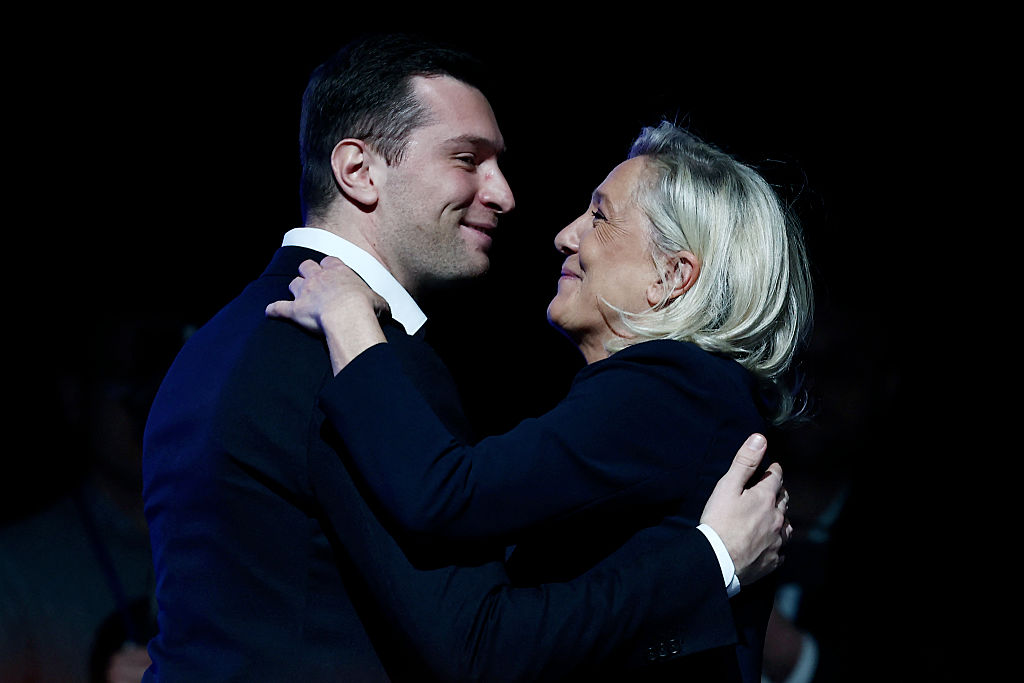
A couple of weeks after her conviction last year, I saw Le Pen alongside Bardella at a rally in Narbonne, about 150 miles west of Marseille, in the RN heartlands. She was combative and no longer stunned. She and Bardella hugged repeatedly, agreeing to selfies with countless young supporters, before promising that regardless of who got to run in 2027, they would govern together. The cheerful crowds roared that the fix was in, but they would defeat it. “If he’s president, she will be advising him all the way,” I heard many times. It was meant as comfort.
That all seems a long time ago now, however. The likelihood that Le Pen will be saved from ineligibility by the 7 July judicial ruling is low. In that case, she will watch from the wings as her deputy grows into the role of her successor.
