









12 Nov 2026 - 10:50am
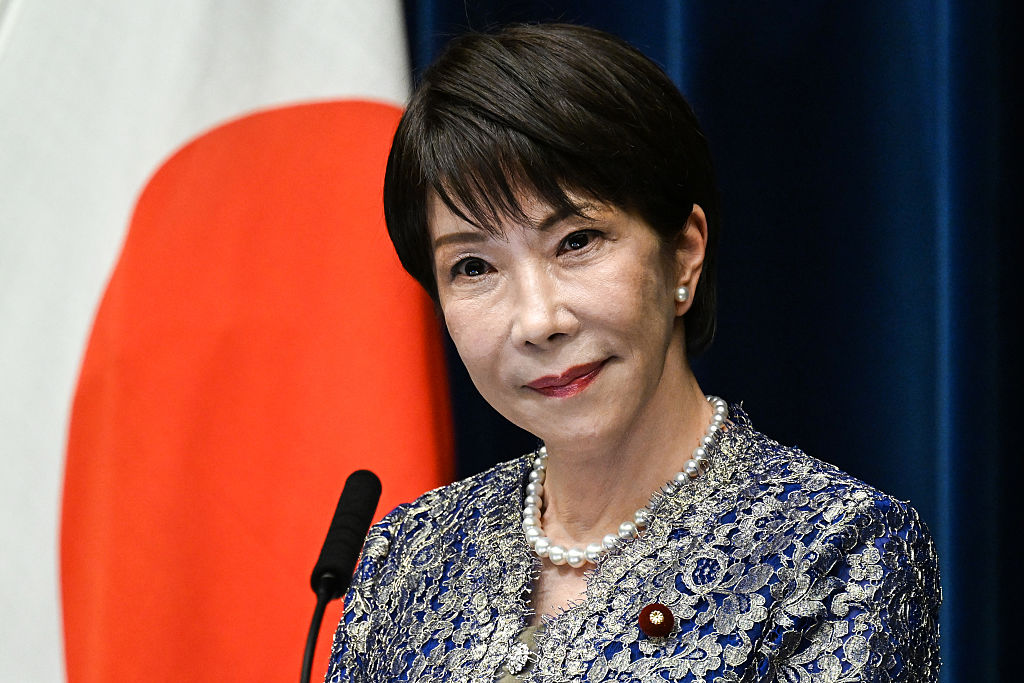
At the COP31 conference in Turkey, Japan has received the not-so-prestigious “Fossil of the Day” award, a booby prize given by the environmental group Climate Action Network to countries deemed negligent in their efforts to combat climate change. The reason provided was that Prime Minister Sanae Takaichi’s decision to skip the event sent a “dismal signal” that Japan no longer considered COP sufficiently important to warrant a top-level presence.
Japan has won the satirical award before, but was joined this year in the hall of infamy by eight other countries — including Germany, France and Italy — whose leaders also chose to be elsewhere. The reaction in the Japanese press was novel. In previous years, there has been an evident sting felt from these rebukes. But this year the coverage has been minimal, with no defence offered. Nobody cares very much.
It has long been suspected that Takaichi was one of the world’s most climate-sceptical leaders. While paying lip service to “pledges” — not binding legal obligations — to decarbonise Japan and switch to renewables, she rarely mentions the issue, and has done little to advance an orthodox “green” agenda.
Takaichi’s real interest is nuclear power, which she has made a centrepiece of her security strategy and key to achieving energy self-sufficiency. She has pushed to bring Japan’s nuclear programme, which has been stalled since the Fukushima accident of 2011, back to life. Her cabinet also revised Japan’s nuclear energy policy guidelines with a view to rebuilding up to 14 reactors by 2050. She has aggressively promoted investment in nuclear fusion and floated the idea of Japan building its own nuclear-powered submarines.
As for renewables, they have hardly got a look-in. Takaichi has ended financial support for large-scale solar plants, often reliant on Chinese technology, which have a patchy record in Japan. Her only interest seems to be in potentially lucrative, exportable homegrown technology, such as perovskite solar cells, which use iodine as a primary component and of which Japan is the world’s second-largest producer.
Japan’s policy is carefully calibrated, then. There is no repudiation of established positions, just an incremental downgrading of the importance of climate change. The subject simply isn’t discussed, and gradually the billboards and TV adverts promising a utopian carbon-free future are disappearing.
The Japanese public seems unmoved. There are no street protests, and Takaichi’s approval ratings remain high, suggesting recognition that the country — which retains a significant heavy manufacturing sector — needs cheap energy and that renewables are not the solution. Even the nuclear stigma, formed by memories of the Second World War and revived by the Fukushima scare, appears to be dissolving.
For Takachi, there is no need to attend international talking shops when she is formulating practical policies based on a mixture of reliable fossil fuels and nuclear energy. All the while, she is prudently investing in next-generation technologies that may be part of the energy mix someday.
Domestic electricity prices in Japan are roughly half that of the UK. If they are wise, Britain’s leaders — struggling to free themselves from the straitjacket of the Climate Change Act — might want to follow Takaichi’s lead.
