









3 April 2026 - 1:00pm
The forthcoming ITV drama series Majesty arrives with the promise of provocation. What we have here is a kitsch reimagining of Elizabeth I that draws, in some measure, on the long-circulating “Bisley Boy” legend: the claim that the young princess died in childhood in Bisley, Gloucestershire and was replaced by a lad who later ruled England. In ITV’s knowingly and cheerfully ahistorical retelling, the conceit is sharpened further: Elizabeth is not an impostor but a trans woman.
It’s a high-concept premise, but it rests on shaky foundations. Not to be found in Tudor sources, the Bisley Boy story is a fabrication of 19th-century vintage. It survives because it is irresistibly absurd. But Tudor England is, inconveniently for such theories, an exceptionally well-documented world. The idea that a wholesale bodily substitution could occur, and remain undetected across decades of such scrutiny, belongs less to history than to the realm of the Gothic novel.
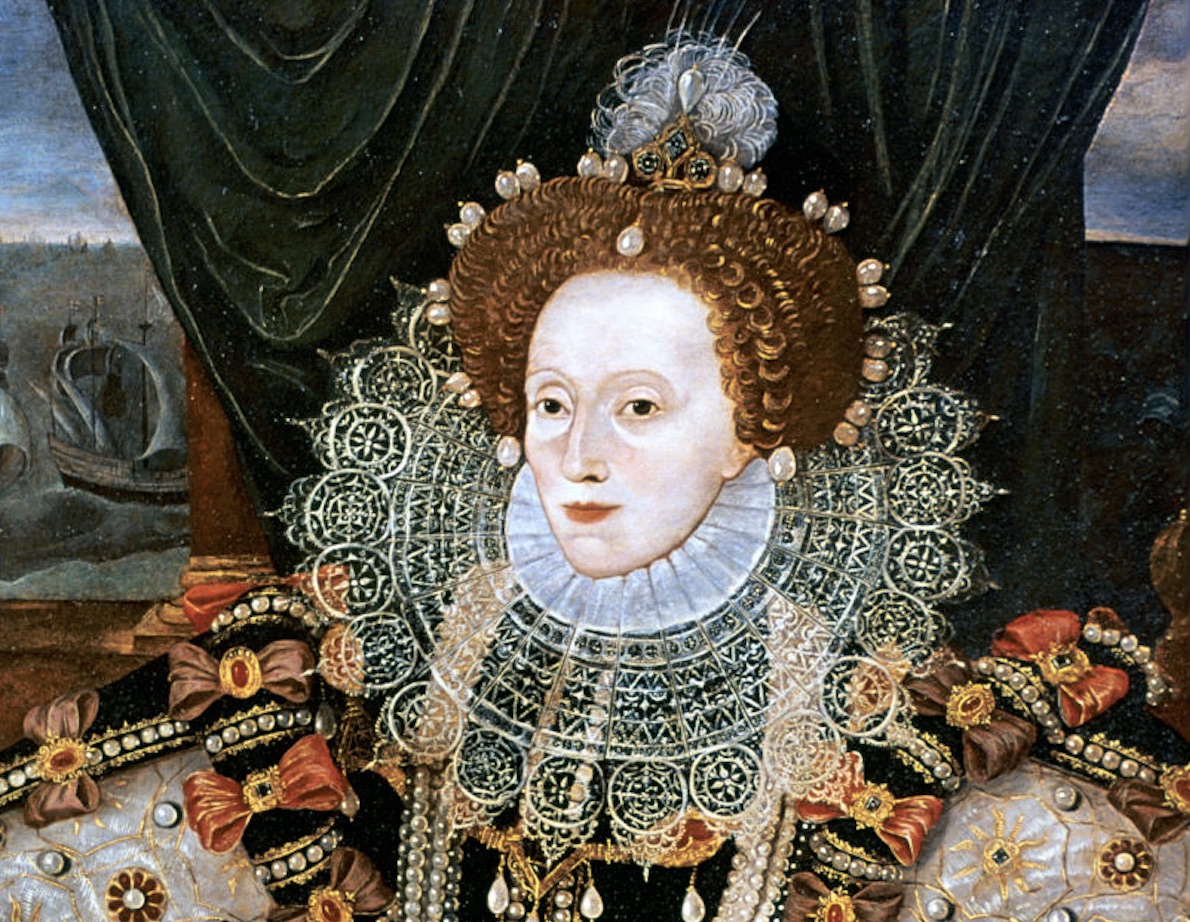
And yet to stop there and dismiss the programme as anachronistic would be to miss the deeper fascination with the Tudor queen. For what Majesty’s conceit does, clumsily and inadvertently, is recognise a truth long known to historians: that Elizabeth I did something extraordinary with gender through her refusal to marry, her careful control over access to her body, and her cultivation of sexual mystique. Contrary to what Majesty might suggest, these are not anomalies requiring a hidden male identity. Instead, they are intelligible as strategies of rule.
To understand this, one must begin with a distinction that early modern political thought took seriously: the difference between the monarch’s “natural body” and the “body politic”. The natural body is the physical, sexed, mortal individual; the body politic is the abstract, enduring authority of kingship. Elizabeth’s dilemma was that these two bodies did not quite align in the expected way. She possessed a woman’s body in a world where male kingship was the norm.
Famously, in her 1588 speech to the troops at Tilbury, she squared the circle by declaring that she had “the body of a weak and feeble woman, but the heart and stomach of a king”. This, of course, is not an admission of gender trouble but a rhetorical manoeuvre. Transposing Judith Butler wholesale into the 16th century will not do. Elizabeth was not claiming to be a man, but instead claiming virtues, such as martial resolve and sovereign authority, understood as masculine by a simpler age.
Historians including Carole Levin have described this as a kind of calculated symbolic androgyny. Elizabeth’s court culture amplified this effect, developing a cult of the Virgin Queen that filled the symbolic vacuum left by the retreat of the Virgin Mary in Protestant England. She could present herself, in one moment, as the chaste, marriageable woman and in the next as the quasi-sacral monarch, above and beyond plebeian gendered expectations. Femininity and masculinity, in her case, functioned less as essences than as repertoires.
And this, paradoxically, is what the ITV premise obscures. By recasting Elizabeth as trans in a very modern sense, and by locating the drama in the supposed truth of her body, it recentres precisely the question that the monarch herself displaced.
There is, moreover, an historical irony in the persistence of stories like the Bisley Boy. They often emerge in contexts where female authority appears sinister or unsettling. The fantasy that Elizabeth was “really” a man functions, at some level, as a way of restoring a disrupted order: if she ruled successfully, perhaps she was not truly a woman after all. In this sense, the legend is less a revelation about Elizabeth than a symptom of later discomfort. Majesty’s showrunners may congratulate themselves on their postmodern edginess for recasting Elizabeth as trans, but nothing could be more reactionary.
Pratinav Anil is the author of two bleak assessments of 20th-century Indian history. He teaches at St Edmund Hall, Oxford.
 pratinavanil