









18 April 2026 - 4:00pm
The obituaries and condolences flowed in from around the world. The New York Times, Forbes, the Guardian, CBS News and the higher-education trade press all reported the news. In a statement this week, Hampshire College, a progressive private institution that lets students design their own curriculum and gives them “narrative evaluations” instead of grades, announced it was closing due to financial problems.
It’s a remarkable collective farewell for a niche college where the total number of students has dwindled from a high of 1,200 about a decade ago to 747 today. Only 168 freshmen thought it was worth attending this year, an indication of the college’s precipitous fall from grace and into $21 million in debt. Students were reportedly reassured by Hampshire’s leadership that the bohemian institution would pull through. Even the college’s most famous alumnus, documentarian Ken Burns, issued a statement lamenting its closure, saying the institution was “woven into the fabric of who I am”.
But does Hampshire College deserve all this pity? The closure of a small college is not comparable to that of, say, a community hospital. Self-directed undergraduate study is a luxury, so it’s more like the closure of a boutique retail store in an oversaturated market. The academic market benefits from an occasional shake-up to weed out underperformers, mismanaged experiments, and incestuous academic monocultures. Hampshire was an example of the process working as intended.
The academic market is undergoing a major realignment, largely due to demographic shifts. Nearly 300 colleges and universities closed between 2008 and 2023, and estimates suggest 442 of America’s 1,700 private colleges and universities are at risk of closing or being forced to merge. According to the Atlantic, academia is teetering on a “demographic cliff”. The number of teenagers graduating from American high schools peaked last year and is projected to fall steadily until at least 2041.
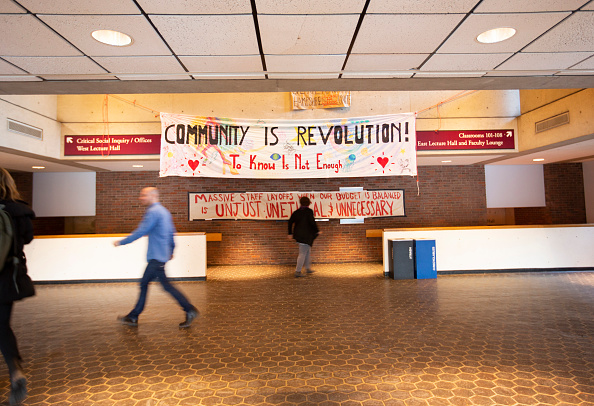
This doesn’t mean that universities are vanishing, but a society can accommodate only so many institutions that relentlessly critique dominant systems of power. Hampshire College represented a bold departure from academia’s staid restraint when it was envisioned in 1965. But now the rest of academia has caught up, turning ideological dissent into conventional teaching.
A sampling of Hampshire instructor bios indicates that the students there were being served stale pabulum clotted with buzzwords. One Hampshire prof “explores the lives of marginalized subjects, particularly trans women living and making community in the rural south”, and emphasises “inclusivity, anti-racism, and the foregrounding of marginalized voices”. Another specialises in “institutionalized racism, social change, and embodied experiences of harm and healing”.
There is little that’s original here, because much of this is now standard fare at major universities and liberal arts colleges. What students don’t seem to be taught is how to question the assumptions of this ideological monoculture. The revolution died at Hampshire, not in an upheaval but in a whimper of conformity and complacency.