








4 April 2026 - 4:00pm
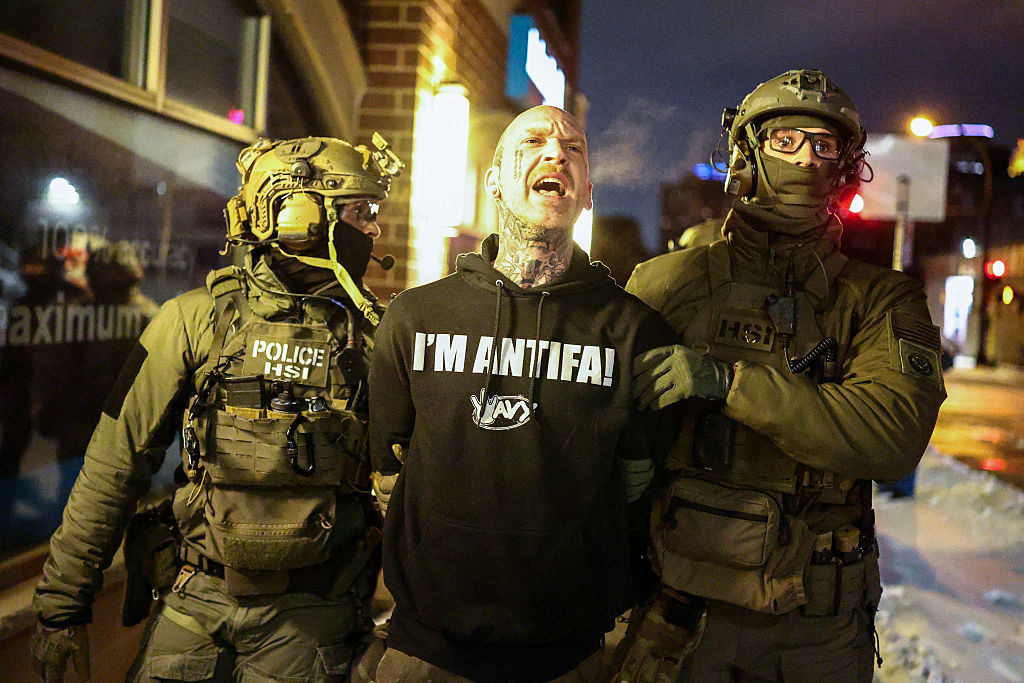
This summer, the Trump administration will hold a multinational summit aimed at combatting Antifa in the US and abroad. Although Antifa has carried out numerous violent attacks over the last decade, it was only weeks ago that eight members were convicted on federal terrorism charges — the first such convictions since the group was labelled a terrorist organisation in May 2020. This summit is long overdue, particularly as Antifa’s tactics are becoming more dangerous — and more lethal.
The challenge for the Trump administration is that Antifa operates as a global, decentralised network. Its ranks have grown since 2016, and its tactics have become more sophisticated with each election cycle. During the so-called “Summer of Love” in 2020, I embedded with the most extreme elements of this group in front of the Portland courthouse, at the borders of the Capitol Hill Autonomous Zone, and at protests and riots around the country. I infiltrated their Telegram group chats and witnessed their tactics escalate firsthand: using leaf blowers to disperse tear gas, heat-treated gloves and lacrosse sticks to hurl munitions back at police, and Molotov cocktails that injected a fiery, decidedly unpeaceful element into their nationwide demonstrations.
Back then, the tactics were mostly geared towards agitating police to initiate less-than-lethal munitions against the demonstrations, with the ensuing violent spectacle turning officers into the “fascists” that Antifa purported them to be. But last month’s Prairieland trial showed that Antifa has become bolder and more violent in its efforts to deter, and even kill, law enforcement.
Watching Antifa’s tactics escalate is worrying, but equally troubling is its ability to identify new enemies as the political landscape shifts. In 2020, the target was local and federal police; in 2026, it was ICE and, more broadly, allies of what is perceived as Western imperialism. As early as 2017, Westerners travelled to Syria to support the fight against the now-deposed Bashar al-Assad, prominently displaying the Antifa flag alongside YPG fighters. The prospect of these individuals returning home with guerrilla training and radicalised zeal is deeply concerning.
While Antifa aligned with the Black Lives Matter movement in 2020, its new allies include radical Islamist groups. I have witnessed this firsthand at anti-Israel protests during both the Joe Biden and second Donald Trump administrations, where embedding with pro-Palestine demonstrations allowed them to antagonise police and radicalise otherwise peaceful gatherings. In highly charged environments, it only takes a few agitators to turn demonstrations violent. Their adaptability stems from a decentralised structure and an amorphous “antifascist” ideology.
This decentralised network resembles insurgent cells in Iraq and Afghanistan — resilient and hard to dismantle. Since the 2020 riots, Antifa has not faded; its relevance may have intensified, evolving to counter new perceived threats while largely avoiding prosecution. That resilience should concern not just the political Right, but anyone invested in the stability of civil society in the US and across the West. With another contentious election cycle approaching and warmer months likely to bring renewed demonstrations, the question becomes how to respond.
First, the Right should avoid labelling every street protester “Antifa”. Not everyone in black bloc belongs to an organised network, and indiscriminate accusations risk pushing moderates toward extremism. Targeted law enforcement efforts that identify and prosecute actual offenders will deter violence far more effectively than online rhetoric.
Second, just as the Left pressed Trump to denounce groups such as the Proud Boys and Oath Keepers after January 6, the Right should demand the same: a willingness to distance themselves from actors who escalate peaceful protests into riots. Reflexively blaming police alone sustains the cycle, just as ignoring extremism on one’s own side erodes credibility.
A disciplined, less sensational conversation, paired with a Justice Department focused on prosecutable cases, would curb violence far more effectively than partisan point-scoring.
Join the discussion
Join like minded readers that support our journalism by becoming a paid subscriber
To join the discussion in the comments, become a paid subscriber.
Join like minded readers that support our journalism, read unlimited articles and enjoy other subscriber-only benefits.
Subscribe