









27 August 2026 - 7:00am
Bradley Townsend is reportedly the first British volunteer to be killed fighting for Russia in the war with Ukraine. Townsend told his family that he planned to visit Romania earlier this year. Instead, he covertly travelled to Russia and joined two British acquaintances to sign up for Putin’s bloody war. How did a self-described “normal working-class lad from Yorkshire” wind up in such a dangerous — and foolish — position?
Townsend’s fate is not unique. He was part of a vast global flow of soldiers that are propping up Putin’s war effort. Russia continues to haemorrhage soldiers on the frontlines. In June alone, it sustained almost 40,000 casualties. Even the systematic combination of force, social opportunity, and monetary bribes that the regime offers potential kontraktniki — contract soldiers — has struggled to keep pace with the scale of losses.
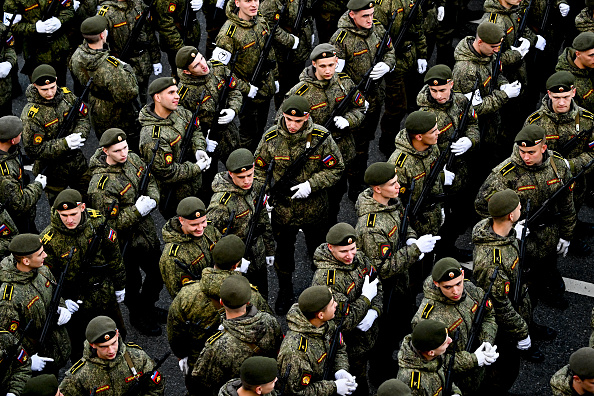
Where domestic recruiting fails, foreign soldiers have filled the gaps. Russia has recruited at least 27,000 fighters from abroad since 2022. The vast majority come from poorer countries in Central Asia, Africa, and South Asia. A vast web of informal recruiters, websites, and targeted social media campaigns works to lure these men — and they are almost all men — into the Russian forces. Sometimes the promise is a well-paying job in Russia itself.
At other times, the exchange is clear: fight for Russia and receive a vast sum of money. Promises of up to $3,000 per month make local salaries pale in comparison. Some even paid commissions to recruiters to access these jobs. The reality is that many are short-changed. The money is less than promised, or it never comes.
However, recruits from Western countries are far fewer, numbering in the dozens. A vast web of Kremlin-sponsored social media feeds and groups offers disenchanted Westerners different reasons to fight. Likely candidates for the Kremlin’s armies are targeted in particular through the Telegram social media platform.
The messages are always simplistic and usually appeal to those who feel marginalised by society. Some are enticed by Russia’s promises that it is waging a war to defend what it terms “traditional values” — its vision of family, sexual, and religious life — against a decadent West. Derek Huffman moved his family from the USA to Russia, complaining about the “LGBT indoctrination of kids”, before enlisting in the army to accelerate his path to Russian citizenship. In sharp contrast, others like Huffman’s compatriot Russell “Texas” Bentley come from the self-professed “anti-imperialist” Left. Huffman is apparently still alive, but Bentley was tortured and killed by his own side in an apparent case of mistaken identity.
Regardless of ideological persuasion, these recruits often seem to speak the same language of Kremlin propaganda: stories of Western ills, Ukraine’s evils, Moscow’s strengths, and Vladimir Putin’s wisdom. On this basis, Townsend’s path to the war can be constructed. In his own words, “in 2014, when everything happened then, I didn’t really know much about politics.” Even an “ordinary Yorkshire lad” can easily be exposed to the Kremlin’s online influence network. Townsend found himself following YouTube and Telegram channels run by Ben Stimson, another Briton and a convicted terrorist who has fought against Ukraine for Russia. Stimson posts videos of fellow foreign volunteers singing, arm wrestling, and visiting Russian memorial sites — a hodgepodge of pro-Kremlin material, laced with anti-Nato and anti-Western talk, that presents war as a fraternity.
By the time he arrived in Russia, Stimson filmed Townsend speaking a fluent language of Russian propaganda, complaining about Western media “brainwashing”, the “Kyiv Junta”, and declaring his support for the “SVO” — the Russian acronym for spetsial’naia voennaia operatsiia, or “special military operation,” the Kremlin’s term for its war against Ukraine. Fellow Briton and Russian army soldier Aiden Minnis, captured in the same video, declared: “This guy has more balls than most of you internet warriors out there.”
Money, as for most Western recruits, doesn’t seem to have mattered to Bradley Townsend. Russia’s war offered the chance to find brotherhood and masculinity. Russia will keep drawing in recruits, using social media networks to root out and target men like Townsend. Let Townsend’s fate serve as a warning that it cannot keep its promises.
Dr. Ian Garner is assistant professor of totalitarian studies at the Pilecki Institute in Warsaw. His latest book is Z Generation: Russia’s Fascist Youth (Hurst).
 irgarner