









30 Oct 2026 - 5:10pm
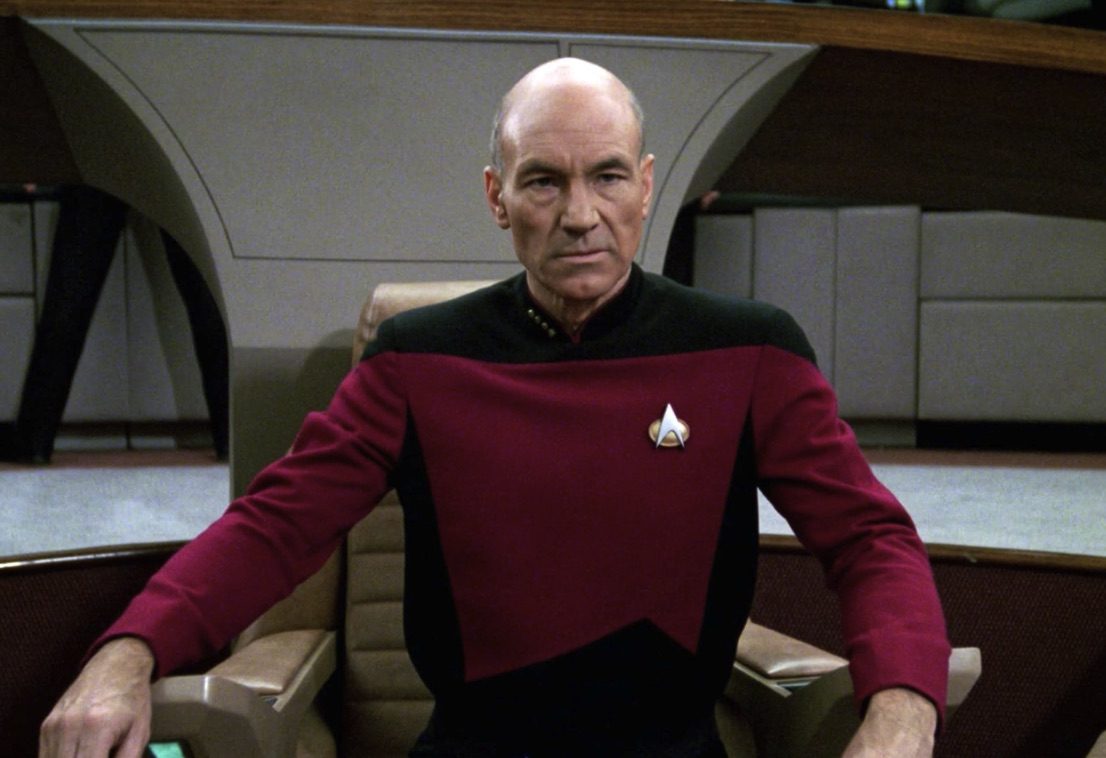
Patrick Stewart’s death at the age of 86 has prompted tributes to both the brilliant actor and the famous role that defined him: Star Trek’s Jean-Luc Picard. Matthew Yglesias, centrist liberalism’s inescapable pundit, today called the character “the single most compelling vision of progressive politics I am familiar with: secular, rational, compassionate, egalitarian, committed to abundance and self-improvement”. It’s an affectionate tribute with an awkward implication. Why does a television captain from the Eighties still offer a more ambitious political vision than the people governing us?
Picard ran a starship the way a certain kind of person imagines a good government should be run. He gathered his senior staff around a conference table, heard everyone out, weighed the ethics, and only then said: “Make it so.” He preferred negotiation to force, treating photon torpedoes as a last resort. With his Shakespearean quotations and patrician bearing, he embodied authority with authoritarianism apparently filtered out — intelligent, humane, cosmopolitan — and he arrived in September 1987, just in time for the end of history.
Two decades later, a good chunk of America thought it had elected a real-life version of Picard mixed with the West Wing’s Josiah Bartlet, another symbol of enlightened liberalism. Barack Obama has never hidden his Trekkie credentials. He once flashed the Vulcan salute in the Oval Office alongside Star Trek actor Nichelle Nichols. While guest-editing WIRED in 2016, he credited the show with influencing his worldview, particularly its optimism that people could overcome their differences and build a better future together. His Trek, to be fair, was the Sixties original, and pundits duly cast him as Spock, the unflappable Vulcan surrounded by hotheads.
But Obama grew up on Captain Kirk and governed like Captain Picard. Kirk was a frontier swashbuckler who was as ready with a punch or a romantic overture as a diplomatic proposal. Picard was the man at the head of the conference table, and that was Obama’s style in full: faith in the well-made speech, and the conviction that a divided America was a misunderstanding waiting to be cleared up. Underneath Obamaism lay the Picard fantasy: listening was compatible with leadership, and eloquence was itself a form of power.
There’s a catch, however, with the Picard model of statecraft: it works because the Federation had already done much of the heavy lifting offscreen. His diplomacy unfolds in a universe where the Klingons eventually signed a treaty, where Starfleet’s institutions can largely be trusted, where even the villains mostly respect the etiquette of the hailing frequency. The eloquent explanation is decisive because everything beneath was already settled, and the use of power needed to create and maintain that order hums in the background.
In reality, Obamaism failed and eventually curdled into a MAGA counterrevolution in part because it did not alter the course of a slow American decline, much less attempt to build the post-scarcity world of Star Trek. In the film First Contact, Picard explains to a woman from the 21st century that the economics of the future are different. Advanced technologies such as replicators and energy-to-matter conversion eliminate basic material scarcity, and so nobody on the Enterprise has rent due, and nobody is rationing insulin. Picard’s world ultimately rests on both the character of its leadership and the organisation of its society.
When Stewart returned to the role in 2020’s Star Trek: Picard, the fictional setting reflected the loss of liberal idealism of post-Obama America. Stewart, a lifelong Labour voter from a Yorkshire mill town, said the show was his response to Brexit and Donald Trump. The series finds Picard as an embittered old admiral holed up at his family vineyard, having quit Starfleet after it abandoned a rescue of Romulan refugees and devolved into suspicion and isolationism. That’s roughly where American liberals found themselves in the decade since November 2016, nursing their Obama nostalgia.
The show ended in 2023 with Picard back in the saddle to save the universe, but in real life liberals are still adrift, with no captain to recall from the vineyard and little agreement about where the ship should go. Democrats appear set to win the midterms unified around an opposition to Trump but little else. They invested so much hope in Obama’s temperament that the question of what his leadership was supposed to build, beyond tepid multiculturalism, remained unanswered. But in Star Trek, part of what made the speeches stirring was that a society behind them was worth defending.
For a time after November 2024, Democrats briefly seemed to grasp this problem. There was a long season of soul-searching and a flood of think pieces asking why the working class walked away, not to mention a quiet retreat from the more alienating vocabulary of 2020 (farewell, “Latinx”). For a moment, it looked as if the party might ask what its society was actually for. That moment has apparently passed, and everyone seems resigned to recasting the next captain, when the problem was always that Picard’s “Make it so” only works when somebody has already made the ship.
