









22 July 2026 - 4:00pm
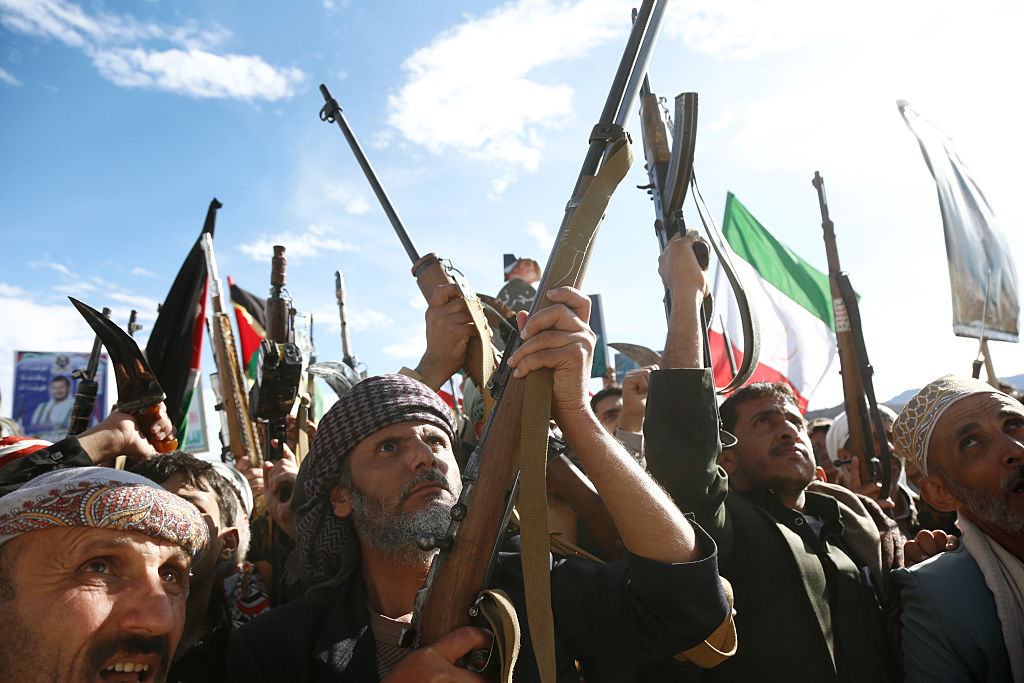
The world’s markets may be about to learn an abrupt and unfortunate lesson in assessing tail risks. The war between the US and Iran has just expanded to effectively include a new theatre and new combatants. In Yemen, the Houthis, an Iranian proxy group, announced a maritime blockade on Saudi Arabia. Although the Houthis are fairly independent of the Iranian regime compared with some other groups, it’s still hard to believe this wouldn’t have been coordinated with Tehran.
In and of itself, this is potentially quite a significant problem, especially for global oil supplies. Saudi Arabia has been sending between three to five million barrels per day worth of oil through the Red Sea to bypass Iran’s closure of the Strait of Hormuz. Most of that is passing through the Bab el-Mandeb, a strait separating Yemen and east Africa, and connecting the Red Sea to the Gulf of Aden and Indian Ocean. The announced maritime blockade directly affects this.
Like with the Strait of Hormuz, the problem for oil buyers is that an announced blockade or closure does not need total coverage to be effective. Once you hit several ships, that often creates sufficient deterrence to cause a much larger drop in traffic. The last time the Houthis interdicted shipping through the Bab el-Mandeb, it caused a 50% year-on-year drop in oil volume shipped through that strait in the first eight months of 2024. Kpler data now suggests that Saudi oil loadings have already dropped 36% in the past two weeks amid increased threats from the Houthis.
This is also potentially a bigger problem than that closure. Although oil was affected through 2024, the biggest problems were for container shipping. But container ships could, and would, go around the Cape of Good Hope instead. For oil shipments originating in the Red Sea itself, this is obviously a lot tougher. They would have to either go through the Suez Canal and then around Africa, or through Egypt’s oil pipeline transport system. This presents both capacity and practical limits.
Beyond this, what’s also worrying about the Houthi announcement is that it takes us one rung further up the escalation ladder. The Iranian regime had been keeping the Bab el-Mandeb as a backup option for quite some time, holding off on closing it and letting the Saudis send their crude out of the Red Sea. Now they are intentionally broadening the conflict. This does not only apply to Saudi Arabia. A US base in Jordan recently came under attack, for instance, showing the Iranian regime’s continued capacity to inflict damage on the US and its regional allies.
There had been a prevalent idea, before the war, that any hypothetical regional war involving Iran would come down to rounds of missile exchange: basically who exhausts their supplies first. The two problems with that are miscalculating Iranian supply, their ability to replace relatively cheap missiles and drones, and the amount of damage they can cause with limited resources. Attacks on oil production facilities, which would be another rung up the ladder, do not require huge waves of drones or missiles. But they can still cause serious disruption, as the earlier attack on Qatar’s Ras Laffan terminal demonstrated.
This is an edited version of an article that first appeared in the Eurointelligence newsletter.