









15 Nov 2026 - 6:00pm
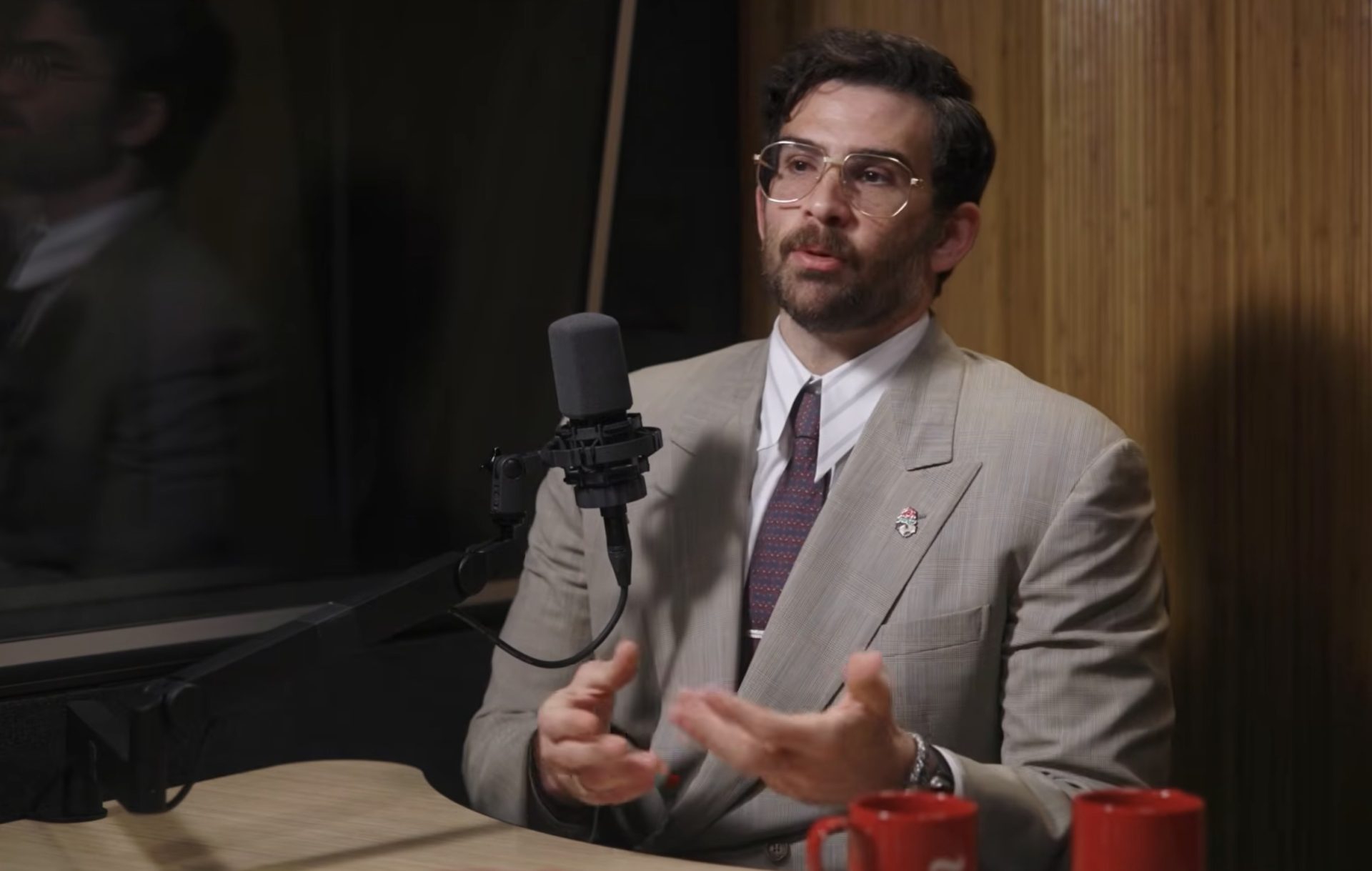
As crazy as it may sound, Hasan Piker told the New York Times columnist Ezra Klein on Friday that he is “a law-and-order Democrat”. The 35-year-old Twitch streamer, who broadcasts for an astonishing seven hours a day to over 3.1 million followers, spent most of an 86-minute interview defending American institutions. He echoed the kind of law-and-order approach which has become mainstream among Democrats at this point: he wanted the rest of the Epstein files released and Trump’s corrupt cronies put on trial. Piker also said he was not a police abolitionist and called himself a pragmatist who would settle for modest social democracy for now. Klein told him he was coming off like a speaker at a No Kings rally, and the Times appropriately titled the episode “Hasan Piker Has Joined the Party”.
Klein told listeners beforehand that Piker may strike them as an ordinary liberal, and that his arguments lined up with those of Adam Jentleson, a centrist strategist who appeared on Tuesday’s show. That comparison is enough to show that Piker is best understood as a chameleonic content producer. He reads whoever is in front of him and supplies what they came for, which is a canny influencer’s skill — not a serious ideologue’s. He has more in common with Joe Rogan than his fans or his enemies suppose. I argued last year that he wasn’t masculine-coded enough to be the Democrats’ Rogan, but he’s certainly every bit as savvy when it comes to the game of audience capture.
Consider how his appearance with Klein differs to how he has worked past crowds. In March 2025, Piker sat down with Theo Von, the comedian who had interviewed Trump during the 2024 campaign, and told him “I don’t care about party affiliation” while the two men agreed that both parties had failed. At the Democratic Socialists of America convention later that year, while speaking with Congresswoman Rashida Tlaib, he said that calling yourself a liberal Zionist was like calling yourself a “liberal Nazi“. Then, during a livestream on 30 October, he compared Abdul El-Sayed’s canvassers in a heavily Jewish Detroit suburb to campaigners for a black candidate in a Ku Klux Klan neighbourhood, and told viewers to clip it.
In his latest interview, however, Piker repeated that Zionism is fascist but conceded that the Nazi comparison was hyperbolic. He gave ground whenever Klein asked about actual people, agreed that not every liberal Zionist had excused the war in Gaza and said Brad Lander, a self-described liberal Zionist just elected to Congress from Brooklyn, belonged in his coalition. “Every time I push you, you don’t quite seem to think that”, Klein smartly remarked.
Piker knows the game. After all, Twitch pays him through subscriber revenue, and he reads his chat while he talks, so for seven hours a day he has an engaged audience telling him line by line what it wants.
But his methods are clearly having an impact. Klein remarked on the fancy suits Piker now wears, and how Piker told Rolling Stone there was “some value in respectability politics” now that clips of him reach people who have never opened Twitch. And on the day the Klein interview appeared, Joe Rogan said MAGA “didn’t just lose the podcast bros” but most of the country. They certainly are losing those bros, though, with 59% of men under 30 voting for Democrats in midterm House elections, up from 51% in 2024. The Democrats who theorised that Piker could be their route back to winning over young men may not have been mistaken.
Sheepdogging sometimes functions as a dirty word on the Left, with Bernie Sanders accused of sheepdogging for Hillary Clinton in 2016 and again for Biden (by me, among others) in 2020. But a man who can play the part of a party-less populist to Theo Von and a get-stuff-done Democrat for Klein has the flexibility to be the Democratic Party’s sheepdog-in-chief, and on Friday, Piker sounded more than willing to do the work.
Oliver Bateman is a historian and journalist based in Pittsburgh. He blogs, vlogs, and podcasts at his Substack, Oliver Bateman Does the Work
 MoustacheClubUS