









15 May 2026 - 1:00pm
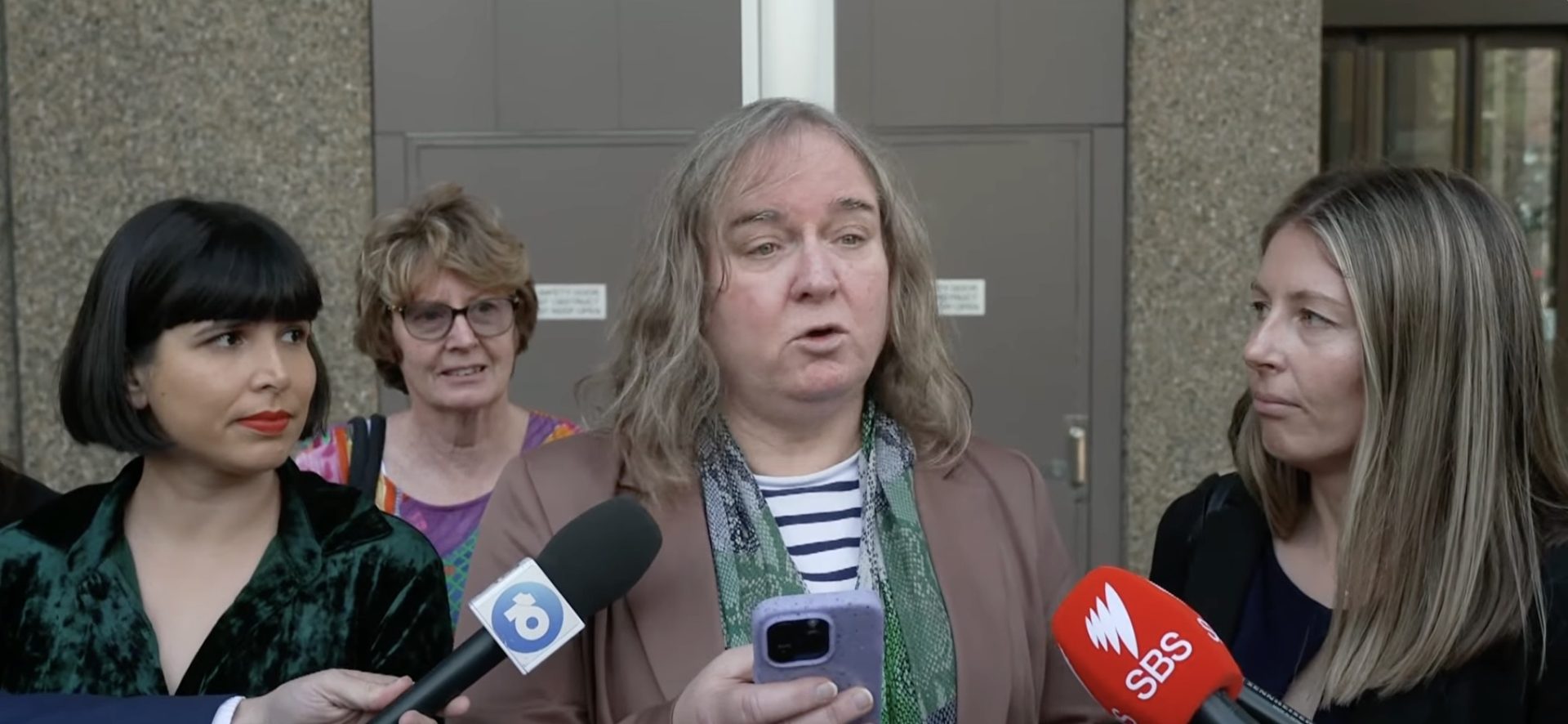
In 2020, following her own experiences of male violence and harassment, Sall Grover founded Giggle for Girls, a women-only social app. Two years later, she received a complaint from the Australian Human Rights Commission accusing her of “gender identity discrimination” for refusing to allow a male, Roxanne Tickle, to join.
Tickle, who identifies as a trans woman, attempted to gain access to Giggle. Following a legal challenge brought under Australia’s Sex Discrimination Act, the Federal Court ruled in 2024 that Giggle had unlawfully discriminated against Tickle on the basis of gender identity. This week, an appeal court upheld that decision, finding the discrimination had been direct rather than indirect, and doubled the damages awarded to Tickle to $20,000.
The judges stressed that the logic of including men within legislation designed to protect women was for Parliament to decide, holding responsibility for the absurdity of the ruling at arm’s length. As they put it: “The desirability or otherwise of that law is not a matter open to this court to consider.”
The legal mess stems from the Julia Gillard government’s 2013 amendments to Australia’s Sex Discrimination Act, which stripped explicit biological definitions of “man” and “woman” from the legislation and replaced them with protections based on gender identity. At the time, this no doubt seemed like a minor accommodation for what politicians were assured was a vulnerable minority. But in the years since, the threat to sex-based rights has become far more serious.
Grover has indicated that she intends to continue the fight in Australia’s High Court. Earlier this week, she wrote online: “I want every woman & girl to be able to say ‘NO’ to a man, no matter how he identifies, and not be punished for it.” She added: “At no point in the past 4.5 years have I been even remotely convinced that men can be women. Not once. In fact, I’m more sure than ever that they’re not.”
Tickle, meanwhile, is equally driven to be accepted as female. He joined a women’s hockey team in his 50s and uses female changing rooms. In court, he explained that since 2017 he had taken “a testosterone blocker and oestrogen and progesterone which induced second puberty”, undergone surgery, changed the sex marker on legal documents, and “started shopping from the female side of clothing stores”. He added that “up until this instance, everybody has treated me as a woman.”
It has seemingly not occurred to Tickle that the women with whom he shares changing rooms may not feel safe challenging him. It is difficult not to see this relentless insistence on access to female spaces as a definitive expression of male entitlement. After the ruling, he described himself as “seeking justice for the discrimination that has since stolen over four of my eight years since I began my gender affirmation”.
The implications extend far beyond one app and two determined people. Across the world, women are increasingly finding themselves in legal conflicts simply for attempting to organise, speak or associate on the basis of biological sex. The sheer absurdity of the Tickle v. Giggle case is likely to prove politically clarifying. Just as the “what is a woman?” debate eventually exploded into mainstream politics in Britain, Australian politicians will now increasingly be forced to confront questions which many have spent years trying desperately to avoid.
Indeed, as with the British ruling in favour of For Women Scotland last year, Tickle v. Giggle is likely to accelerate Australia’s emerging sex-realist political movement. Politicians including Pauline Hanson have already called for biological definitions of “man” and “woman” to be restored to the Sex Discrimination Act, arguing that gender identity protections have overridden women’s rights. What was once dismissed as a fringe culture-war obsession is rapidly becoming a central political question: should the law prioritise biological sex, or subjective identity?
Grover said nothing when she left the court but later posted online: “Men who claim to be women have more rights than actual women in Australia. It is women who are being discriminated against, not the men who claim to be us. But in a sense, nothing has changed: we will all wake up tomorrow & men will still not be women.” As another heretic said long before her: Eppur si muove.
