









25 April 2026 - 1:00pm
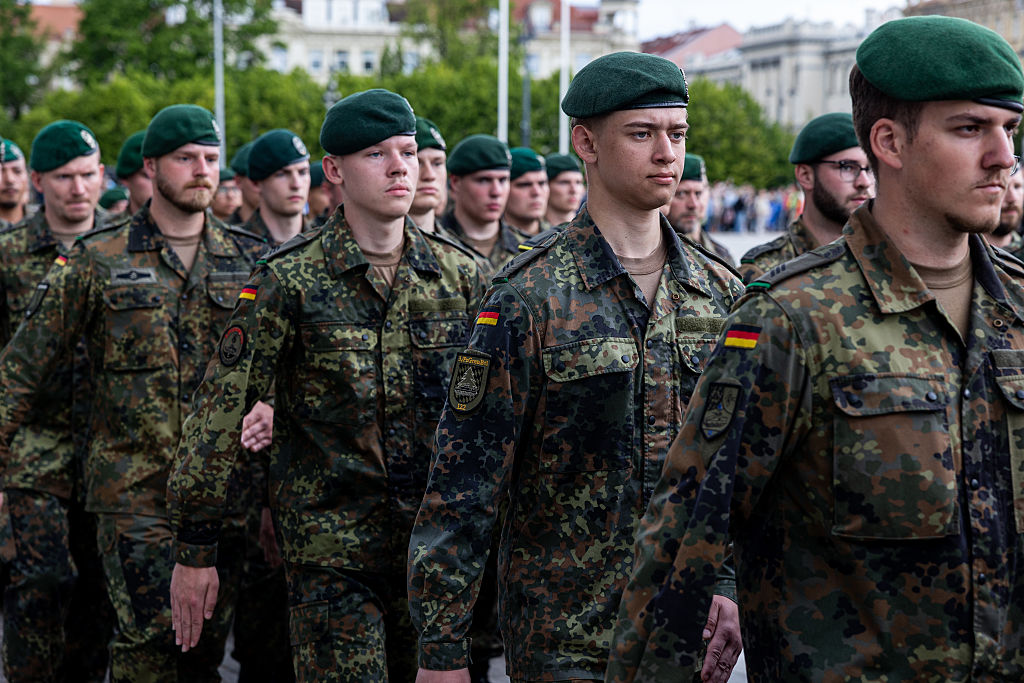
Germany has unveiled its first military strategy since the Second World War, and it’s certainly ambitious. By 2039, Berlin wants to command the strongest army in Europe, with a total of 460,000 combat-ready troops. Defence Minister Boris Pistorius argues that this is a historic turning point, and he’s right. But the national effort he’s asking for requires a change in the national attitude towards war, which may be much harder to achieve.
The fact that Germany now has a military strategy at all is the culmination of a drastic rethink triggered by the shock of Russia’s 2022 invasion of Ukraine. Three days after troops entered the Donbas, then-Chancellor Olaf Scholz told parliament that this marked a Zeitenwende or “a watershed in the history of our continent”. Four years later, Germany has a strategy document that identifies Russia as “the greatest and most immediate threat in the foreseeable future”.
Since the paper assumes that “Russia is laying the groundwork for a military attack on Nato member states,” it concludes that Germany’s capabilities must be large and effective enough to deter or even repel such an attack. This means having 460,000 soldiers, including 200,000 reserves, and improving or building capability in areas such as precision strikes, air defence and drone technology. Since the government has changed the law to allow all military spending above 1% of GDP to be debt-funded, the German state has enormous financial resources to enable this spending.
What Germany can’t legislate or borrow money for is the enormous cultural change required to get young people on board. Despite a massive recruitment drive in recent years, the number of active soldiers has stagnated at around 185,000 men and women. Last year, recruitment was reportedly up by 10%, but that won’t be enough.
To combat this, Pistorius hopes to accelerate recruitment with a mixture of incentives and force. New legislation came into effect this year which reintroduced obligatory medical screening of all 18-year-old men to assess their suitability for military service. At the moment, this legislation won’t reintroduce conscription, which was suspended in 2011. But the German parliament will debate this option should the current push not produce the desired effect.
Forcing young men into uniforms may backfire, though, and there have already been widespread school protests against the reforms. In a society where postwar culture was built on rejecting militarism and nationalism, which were seen as the underlying causes of the two world wars, there is a fervent desire not to embrace the rhetoric of rebuilding the army.
More broadly, postwar Germany has been wary of notions of patriotism. Even the country’s military ethos is built on the concept of soldiers being independent-minded “citizens in uniform” rather than a collective unit that subordinates individual interests to a national purpose. Russia’s invasion of Ukraine may have changed German politics overnight, but it doesn’t have the power to change society in the same way.
What’s lacking from Germany’s military strategy is a compelling reason for the public to match the enthusiasm of the government to bolster the army. It won’t be enough to ask young men and women to sacrifice a bit of themselves for abstract concepts like defending Nato territory.
Germany remains an economically powerful country with the financial and industrial capacity to pull off a rapid material expansion of its military capabilities. But remilitarisation will require some thought about the huge cultural shift that must accompany spending to become fighting fit. As ambitious as Germany’s new military strategy may be, it doesn’t give a compelling answer to the biggest question of all: what are young Germans fighting for?
Katja Hoyer is a German-British historian and writer. Her latest book Weimar: Life on the Edge of Catastrophe will be released in May 2026.
 hoyer_kat