









24 September 2026 - 1:00pm
While the AfD is the largest party across east Germany, a regional exception can be found in Berlin. In last week’s state election, the far-Left Die Linke more than doubled its previous vote share to 25.7%, making it the largest party, with the AfD in third place. In east German politics, it’s clear that the CDU’s support base is being eroded by the AfD. But Berlin presents an exact mirror image, with the SPD being sidelined by Die Linke.
Unlike the CDU with its Right-wing rival, the SPD does not have a formal firewall against Die Linke. That may be changing now, though. The Berlin branch of Die Linke is the most radical in the country. Its main proposals are rent control in the city and the expropriation of private housing owned by property companies. After the Berlin result, the share price of Vonovia, a large Berlin property company, declined against a more hostile political backdrop.
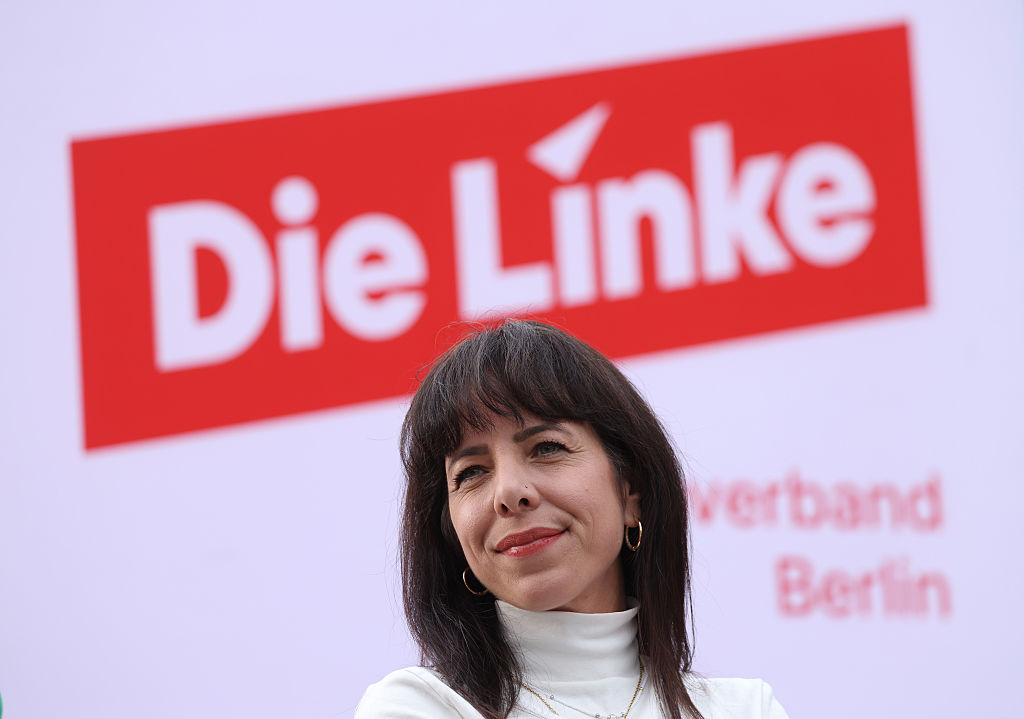
Die Linke’s success is no fluke. In Berlin, the party ran a highly focused campaign, led by Elif Eralp, who has become one of the most recognised faces of German politics. Voter analysis showed that around half of Berlin’s under-25s — and a similar proportion of the city’s 400,000 Muslim population — voted for Die Linke. The party campaigned in Arabic in some districts of Berlin. Earlier this year, party officials held a meeting with US Representative Alexandria Ocasio-Cortez and closely studied the successful campaign of New York City Mayor Zohran Mamdani.
Expropriation is a red line for the SPD. After the Second World War, the party supported nationalisation. Then, at the Godesberg party congress in 1959, it decided to accept ownership rights in full. The SPD’s corporatist approach prevailed over competing visions of Germany’s economic order. But in the latter part of the 20th century, corporatism and regulation began to hit their hit limits due to deindustrialisation and, in Berlin specifically, chronic housing shortages.
Grandees such as the former SPD leader and foreign minister Sigmar Gabriel have come out against the party joining a coalition with Die Linke. There is another coalition option: one led by the CDU, with the SPD and the Greens as junior partners. The Greens might not accept that agreement, and in any case it would be a coalition of the losers which would likely radicalise the electorate even more.
The story of German politics is not one of the far-Right challenging the centre, but one of the centre being pulled apart by both the Left and the Right. Elmar Brok, a CDU MEP until 2019, has recommended that the party should move further to the Left as social policies become increasingly important. He speaks for the still-large Angela Merkel wing of the party. There can be no doubt that this is what the CDU will do, especially if Hendrik Wüst, the North Rhine-Westphalia state premier, takes over from Friedrich Merz as chancellor. But it is hard to see how this can work even as a tactical ploy, because it opens up even more room on the Right for the AfD. It seems as though neither the SPD nor the CDU have a plan for fending off the growing threats from their respective Left and Right.
This is an edited version of an article that first appeared in the Eurointelligence newsletter.
