









7 August 2026 - 4:00pm
In an op-ed published by Die Zeit on Wednesday, Lars Klingbeil, the German Vice Chancellor and co-chairman of the Social Democrats (SPD), reignited the long-running debate on banning the Right-wing nationalist Alternative für Deutschland (AfD). A legal opinion issued by a group of scholars for the Society for Civil Rights (GFF) makes examining whether to ban the party “democratic duty”, Klingbeil said, as “independent academics have demonstrated that the AfD is systematically working to destroy our democracy and rule of law.”
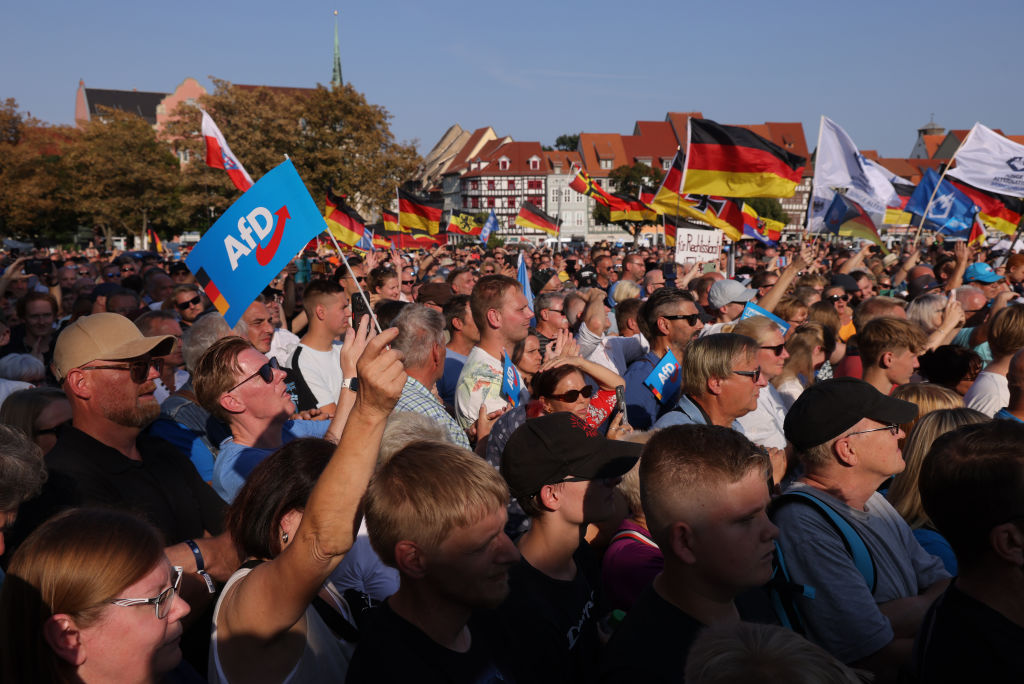
Mainstream parties are panicking over the AfD’s projected victory in state elections in Saxony-Anhalt next month, with Klingbeil warning that “if this far-Right ideology were to gain state power, no one would be safe from it anymore.” He added: “It must be seriously examined whether the conditions for a ban procedure before the Federal Constitutional Court are met.” Die Linke’s deputy parliamentary leader urged the SPD to “initiate a federal-state working group” to specify steps for taking a ban forward.
This is no mere political posturing; the German constitution has clear provisions for banning parties and has established a legal framework for doing so. Support for banning the AfD has been expressed at every rung of the German political hierarchy, all the way up to the President — himself a former SPD party chief — who last year said that excluding “enemies of the constitution” is “not inherently undemocratic. On the contrary: It is the expression of defensive democracy.”
The GFF, though, frames its lengthy legal opinion by lamenting that “the debate on the AfD’s unconstitutionality has come to a standstill.” The group is, it bullishly asserts, “changing that now” by coupling its legal opinion with an email petition to MPs calling for ban proceedings to be initiated. At the time of writing, over 112,000 emails had been sent.
An issue running throughout the report, acknowledged by the legal scholars themselves, is the distinction that must be drawn between “ideological statements” by AfD members and actual policy proposals. Instances of individual vulgarity and crudeness are used as the basis for pure speculation about the party’s evil intentions, with no more concrete evidence provided for the dastardly plans which the AfD is accused of harbouring: from its alleged antisemitic intent, to suggestions that it plans to bring the courts under political control and undermine parliamentary democracy.
What’s more, many of the alleged plans for which there does appear stronger evidence — a large-scale deportation programme, banning headscarves in public places, restricting legal gender identity options to two, and designating Antifa as a terrorist organisation — are increasingly mainstream in a European context, given the ascendancy of a more nationalist and ethnically-charged brand of conservative politics across the board.
Notably, the report bases its conclusions on a previous attempt to ban the neo-Nazi National Democratic Party of Germany in 2017; the court then agreed with the legal arguments for a ban, but demurred on the grounds that the party was too small and therefore did not threaten the constitutional order. Now, calls from party leaders such as Klingbeil for a ban on the AfD show the bind in which establishment politicians, to their horror, find themselves: the AfD has become big enough for the court to consider banning, but the scale of popular support for the party — and more importantly, its message — would make a ban a political atomic bomb.
Indeed, the GFF’s legal opinion and petition, together with Klingbeil’s diatribe, have the air of a final forlorn trumpeter desperately calling for the cavalry of the courts to ride in and save Germany’s beleaguered political establishment. Most politicians will see that the risks of trying to ban the AfD now far outweigh the perceived benefits — especially given the potential for the court to rule against a ban anyway. In this context, party leaders will rue the fact that they did not act to ban the AfD three or four years ago, when it had half the support it does today, and when doing so wouldn’t have threatened an almighty backlash from a sympathetic MAGA-led White House.
They didn’t act when they could, partly because they complacently believed the AfD would only ever enjoy fringe appeal. Now, with the party hoping to win an absolute majority and take control of state government for the first time in Saxony-Anhalt, they face a genuine opposition movement that may have become too big — however much they wish it — to outlaw.