









11 July 2026 - 5:00pm
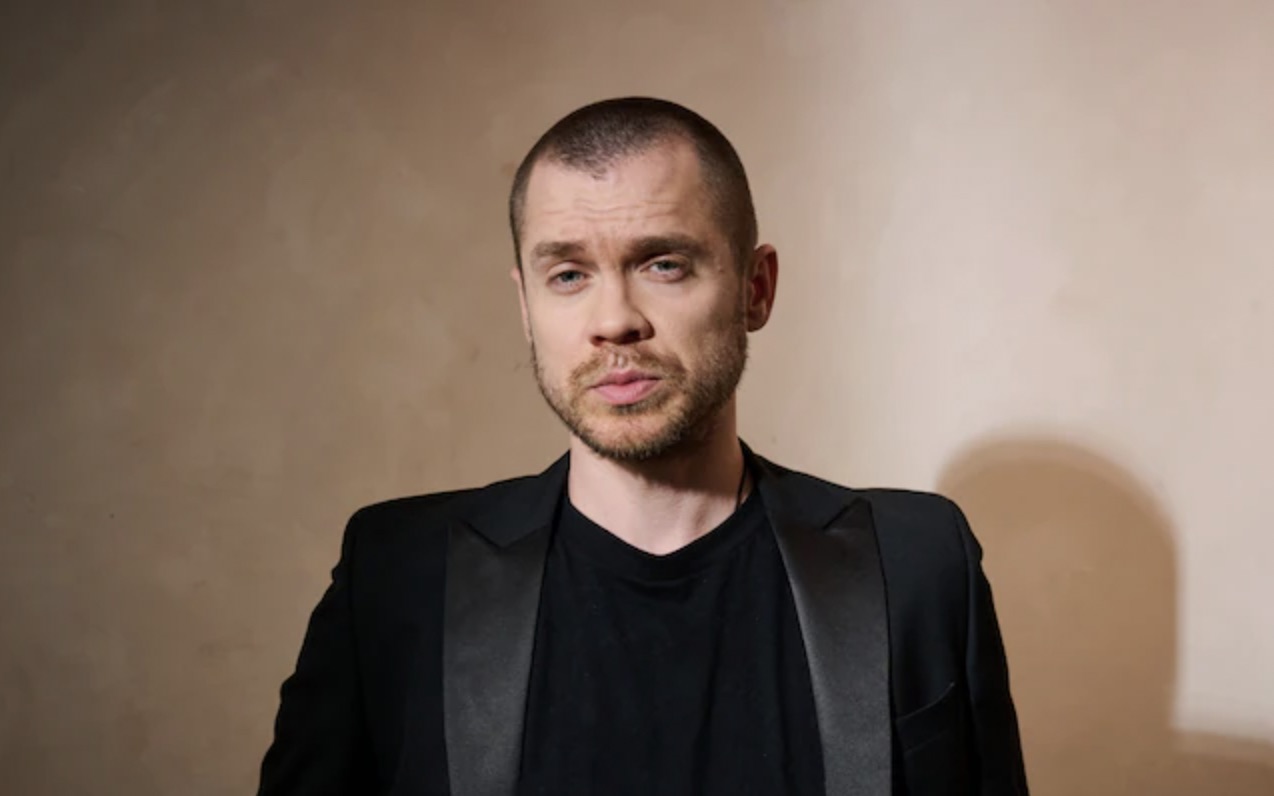
Gary Stevenson is “sick” and “tired” of being Gary Stevenson. “I come out every day,” the pop economist recently huffed to Piers Morgan. “I bet on the collapse of our society, I’m right every year, I don’t want it to collapse, and every day it’s the fucking Gary Stevenson Show. I’m bored with it.” You and us both, Gary.
The Passion of Gary Stevenson is probably best understood in the following terms: monomania is a sliding tax on the soul that, left unchecked, eventually reaches 100% — at which point the obsessive usually ploughs on pro bono. It must be immensely frustrating to see the one lever that could alleviate the bulk of the world’s problems left cobwebbed. For Stevenson, that lever is a wealth tax: a 2% tax on all wealth above £10 million (leaving his own self-declared £5 million fortune just out of reach).
A wealth tax might seem like an attractive idea in theory, but it is deeply flawed. If enacted, it would make Britain poorer in short order, knocking the country off its current perch of a GDP per capita comparable to Alabama. Several years ago, some of Germany’s leading economists authored a study titled “The Economic Effects of a Wealth Tax in Germany”, which demonstrated that “a wealth tax can have a notable adverse impact on economic activity, reducing economic growth, investment and employment”. Consequently, the authors highlight that “the burden of a wealth tax is practically borne by every citizen, even if the wealth tax is designed to target only the wealthiest individuals in society.”
Stevenson has occasionally acknowledged this trade-off, but seems to think it a worthwhile one to flatten inequality nonetheless. This would be a more compelling position if it weren’t accompanied by puddle-deep analysis, often veering into tautology. “If you don’t do anything about rapidly growing inequality,” he told Morgan, “you will see rapidly growing inequality.” Circular arguments of this kind are his regular fare; it is little wonder he is tired of making them.
We are often entreated to take Stevenson’s credentials as evidence for the validity of his arguments, as if a man with his CV — a stint as a city trader and a degree from the London School of Economics — would not lead anyone down the garden path. “Listen!” he told Morgan, who was pouting like a father indulging his Che Guevara t-shirt-clad son. “I am the best inequality economist in the country and I’m telling you, very clearly, if you do not fix this, poverty will explode.”
As Britain’s financial picture worsens, Stevenson’s brand of economic populism will likely attract a larger and more credulous audience. This platform has already borne fruit for Zohran Mamdani, New York’s firebrand socialist mayor who has demonstrated that political outsiders can break through against the odds by promising redistributive policies. There are signs that British politicians adopting Stevenson’s policy proposals would be pushing at an open door: 78% of the British public supports a 1% tax on net assets worth more than £10 million, according to YouGov. When advocates like Stevenson fudge the downsides and stress the dubious benefits of such policies, it is not hard to see why voters feel this way.
When Stevenson brought his idea of a wealth tax to the tax expert Dan Neidle, as part of his Channel 4 documentary How to Get Filthy Rich with Gary Stevenson, the ensuing scene resembled a Soviet worker being forced into the factory of his own delusions at the point of a bayonet. “Absolute populist claptrap and the people pushing it should be ashamed of themselves,” Neidle said. Wealthy individuals and foreign investors, he continued, would simply take their money elsewhere rather than face a 2% annual attrition rate.
“I think that’s a very good point,” Stevenson responded, acknowledging that a wealth tax might disincentivise investment. “But what we can do is improve the wealth ownership of the general public.” If he has considered the difficulty of accomplishing this with a smaller absolute economic pie, he did little in his own documentary to demonstrate it.
Instead, he shook his head as if looking around the room for his weapon of choice: a well-touted London School of Economics degree. “I’m an economist, alright,” he said, “and I know what’s going to happen.” Neidle later wrote on social media that the number of times Stevenson said he was “one of the world’s leading experts on inequality” made him “uncomfortable and suspicious”, as “this is not what experts tend to do.” Stevenson’s plea to credentialism prompted Neidle to go for the jugular: “If you were a proper economist you would have thought about foreign investment.” Stevenson responded: “You think I’m not a proper economist?”
If his documentary — described by the Guardian as a show in which the host is “totally out-argued by all his interviewees” — accomplished anything, it was to remove all doubt about the answer to that question.
Michael Murphy is a journalist and documentary filmmaker covering immigration and international affairs.
 michaelmurph_y