









11 April 2026 - 8:00am
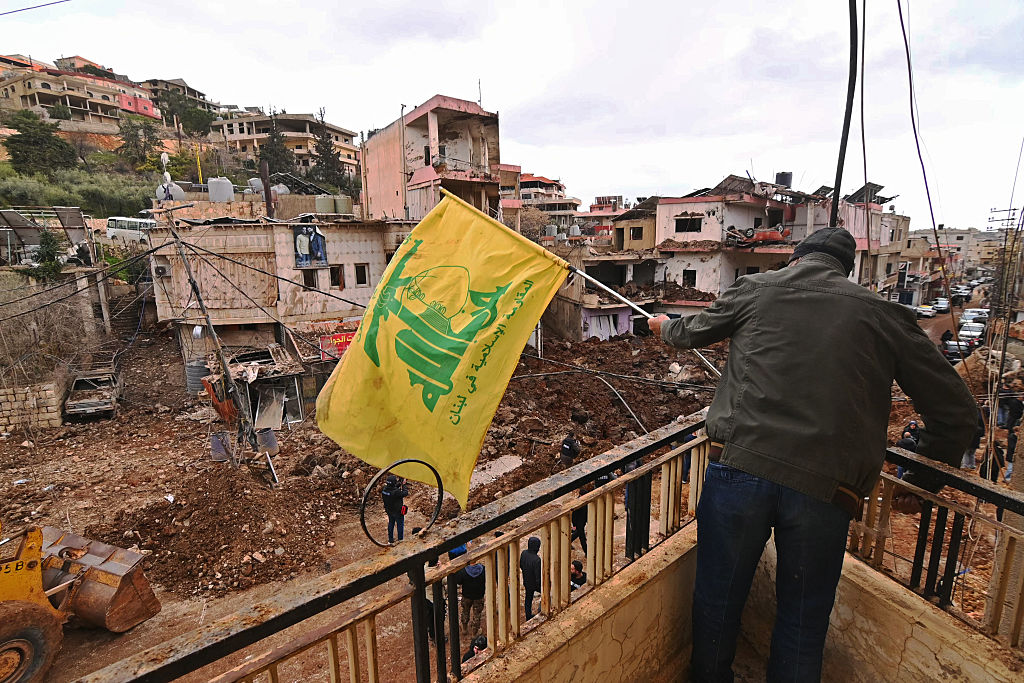
When fighting exploded across the Middle East at the end of February, Lebanon was dragged into the maelstrom by forces beyond its own control. Now that the guns have — temporarily, at least — fallen silent over Iran and the Persian Gulf, the Lebanese continue to be trapped by the war, even as the fighting threatens to rip their society apart.
Confusion reigned following the announcement of a ceasefire between Iran and the US this week, especially because none of the parties involved seemed to agree on what it actually entailed. This became abundantly clear when Israel unleashed “Operation Eternal Darkness” on Wednesday, striking over 100 targets across Lebanon including in previously unscathed parts of central Beirut, and killing over 250 people in the process. Whether the ceasefire in Iran holds depends enormously on what happens in Lebanon.
Apparently under pressure from Donald Trump, Benjamin Netanyahu said on Thursday that he had asked his government to begin direct negotiations with Lebanon to disarm Hezbollah. Yet the IDF has continued issuing evacuation orders for Beirut ahead of anticipated strikes. Nor has Israel made any indication that it would roll back its aims to establish yet another occupation of southern Lebanon, all while pressuring local Christian and Druze communities to stop harbouring Lebanese Shi’a Muslims displaced by the IDF’s campaign.
Whether or not there are negotiations, Israel’s strikes, together with growing resentment towards Hezbollah among non-Shi’a Lebanese citizens, point toward a looming reorientation of Lebanon’s sectarian dynamics in the long term. Though this may fall short of a complete civil war, it could still tear at the country’s fragile social fabric.
Lebanon’s Shi’a have increasingly been ostracised by much of the country’s Christian, Sunni Muslim, and Druze populations because they make up Hezbollah’s traditional support base. Wherever they go, according to this logic, militia members — and therefore Israeli bombs — follow. This tension is unlikely to lead to the sort of large-scale, multi-party conflict of the kind that dominated Lebanon in the Eighties, given the security of the US-backed government in Beirut, but a more likely outcome is the spread of localised, low-level violence.
In this instance, religious communities — primarily Christians and Druze — will seek to put up walls against dangerous interlopers in their midst, strengthening their sectarian institutions in the process. Over the long term, the result will be a dramatically more segregated country where non-Shi’a Lebanese will do whatever they can to remove themselves from the war between Israel and Hezbollah, weakening intercommunal relations even as the central government paradoxically enjoys more authority over the country’s national institutions than at any point in the last two decades.
Yet as Lebanon’s cohesion decreases and its desire to extricate itself from the firing line grows, Lebanese Shi’a will only be further pushed into Hezbollah’s embrace. This may result in the militant group adopting an even more overtly sectarian stance, focusing its attention only on the fight with Israel in the south as the IDF entrenches itself in the area. And while the goal of the government in Beirut has previously been to disarm Hezbollah across the entire country, a new policy of sequestering the group and its weapons within the militia’s own territories is already starting to take shape. This week, Prime Minister Nawaf Salam directed the Lebanese army to establish an arms monopoly, not across the contentious south but only within the limits of Beirut itself.
The US is evidently trying to rein in Netanyahu’s use of force in Lebanon, understanding that a continued shock-and-awe campaign will undermine the fragile ceasefire with Iran. But while Trump may have succeeded in getting Israel to the negotiation table with Lebanon, Netanyahu’s continued invasion promises to reopen backroom tensions with the US down the line. Still, the Israeli PM understands that despite occasional hiccups, Trump’s America acts largely as his enforcer in Beirut, urging Lebanon’s leaders to keep their focus on Hezbollah even if civil strife unravels.
Middle Eastern powers will surely attempt to use Lebanon’s plight for their own gain, inviting further regional destabilisation in the process. Whatever happens, it’s clear that this is no longer merely a conflict between Israel and Hezbollah wrapped up in the broader Iran war. Rather, it is the culmination of decades of history following the Lebanese Civil War. And, like its predecessor, it will serve as a prelude to the next phase of conflict in the Middle East.
 Michal_Kranz