









28 April 2026 - 10:00am
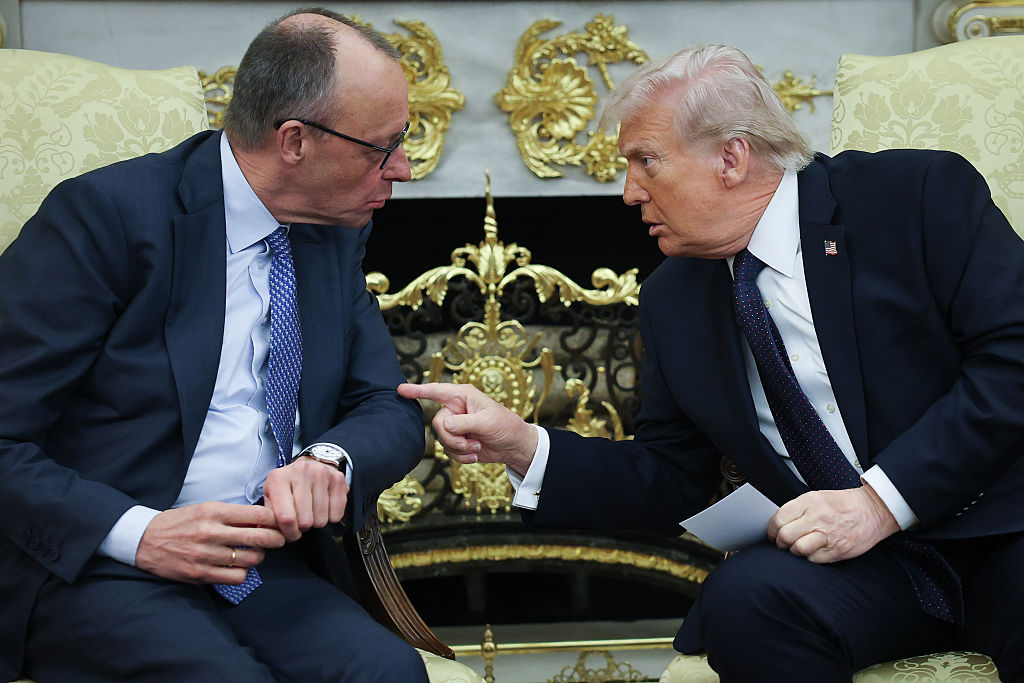
On 3 March, four days into the war with Iran, German Chancellor Friedrich Merz travelled to Washington for a bilateral meeting with Donald Trump, where he sang the US President’s praises. Seated next to Trump in the Oval Office, Merz commented that Germany was “supporting the United States and Israel to get rid of this terrible terrorist regime”, one that had previously been implicated in attacks against Iranian activists residing on German soil.
Now, that very same Chancellor is making a 180-degree turn. In a span of weeks, Merz has gone from one of Europe’s principal Trump boosters to the German equivalent of Spain’s rebellious Prime Minister, Pedro Sánchez. The United States, Merz said yesterday, is presently being “humiliated” by the Iranian regime. The Iranians “are obviously stronger than previously thought” and the Americans don’t have a convincing strategy for negotiations, in his view.
Merz isn’t wrong. The Trump administration’s entire Iran strategy is based on coercing Tehran to reopen the Strait of Hormuz, surrender its stockpile of highly enriched uranium, and terminate all enrichment activities. But US actions to date have merely consolidated Iran’s leadership and compelled it to resist even more strongly.
The latest proposal from the Iranian regime, which offers the chance to reopen the Strait of Hormuz in return for an end to the US blockade and a full ceasefire, will be rejected or heavily modified by the White House. This is a problem for Europe because the longer the conflict goes on, the more painful the continent’s bottom line will be. As Lars Klingbeil, Germany’s Finance Minister, noted earlier this month, the war has left his country’s economy fragile, with the IMF downgrading German growth forecasts for both this year and next.
Merz’s latest remarks are a reaffirmation of Europe’s opinion on the war in general: that it is a stupid, reckless and wholly unnecessary adventure. But the broader question is whether Europe’s growing resistance to the war can force Trump to reassess his policy. This is doubtful. In the short term, Merz may have done the precise opposite by reconfirming in Trump’s mind just how wimpish and ungrateful Europe’s politicians are. The US President will only end the war and cut a deal with Iran based on how Americans are impacted in their wallets, not on anything the Europeans say or do.
Over the long term, a future US administration after Trump could alleviate some of the current tension over personalities and policy. Some of the issues now hampering the transatlantic relationship, particularly the Iran war, will cease to be problems with the passage of time. Yet even with a more sympathetic president in the White House, the days when the West had a common foreign policy — or at least a common theory for how to tackle disputes — are gone. Individual nations will have individual policies, some of which will align while others will clash. We’ve already witnessed this in action, as even Joe Biden, an avowed advocate of Nato and a committed transatlanticist, often disagreed with Europe’s more aggressive calls for certain US weapons systems for Ukraine and early calls to establish a no-fly zone there.
What the Iran war has proved is that European and American foreign policy alignments are no longer working in tandem. However it ends, the transatlantic rift will widen further as both sides double down on their conviction that they’re on the right side of history.
Daniel R. DePetris is a fellow at Defense Priorities and a syndicated foreign affairs columnist for the Chicago Tribune.
 DanDePetris