









25 May 2026 - 8:00am
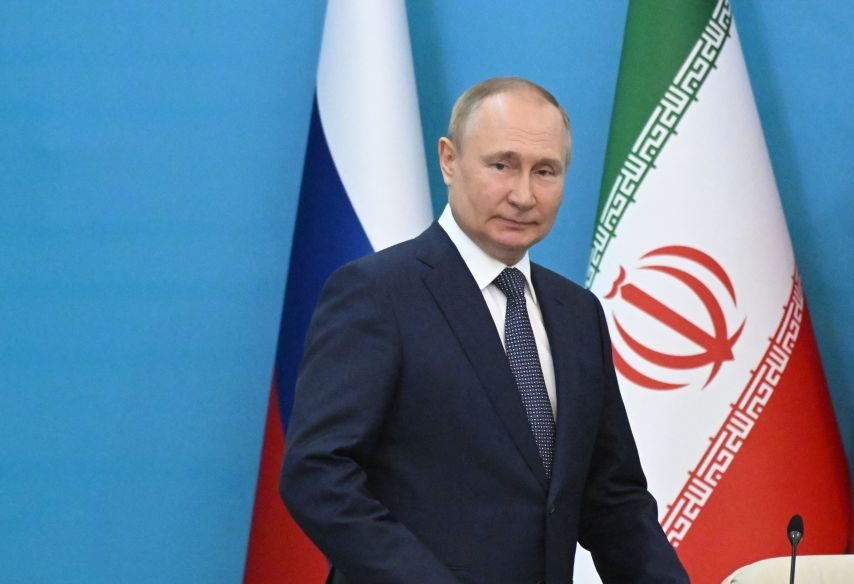
According to recent reports, the latest casualty of the Iran war is Tehran’s relationship with Moscow. During recent attacks from the US and Israel, Russia has provided limited military support despite condemnatory rhetoric toward the West, and each is competing in the incredibly competitive oil market. On Saturday, Donald Trump announced that an American truce with Iran was close to agreement, even if the US President has since played down this prospect. If the agreement does go through, the fallout could drive Moscow and Tehran toward different spheres of power, regardless of what is included in any peace deal.
If their “alliance” is indeed dead, that is perhaps because it was never truly alive. Less a “marriage of convenience” than a “friends with benefits” arrangement, the two have in recent years collaborated in their shared pursuit of an anti-Western international order. Each has helped the other dodge sanctions and together propped up former Syrian leader Bashar al-Assad. Beyond those shared interests, the relationship has been highly transactional, with the sides exchanging military intelligence and supplies to fight their own wars as well as suppressing domestic dissent.
But beneath the surface of this alliance, there has been a clear divergence. The two powers have never agreed on a military alliance nor any obligation to come to one another’s defence. Iran is in no hurry to feed its soldiers into Moscow’s meat grinder, while the Kremlin’s regional posture has been shaped by a determination to avoid confrontation with the US or Israel. As such, Tehran could scarcely have expected Moscow to provide overt military assistance in the most recent conflict, especially given its largely rhetorical response during the Twelve-Day War. In its aftermath, Russian President Vladimir Putin stressed the two million people with heritage from the Soviet Union in Israel and Moscow’s longstanding friendly relations with the Arab world.
The Iran war works in Putin’s favour, however. Energy prices are up, providing more funds for the war in Ukraine, and he has had the satisfaction of watching the US and UK dilute sanctions on Moscow’s oil. This has come at considerable cost to their relations with Ukraine. Note the Kremlin’s glee at how the Middle East has distracted America from negotiations on Ukraine, as that peace process grinds to a halt.
Putin would be disinclined to jeopardise relations with the White House at such a sensitive moment by openly throwing his weight behind a US adversary. While Russia has reportedly been providing intelligence to assist Tehran in targeting US forces, American President Donald Trump dismissed it as only “a bit” of help with limited operational impact. Anything that could truly alter the course of the conflict would be off-limits from Russia’s perspective.
Moscow has long pursued a balanced foreign policy in the region, ditching Iran when it has suited. Russia suspended delivery of the S-300 missile system to Tehran under Israeli and US pressure, and allowed Tel Aviv’s strikes against Iranian targets in Syria. The Gulf’s economic importance to Moscow outweighs that of Iran, and Putin has accordingly maintained contact with its leaders throughout this conflict, limiting his appetite for excessive cosiness with Iran.
That may not be the end of Russia’s relations with Tehran. Ukraine, not Iran, is Russia’s core priority. The Kremlin may therefore be willing to trade concessions on Iran for US equivalents on Ukraine, cutting off intelligence to Tehran in return for America doing the same to Kyiv. Moscow has form for using Iran as leverage, having attempted to torpedo nuclear talks in 2022 to manipulate oil prices and undermine Western sanctions over the Ukraine war.
Any public betrayal would further damage Moscow’s reputation as a reliable patron of client states. It is an image already under significant strain following Putin’s muted reaction to the fall of Assad and Venezuela’s Nicolás Maduro. While it will be a source of anxiety to Putin that he cannot project power in the Middle East as he would wish, the relationship with Iran has long been defined by suspicion and self-interest.
But who else could Iran turn to for a more reliable partner? The US is an obvious non-starter, as is Europe. North Korea is small and bogged down in Ukraine. India has supported the US and Israel in this war. China has rebuffed Iran’s hopes for deeper strategic alignment and is as disinterested as Russia in offering enough military support to anger America and Gulf nations. So back to Moscow the new Ayatollah must go, perhaps needier and seeking more weapons and intelligence. Fearful of alienating the US and Gulf, Russia will still want to keep things casual so that it can see other people. An on-off relationship, they get back together when they see no one else is interested.
