









21 October 2026 - 4:00pm
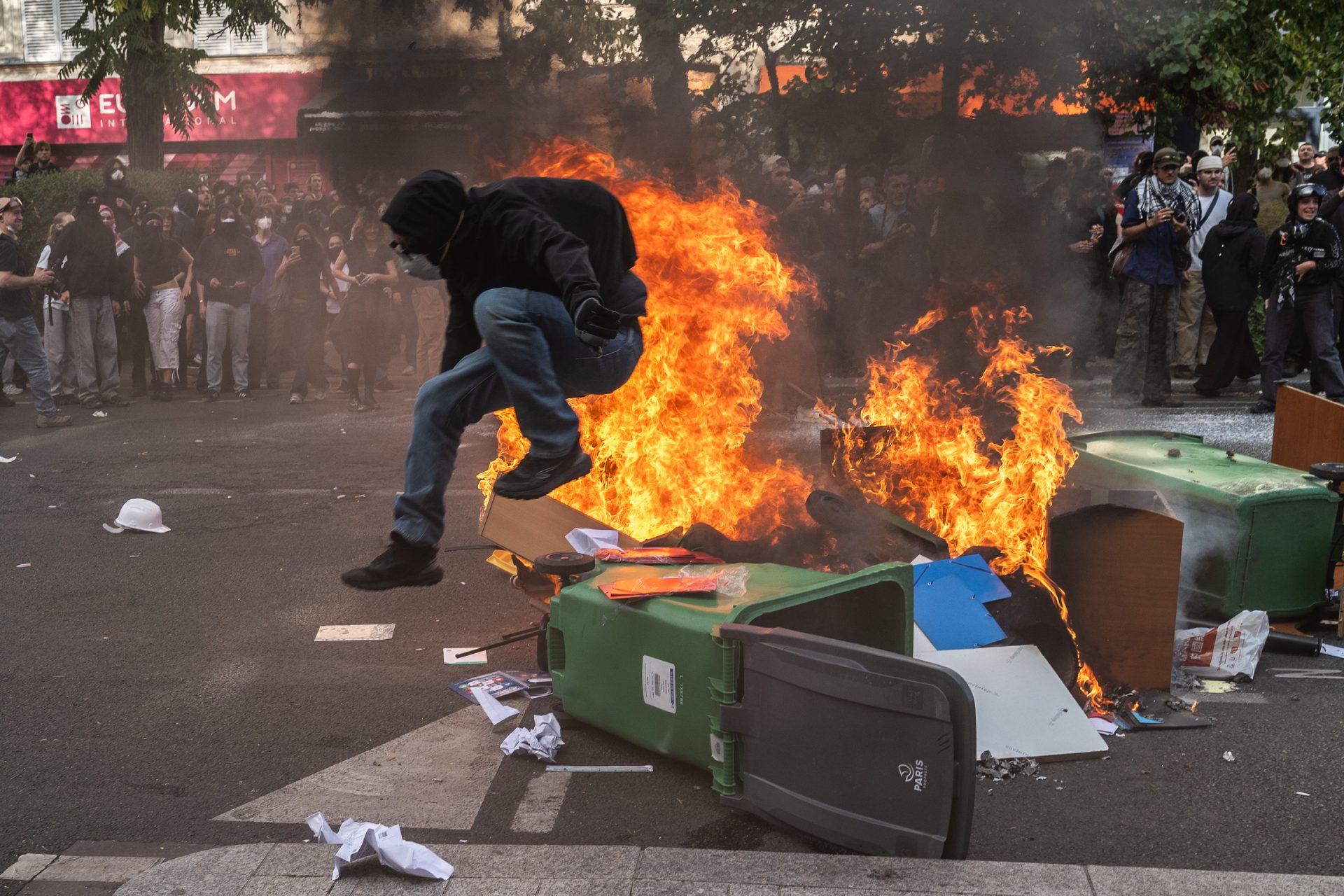
Do riots matter? The clichéd view is that the French are always revolting and that current events will be met by the voters with a Gallic shrug. The opposing view is summed up by Andrew Neil who reckons that the “appalling scenes of carnage and anarchy” will make the victory of Marine Le Pen in next year’s presidential election “all but inevitable”.
The first opinion poll conducted since the height of the destruction on Saturday has now been released. According to Ifop, Le Pen’s support has, since last week, increased by either one or two points (depending on the first round voting scenario). Furthermore, the Left-winger Jean-Luc Mélenchon is still her nearest rival, despite his association with the protests. This too is good news for Le Pen because of all the likely challengers, she’d beat Mélenchon the most easily in the second round (though she’s got a growing lead over all of them).
While we await further polling, it’s worth looking at recent French and British history to see how previous riots have impacted electoral politics. To date, the worst French riots of the 21st century were in 2005 when the banlieues of Paris burned for three weeks straight. At the time, the minister of the interior was Nicolas Sarkozy. His zero-tolerance response to the rioters and his inflammatory rhetoric polarised public opinion, but also propelled him all the way to the Élysée Palace in 2007.
Ultimately, though, his presidency was a failure — and so, evidently, was the long-term policy response of successive French governments. Despite lavish state spending on shiny new schools and other projects to curb social grievances, underlying tensions fuelled by continued mass immigration have not been resolved.
In the UK, we saw a remarkably similar pattern in response to the riots of August 2011 when disturbances in London spread to cities and towns across England. At first, the authorities swiftly got a grip. There was a shock-and-awe demonstration of the power of CCTV evidence, in which the police and the courts worked overtime to send a succession of looters and vandals off to prison sentences they clearly weren’t expecting. An outbreak of violence that could have derailed the coalition government instead allowed ministers to show that they were in control. David Cameron’s Conservatives went on to triumph in the 2015 general election. Yet, as in France, the policy response to the underlying social problems was bungled — and promises to get a grip on immigration went unfulfilled.
And so in both Britain and France, governments have been tough on rioting, but not the causes of rioting — which means that riots keep happening.
The difference now is that the politicians are getting the initial response wrong too. Just look at Keir Starmer’s reaction to the Southport riots of 2024. The Labour government tried follow to the 2011 playbook with a crackdown on the streets (and on social media), but this time it backfired politically amid accusations of two-tier policing. Without an effective programme to restore trust in the system, Starmer’s poll ratings collapsed, never to recover.
In France, Emmanuel Macron is in an even worse position to respond to the current crisis. He’s a lame duck president, his approval ratings are on the floor — and the government of his Prime Minister, Sébastien Lecornu, lacks a parliamentary majority. As well as not getting a grip on the emergency, he’s offering no new long-term solutions.
And that, of course, leaves the floor wide open to politicians like Le Pen, who promise an immediate hardline response and permanent change to the system. Andy Burnham had better hope that the violence doesn’t cross the Channel.
Peter Franklin is Associate Editor of UnHerd. He was previously a policy advisor and speechwriter on environmental and social issues.
 peterfranklin_