









8 July 2026 - 7:00am
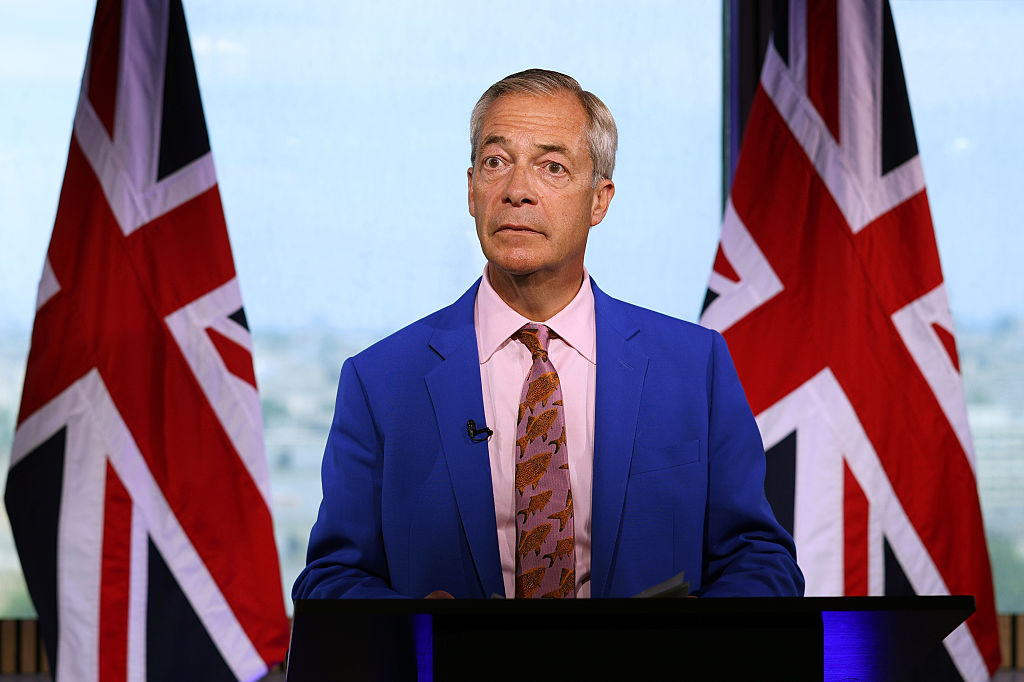
Nigel Farage’s address to the nation yesterday should have been a clarifying moment. The speculation that he’d be taking a break from frontline politics was evidently wrong. In place of exhaustion, what we got from him was anger — plus a determination to take the fight to his enemies. Specifically, that meant triggering a by-election in his Clacton constituency. “This will be a people versus the establishment by-election”, he said, “a chance to stick two fingers up to the entire establishment.” Yet his campaign of defiance is already unravelling.
It’s not often that a sitting MP triggers and fights a by-election in their own seat. Naturally, they only do so when they’re confident of winning. However, things can still go awry. The last time it happened was in 2014, when Douglas Carswell and Mark Reckless — both Tory defectors to Ukip — resigned their seats. They won them back in the ensuing by-elections, but Reckless then went on to lose Rochester and Strood in the 2015 general election. Carswell retained his seat (Clacton as it happens), but then fell out with his party leader (Nigel Farage as it happens) and quit the Commons in 2017.
An even more relevant example is the 2008 Haltemprice and Howden by-election, which was triggered by the Conservative MP David Davis as a protest against the Labour government’s erosion of civil liberties. Both Labour and the Liberal Democrats refused to put up candidates, so Davis instead faced an assortment of 25 independents and fringe party opponents. He was duly returned to Parliament with over 70% of the vote, but it was a hollow victory.
Now Farage could receive the same treatment. Restore Britain was the first party to boycott his by-election, which Rupert Lowe has condemned as “making a mockery of our entire democratic process”. Rather, Lowe is promising to contest a second Clacton by-election later this year, which he predicts will have to be held “when the investigations into Farage’s finances conclude as we all suspect they will”.
More seriously, the Conservatives — normally Reform’s primary rivals in Clacton — are following suit. They too are anticipating a second by-election which Kemi Badenoch says will “follow the standards investigation into Nigel Farage’s fishy finances”. The other main parties are taking much the same line.
Clacton is the safest Reform seat in the country, considering that Farage won in 2024 with over 46.2 % of the vote, so it was always a safe bet. But now, without any real opposition, he has to win an overwhelming majority on a reasonable turnout or face humiliation. Unless local people turn out in very high numbers to vote for him, this contest carries very little upside for Reform.
There’s a further headache over the timing. By convention, the date of a by-election is decided by the incumbent party. In his statement today, Farage expressed his hope that the contest would be held in “short order” — as well he might, because the longer the campaign drags on the more time there is for further negative headlines about Reform’s financial affairs. If the “establishment” really is out to get Farage, then it should use every lever to delay polling day until after Parliament’s summer break.
Finally, there’s the impact of all of this on Reform UK’s political positioning. Yesterday’s anti-establishment tirade from Farage supercharges the party’s populist instincts. Despite the defection of Robert Jenrick and other Tory MPs earlier this year, the concept of Reform as a better kind of Conservative Party is dead. This by-election’s most lasting legacy, therefore, may be a deepening split on the Right.
Peter Franklin is Associate Editor of UnHerd. He was previously a policy advisor and speechwriter on environmental and social issues.
 peterfranklin_