









17 October 2026 - 1:00pm
It started with diesel. In late September, truck drivers in Calabria and Sicily began blocking motorway junctions with their lorries. Fuel prices had been climbing since the US and Israel attacked Iran in February, disrupting oil shipments through the Strait of Hormuz. By late September, diesel cost more than €2.30 a litre. When the government’s latest fuel tax cut expired on 5 October, prices rose further. For truckers, filling a tank that once cost €1,500 could now cost closer to €2,500.
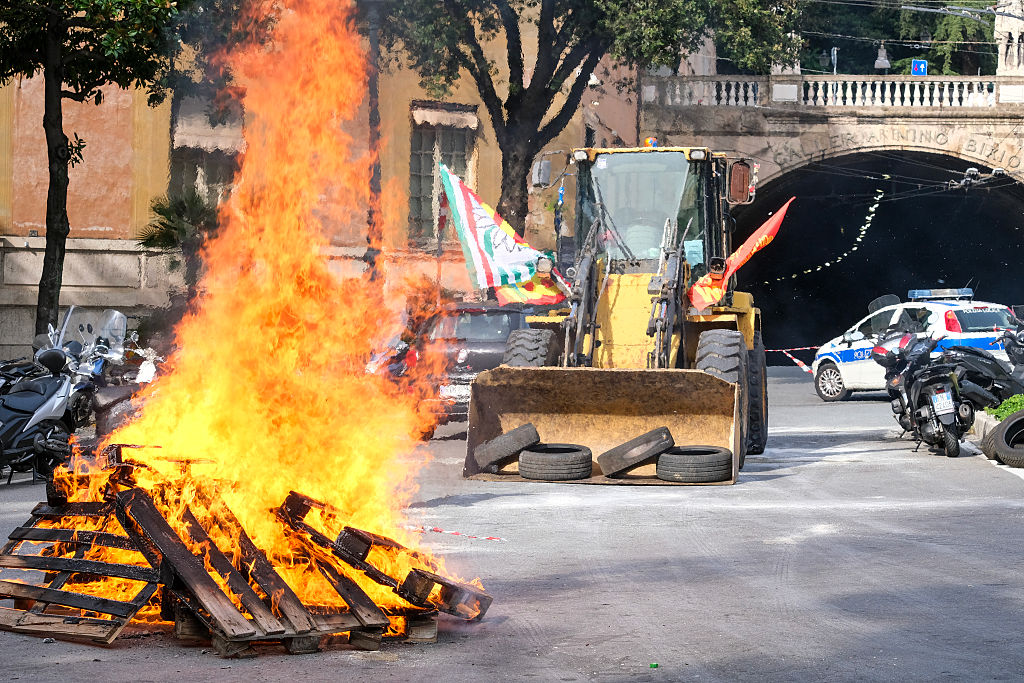
Within weeks, the protests had spread across southern Italy, with thousands of farmers, fishermen and lorry drivers blockading roads. Street vendors, small shopkeepers and ordinary families, squeezed by the cost of living, soon joined them. A national demonstration has been called in Rome for 27 October. “We are not at war with anyone,” said one Calabrian farmer. “They are waging war against us.”
So far, the government’s response has ranged from indifference to paralysis. It allowed the fuel tax cut to expire and never issued the decree that would have returned the state’s additional VAT revenues to motorists. Requests for meetings with Matteo Salvini’s transport ministry went unanswered.
Italy is not an isolated case. In France, students at hundreds of high schools have taken to the streets to demand better funding, infrastructure repairs, and educational reforms. In Spain, rising rents and speculative investment funds have set off mass protests over housing. And in Belgium, anti-austerity protests have swept through the country. The triggers, the people involved, and the demands all differ: students, tenants, small haulage firms, farmers. But they are all reacting to the same thing, which is the steady decline of the cost of living.
Both of those come from the geopolitical choices of Europe’s governments. First they cut themselves off from cheap Russian energy. Then they went along with a US-made war in the Middle East that has driven oil prices up again — issuing performative denunciations but, in fact, allowing Washington free use of its bases in Europe in support of military operations against Iran, as Nato Secretary General Mark Rutte acknowledged.
On top of that, they have committed to huge increases in military spending, all while complying with the EU’s notoriously rigid fiscal rules. The mechanism is straightforward: money for the warfare state has to come from the welfare state.
Giorgia Meloni’s recent address to parliament was revealing. She restated her firm support for Kyiv and blamed the fuel spike mainly on the war in Iran, without saying a word against the government that started it.
It is hard to think of a better illustration of the self-defeating Atlanticism of Europe’s leaders. At Washington’s urging, Europe now uses more expensive American LNG, and bankrolls a war in Ukraine that has done enormous damage to Europe’s own economies. Now they are so committed to that course that they are doubling down on it, even as Washington relaxes the pressure on Moscow and starts buying its diesel.
That position will become harder to hold, in Italy and across Europe. Of all the regions locked into the West’s confrontations with Russia and Iran, Europe pays the highest price: it imports its energy, it is losing industry, and its budgets are tightly constrained. For decades, aligning with Washington was sold to Europeans as the price of prosperity. Now the prosperity is gone, and the bill remains.
The tractors on the Autostrada 14 and the boats stuck in Calabrian harbours show that this bargain is coming apart. Governments that keep supporting a forever war in Ukraine, and deferring to Washington in the Middle East, should expect many more of them.
Thomas Fazi is an UnHerd columnist and translator. His latest book is The Covid Consensus, co-authored with Toby Green.
 battleforeurope