









14 Nov 2026 - 8:00am
The Trump administration now wants the Europeans to take part in the Russia-Ukraine negotiations. Moscow, meanwhile, has challenged the Europeans to appoint a single representative if they wish to take part. But Kremlin spokesman Dmitry Peskov warned that Russia had yet to decide whether it would agree to their involvement.
“After we understand [the Europeans’] real intentions and readiness to help the peace process,” he said. “Then we can take a decision about holding dialogue on the Ukraine peace process in an expanded format.”
He has a point. Up to now, the problem has been not just that European countries have not agreed on who should represent them, they have not begun to talk — or even, in most cases, to think — about a common position that could form a viable basis for negotiations with Moscow. Some countries in southern Europe may be amenable to certain compromises if it means saving money on support for Ukraine, whereas Britain, the Baltic states and Poland are much more hardline.
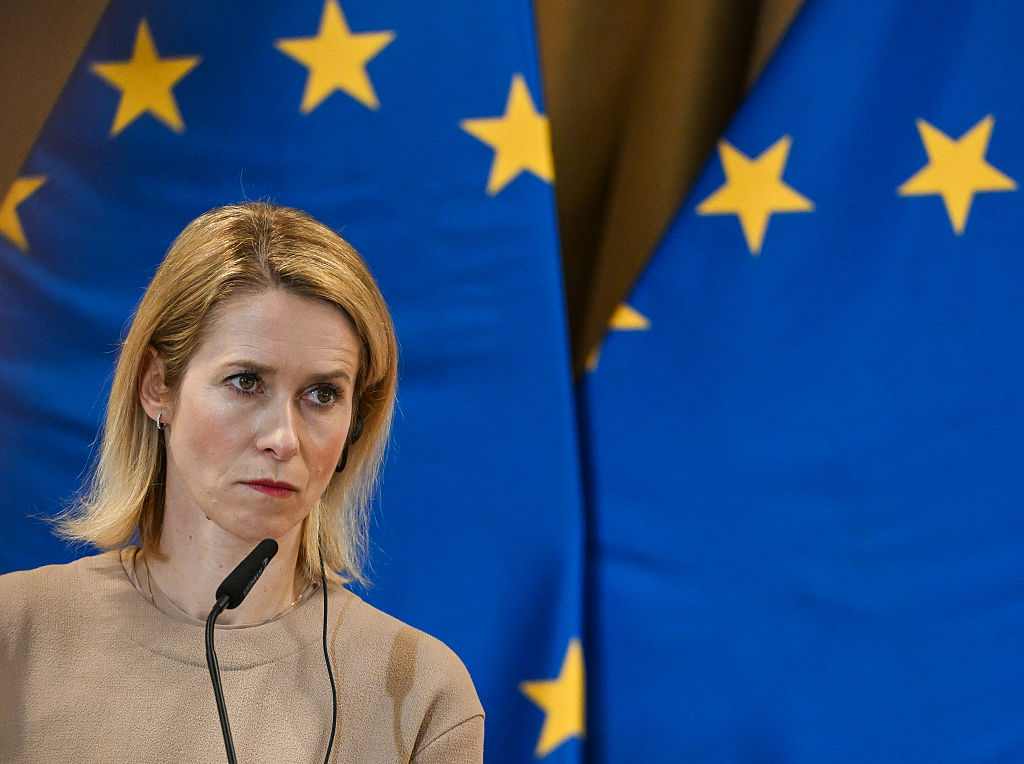
In terms of formal EU responsibility, the choice of lead negotiator should be obvious: Kaja Kallas, High Representative of the European Union for Foreign Affairs and Security Policy. But given her repeated public condemnations of any compromise peace whatsoever, this proposition seems very far-fetched.
The US negotiating team of Steve Witkoff and Jared Kushner is now proposing that, in exchange for Russia dropping some of its most expansive demands over Ukraine — notably, that Kyiv withdraw from the parts of Donbas it still controls — Moscow be offered a place in a new European security architecture. The hope is that such a framework would take account of Russian security concerns while avoiding the failures of communication and diplomacy that preceded the 2008 war in Georgia and the 2014 crisis in Ukraine.
The initial response of most European governments to this idea, however, has been twofold, and wholly negative. First, they insist that Russia agree to an unconditional ceasefire before talks on a new security architecture begin. This is a non-starter. Of course the Russians are not going to give up their only leverage for a vague promise of future discussions.
As Russian President Vladimir Putin said after his latest meeting with Witkoff and Kushner: “What do we hear from them [Europeans]? That once a peace agreement is signed, they will immediately deploy troops in Ukraine. This is a legitimate target for us, so the war will resume immediately.”
The Trump administration therefore appears to recognise that all terms of the settlement will have to be agreed as part of one package. Moreover, several leading European officials have immediately declared their opposition to the very idea of any new security architecture, despite the failure of Nato to prevent the drift to war in Ukraine or to bring that war to an end.
In fact, if Germany, France and Britain (the “E3”) insist on sticking rigidly to the principles they drew up in London in June, no agreement with Russia will be possible. These principles rule out key Russian demands that members of the Russian establishment tell us are non-negotiable: Ukrainian neutrality, and a bar on Western troops in Ukraine.
Much of the public debate in Europe is also couched in terms of demands for a “just peace” and for “punishing Russian aggression” that, in effect, rejects the very idea of compromise.
This approach may have made some kind of sense when it was possible to believe that Ukraine’s position would improve with time. But the optimistic predictions earlier this summer that Ukraine had “turned the tide” and gained “momentum” now seem rather distant. Russia is making little net progress on the battlefield, but it is inflicting mounting damage on the Ukrainian economy, not least through its systematic assault on the country’s energy infrastructure. If this continues, how long can Ukraine really hold on?