









27 Nov 2026 - 7:00am
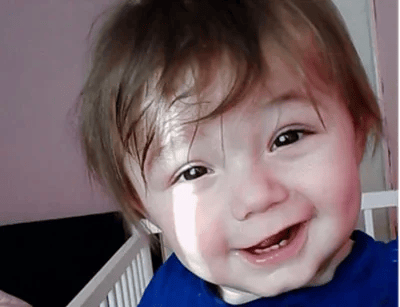
My heart sank thinking about the 2021 murder of two-year-old Ethan Ives-Griffiths by his grandparents in Wales. The photos published after the trial show a cheeky-faced toddler whose smile concealed a short life of unimaginable cruelty. Deprived of food and water and subject to beatings, he died of a “catastrophic” head injury.
A review into the child’s death has now found that despite repeated warnings about Ethan’s welfare, opportunities to protect him were repeatedly missed. He had been placed in the care of his grandparents, Michael and Kerry Ives, without the local council being informed, and despite warnings from his father about the child’s safety in their care. Although Ethan’s aunt eventually informed children’s services of the move, no record was made of any checks on his welfare. That was despite the Ives family being well-known to local services for issues around “significant domestic violence”, substance abuse and homelessness.
Michael and Kerry Ives have been jailed for life for Ethan’s murder, with his birth mother receiving 12 years for allowing his death. The Child Practice Review concluded the painfully obvious: the toddler was failed at every turn by the agencies supposed to protect him.
Ethan’s case reveals the dangerous lack of oversight that has become commonplace in the growing trend of keeping children within the birth family network. Experts have long warned against the trauma of permanently severing birth family ties; and while removing children from their birth parents’ care is rightly viewed as a last resort, the state has pivoted sharply away from adoption in the past decade and towards “kinship” care, where children are placed with relatives or family friends.
The figures bear this out. Data from Ofsted shows that while the number of children coming into care continues to rise — climbing above 82,000 as of March this year — the number of foster households has barely increased. Kinship care households have surged by 18% since 2022, meanwhile, and now make up 22% of all fostering provision. The number of adoptions is also plummeting, from 3,060 in 2025 to 2,720 in 2026 — a continuation of the trend that has seen a 49% collapse since the 2015 peak.
On paper, keeping children within the extended family network sounds compassionate. In reality, though, the shift can leave kids vulnerable to repeated cycles of neglect. Placing children in kinship care often involves relocation, and the receiving local authority is not always informed, with the fractured communication leaving huge gaps in protection.
As a foster carer, I have seen the failure of this well-meaning policy up close. A few years ago I cared for a two-year-old boy called Freddie*. He had been removed from his birth mother, a heroin addict who funded her habit through sex work and failed to protect him from a revolving door of men. Prolonged bouts of crying eventually alerted neighbours to the horror, and when he finally arrived at my door, he was a terrified shell of a toddler who hid behind the sofa every time the doorbell rang. Fast-forward 13 months, and he had transformed into a chatty, smiley three-year-old who was thriving in nursery.
Squeezed by shrinking budgets and new procedures, however, social workers are obliged to find anyone within the family or friends network who can take over care of children like Freddie. In his case, they settled on his paternal grandmother. I stayed in touch to ease the transition. But each time I visited, Freddie was glued to a new iPad, his grandmother looking more depleted than ever.
Walking down my local high street not long after, I discovered the child walking towards me holding his birth mother’s hand. He reached out to me in confusion. “Couldn’t cope with him, could they,’ his mother said, nudging him away. “Don’t tell no one I’ve got him.” I immediately reported it, but when Freddie eventually came back into care my own home was already at capacity so, sadly, I couldn’t take him back.
There is no ideal solution for children who aren’t safe in the arms of their birth parents, and no “correct” quota for adoption or kinship care. Child protection is more an exercise in making finely tuned judgements and balancing risks. Adoption is no panacea. The ties binding children to their birth parents remain strong, no matter how much rejection or abuse they’ve suffered at their hands.
But adoption offers something that stressed relatives and overstretched social workers rarely can: a clean break from chaos and the security of a forever home. When a guardian is loving, protective and robust enough to hold firm boundaries with birth parents, kinship care can be a good option, but biological proximity doesn’t always mean safety.
Until the preference for kinship care is matched with the resources necessary to provide ongoing and rigorous oversight, there will be more harrowing cases like those of Ethan and Freddie.
*Names have been changed.