







 Prefer us on Google

15 August 2026 - 5:00pm
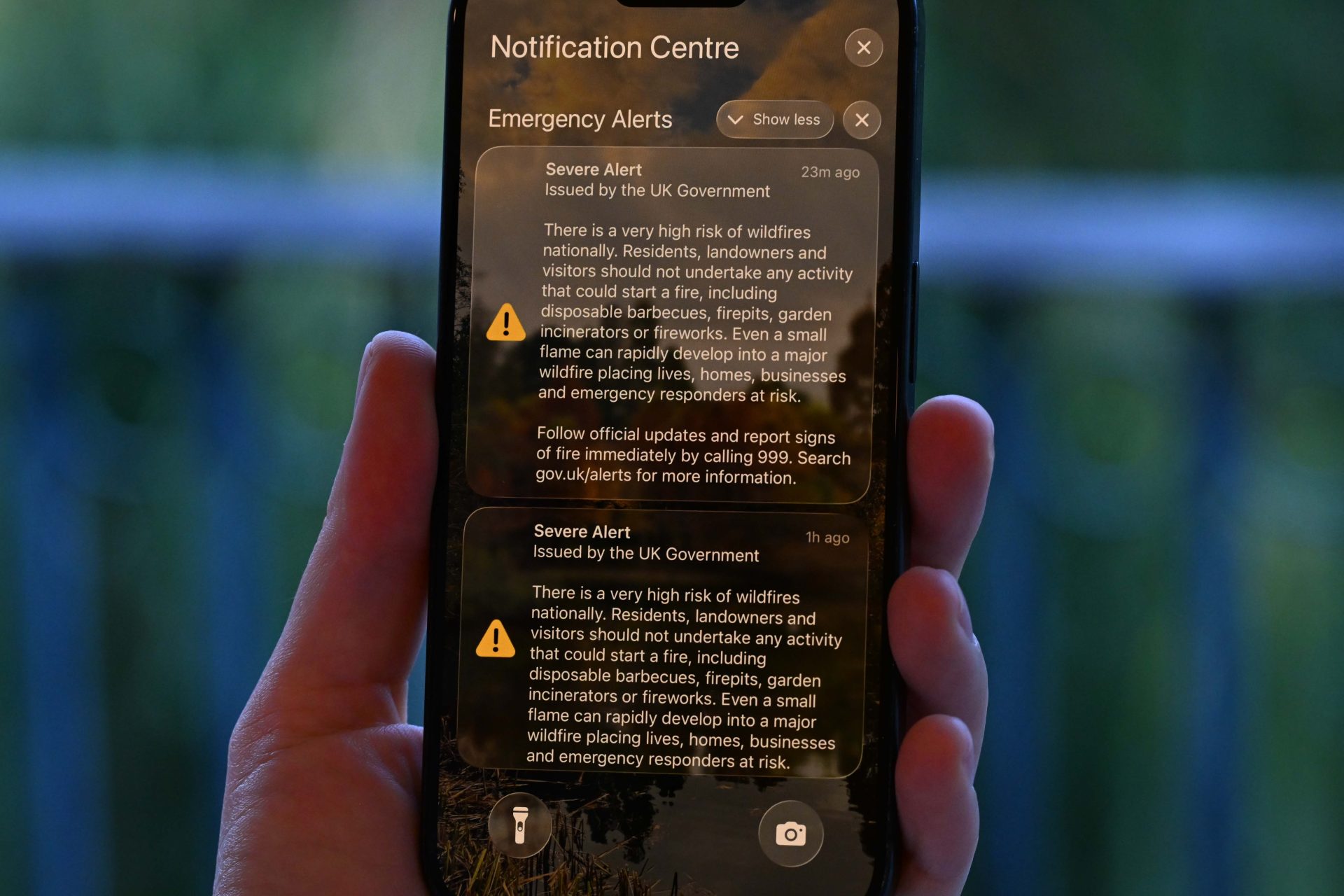
Like millions of my fellow citizens, I was alarmed yesterday evening when my phone emitted a sound like an air-raid siren. It was a “Severe Alert” from the UK Government, reminding me not to do anything that could start a fire — including using disposable barbecues or fireworks. Following days of news coverage of people’s homes burning down and exhausted crews battling heathland fires, I would probably have thought of all this myself: don’t drop cigarette ends, and don’t leave glass where it might focus the Sun’s rays onto tinder-dry vegetation.
Admittedly, I grew up in the countryside, where all these things were both common sense and spelt out on large signs next to footpaths. If people can’t get the message today, however, why doesn’t the Government bring back public-information films, to be distributed on TikTok or Instagram? Did we really need a gin-and-tonic-spilling shriek from our devices to warn us off starting wildfires?
The Emergency Alert system was introduced in 2023 by the then-Conservative government, which it said would only be used “to warn you about an immediate threat to life”. If a wildfire — or a flood — were approaching my location, I would be glad to get some warning. In countries where earthquakes, volcanoes or tsunamis are a regular risk, such early warning systems save thousands of lives. In an urban garden, however, an unlit barbecue is not a “severe threat to life”.
I should be more surprised that this government has flipped straight from apparent inaction to misusing a national warning system and treating its citizens like children. Unfortunately, it’s as predictable as a grass fire following a smouldering cigarette end. Not content with banning disposable barbecues, Andy Burnham also wants to remind us that in the digital age, the state has direct access to each of us, and that it can — and should — direct each aspect of our everyday lives.
Vaping and gambling are already in the sights of the virtue police, after all, along with the social media habits of teenagers. The rapid expansion of Live Facial Recognition (LFR) technology in town centres should remind us that distrust of the plebs and our bad habits quickly turns into micromanagement. CCTV, which was originally supposed to be for extreme cases only, was within a few years being used against dog owners who didn’t pick up poo; the Emergency Alert system is already becoming the voice of Big Brother in very non-emergency situations.
After the second ear-splitting alarm within an hour, I consulted social media for guidance on how to disable all alerts on my phone. If a disaster, natural or otherwise, heads my way, I will now have to rely on friends and neighbours to alert me.
Unfortunately, going off anecdotal social media evidence, many are far too willing to agree that the problem is the foolishness of other people. No wonder the easiest resort for the authorities is to do something that passes the buck onto ordinary people. If fires are raging, the alert tells us, it is not because of significant Government policy failures: it’s because idiots don’t know that dry vegetation is flammable and that naked flames ignite such flammable material.
Please, UK Government: bung up some signs, either in the countryside or on the social media to which we supposedly pay too much attention. And then get on with your job of fixing the country’s infrastructure so we can deal with the extreme weather. And keep Emergency Alerts for immediate threats to life.
Timandra Harkness presents the BBC Radio 4 series, FutureProofing and How To Disagree. Her book, Technology is Not the Problem, is published by Harper Collins.
 TimandraHarknes