









1 October 2026 - 4:00pm
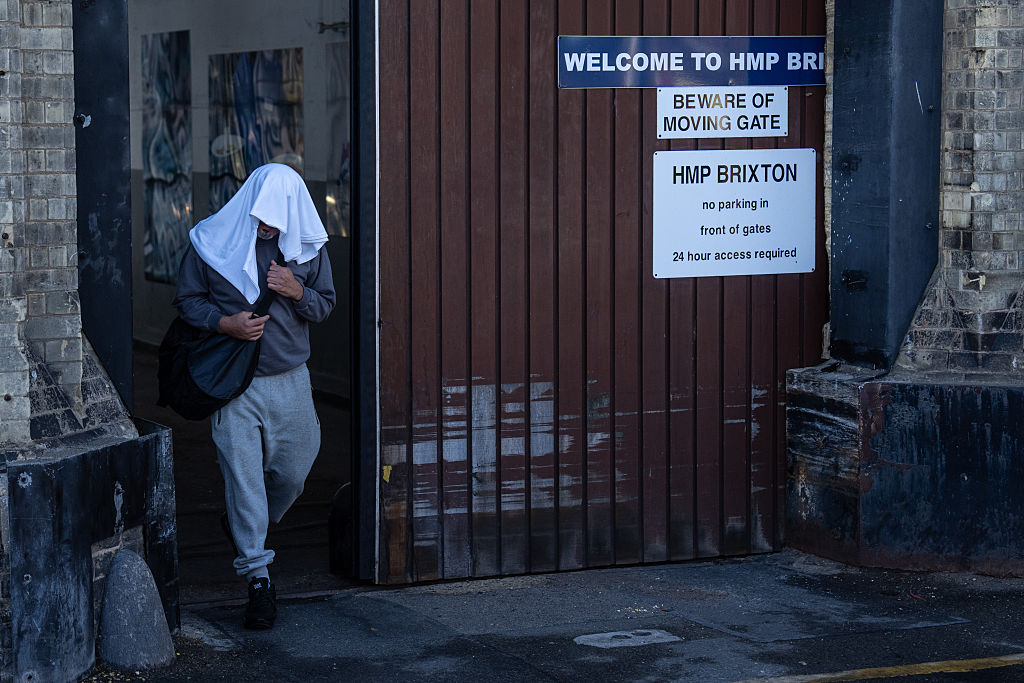
Today’s mass early release of prisoners and public opinion are two trains going in opposite directions. The Government’s aim is to relieve a prison system set to fall into gridlock within the next 12 months, with adult male capacity currently at 98.5%. Gold Command opened today in HM Prison and Probation Service to handle the first tranche of around 700 released prisoners.
Officials there will be praying the scenes of jubilant prisoners that characterised Keir Starmer’s first days in office are not repeated. But the problem will only increase when, in two weeks, 650 more prisoners will walk through the gates, with a gradual increase to 5,000. The issue could be as detrimental to Andy Burnham’s premiership as it was to his predecessor.
Anxiety in Government will be matched and exceeded by the fears of victims. Prisoners released after serving only one third of their sentences behind bars will now be essentially free in the community to reoffend. Ministers have placed faith in a set of unsteady beliefs in technology, with the usual sophistry to counter this reality.
These announcements imply that most prisoners released early will be subject to “tough” new electronic monitoring, with police on standby to intervene if any breaches occur. Metropolitan Police Commissioner Mark Rowley has been clear that this round of early releases was sanctioned with no risk assessment by the Government on the impact on his officers, who are already under huge strain.
If anything, the organisation that is supposed to lead the supervision of thousands more offenders is in worse shape. The probation service is short by around one fifth of the officers required to supervise offenders safely. The Chief Inspector of Probation, Martin Jones, has said he’s “not confident” that the organisation is capable of stopping serious further offending by those released early, including murder.
Technology does not supervise offenders — people do. Ludicrously, prisoners will walk through the prison gates without tags being fitted. Recent inspections of the two major tagging providers, G4S and Serco, show only 55% of tags fitted on time. Some offenders are even waiting up to five months for a tag to be fitted, and breaches are only acted on 46% of the time. Ministers know all this, and still they have ploughed ahead.
Starmer’s premiership arguably never recovered from his first decision to put logistics before community safety and victims in 2024. While it is obvious Britain has a capacity crisis, the Government decided to collude with a criminal justice commentariat hostile to the very idea of incarceration and dismissive of public safety. Labour could have spent the intervening two years responding to the need for confidence in a justice system that isn’t contingent on space for prisoners. A national emergency prison capacity task force, led by people outside the Ministry of Justice who have successfully delivered big infrastructure projects, could have delivered better results.
The Government could have halted the exodus of prison officers by improving the training, leadership and protection they receive. Drug-addicted offenders could have been diverted into secure NHS provision instead of putting them in feral dumps that make them worse. But all of this was too difficult for lazy ministers and ideologically captured officials. Burnham’s government will not be easily forgiven for this dereliction of its first duty: to keep Britons safe.
Ian Acheson is a former prison governor and author of Screwed: Britain’s Prison Crisis and How To Escape it.
 NotThatBigIan