









12 October 2026 - 7:00am
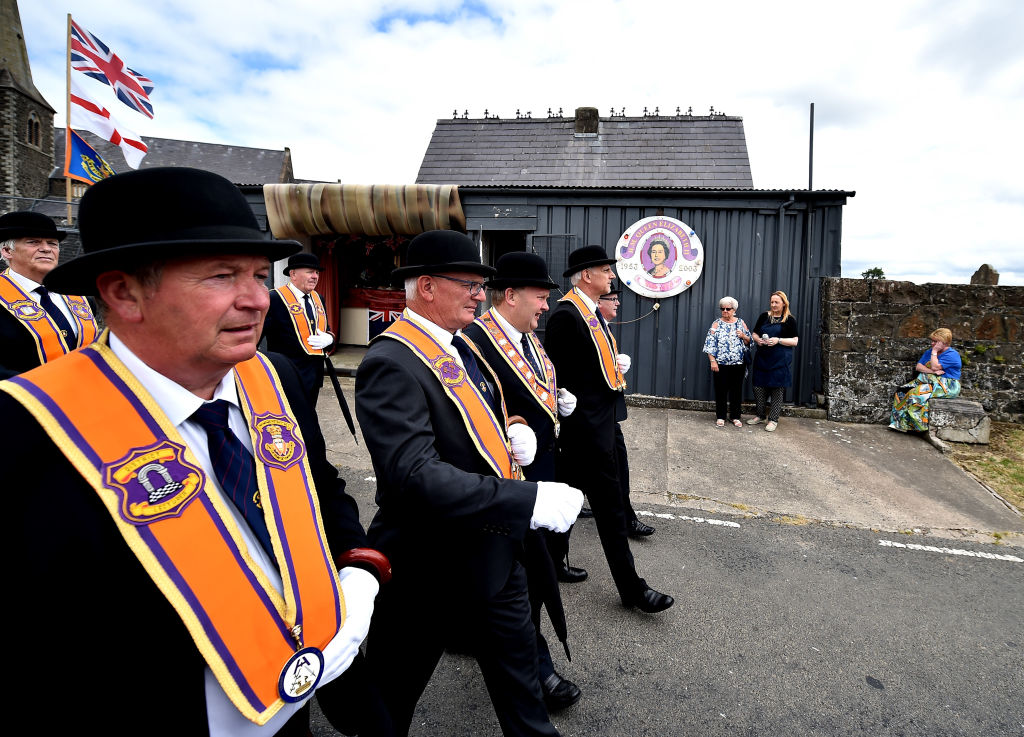
Northern Ireland Secretary Chris Bryant has announced a ban of the Orange Order’s proposed parade in Drumcree. This was planned to run from Drumcree Church down to the predominantly nationalist Garvaghy Road in Portadown, and had previously been approved by the Northern Ireland Parades Commission late last month. It was the only sensible decision after the region’s police chief, Jon Boutcher, had written to Bryant formally requesting a review of the Commission’s ruling. The alternative was to let the dispute fester through a long winter and set the context for regional elections looming in May.
Drumcree is Northern Ireland’s most contentious parade, and was a consistent source of violence through the Nineties. The Commission had blocked it from passing through Garvaghy Road for 28 years until this volte-face, which followed a High Court ruling in August quashing its earlier determination.
The decision lets both sides of Northern Ireland’s divided community claim victory. Nationalists — from anti-Good Friday Agreement dissident Republicans, through to Sinn Féin and the Social Democratic and Labour Party (SDLP) — were united against reviving the parade. Thousands, including Sinn Féin President Mary Lou McDonald and Vice President Michelle O’Neill, descended on Portadown over recent weekends to support locals, who repeatedly showed they could block the road in numbers too great for the police to remove them without a degree of force nobody was prepared to countenance.
Many Unionists, however, see a decidedly pyrrhic victory for Irish nationalism, undercutting its claims to accommodate Orange and British culture in any future “new Ireland”. They hope it will bolster wavering liberal Protestants — the sort deeply perturbed by Brexit, who have shown intermittent flashes of being tempted by a united Ireland in a future border poll — although this group is hardly known for supporting Orange parades. Unionism can walk away from this crisis seeing itself as the side that boxed clever and took the moral high ground. Rather than shouting “No surrender” and digging in for a long siege as it once would have, it leaves with important legal victories in its back pocket, having avoided unduly annoying the likely swing voters in any border poll: the region’s detribalised moderates and ethnic minorities.
Nationalism’s victory comes at the cost of a real medium-term risk to the 1998 Public Processions Act which regulated parades. That framework initially relieved nationalist communities long fed up with unwanted Orange parades, but in recent years Loyalist parades have passed without rancour through staunchly Republican towns and villages after local negotiations. There may now be pressure from the fringes of both communities — those opposed to the region’s political settlement — to reopen the marching issue. That pressure, however, may fall foul of public opinion: most people in Northern Ireland, across political and religious divisions, react to the idea of reopening the parading issue with genuine fear. It’s a sharp reminder that this is a frozen conflict, not a solved one.
It is also a reminder that Northern Ireland can never entirely escape being a zero-sum situation. Foremost among the creative ambiguities of the Nineties peace process was that nationalists assumed demographics would carry them into a United Ireland within a generation or so, while Unionists assumed that many Catholics and most ethnic minorities would be quietly content to remain in the UK. One side will be disappointed in the end.