









4 April 2026 - 1:00pm
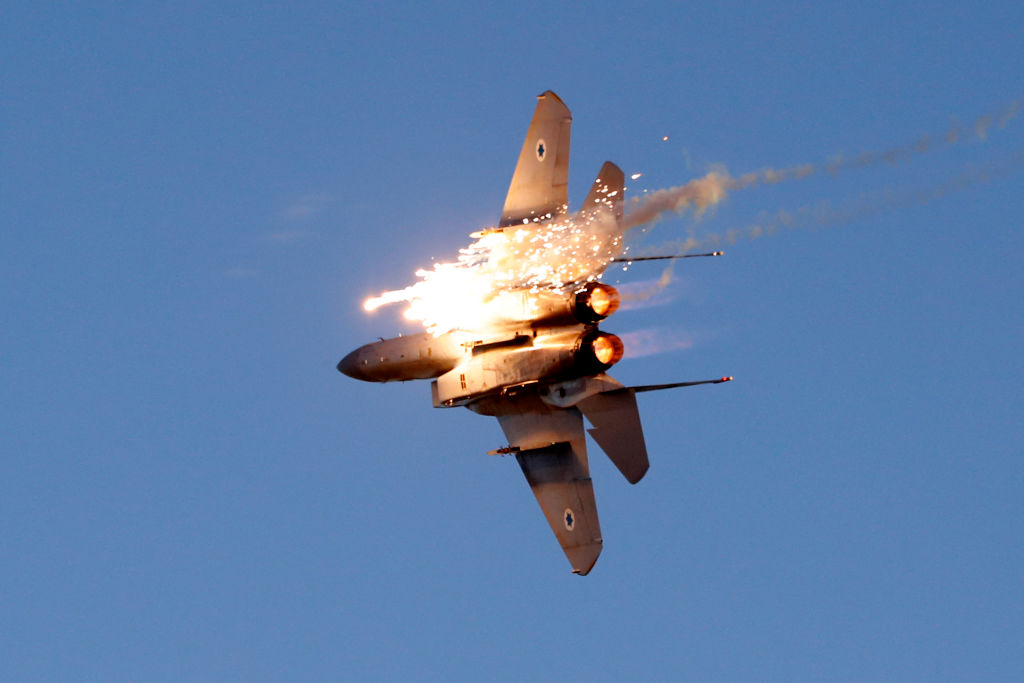
The US-Israeli war on Iran has left things worse than they were a month ago, when Tehran seemed ready to cut a conciliatory deal with Washington over its nuclear programme. Trump, refusing to take “yes” for an answer, instead decided to launch a war that shows no signs of winding down soon, despite the President’s rhetoric. The downing of two US fighter jets over Iran is only the latest example of the unnecessary risk to American lives and the dangers of further escalation presented by this self-destructive conflict.
The possibility of US personnel being taken hostage or further casualties among search-and-rescue operators is just one of the many looming scenarios in which Trump may feel compelled to deepen US involvement in Iran. While the US and Israel have degraded Tehran’s missile, naval, and command capabilities with characteristic skill, these tactical successes have put the political goals of the war even further out of reach.
Rather than installing a more pliant regime, the US has hardened the one it sought to weaken. While Washington framed its actions as preventing Iran from acquiring nuclear weapons — despite Tehran’s longstanding reluctance to do so — the result may be the opposite: Iran now has stronger incentives to pursue a nuclear deterrent as the only reliable guarantee of regime survival.
Instead of proving its ability to defend its Middle Eastern partners, the US has exposed them to levels of risk that would have seemed implausible just weeks ago. Far from weakening China and Russia by wearing down their Iranian ally, Washington is diverting forces from Asia and Europe, bleeding resources and further straining its defence industrial base — all while its rivals look on from the sidelines. Even the degradation of Iran’s military may prove both pyrrhic and short-lived, as its capabilities can be rebuilt in short order.
To the extent the United States retains any interest in the Middle East, it is ensuring the steady flow of Persian Gulf oil and the stability of global energy prices. Yet that objective is now under threat, as the risk of prolonged disruption to regional production grows. Managing the resulting price pressures may ultimately require Washington to ease the very sanctions from which Iran once sought relief in exchange for curbing its nuclear programme.
Restoring traffic through the Strait of Hormuz would itself only be reestablishing the pre-war status quo. Although the Trump administration says it will not force open the Strait, it is reportedly staging thousands of troops for a risky ground operation, raising the prospect of deeper involvement in another Middle East quagmire.
The Iran war is perhaps the starkest example yet of how the United States’ use of force is undermining its desired political objectives, as the White House and the Pentagon crow about how much destruction they have wrought on Iran even as American leverage diminishes.
The White House’s demands to end the conflict sound essentially like those made before the war. But they are now directed at an adversary no longer disposed to making a conciliatory deal — or perhaps any deal — until a sufficient pound of flesh has been exacted as a deterrent against future aggression by the US and Israel. Even such unworkably ambitious demands fall well short of Trump’s prior, hubristic call for Iran’s “unconditional surrender”, which in Persian likely translates to something like “fight to the death”.
Washington’s best option now is to get out immediately, but this scenario is also doubtful. Though Trump might try to declare “victory” based on the erosion of Iran’s military, it would be a tacit admission of defeat — and the US has repeatedly shown itself unwilling to cut its losses in an unwise attempt to maintain the illusion of “credibility”. Trump would be lucky to get Iranian negotiators back to the table, and any deal would likely be significantly worse than what Tehran was prepared to agree to just before the opening shot of the war. Even then, the war could not end unless Israel also agrees to stop fighting, requiring pressure that Washington has seldom exerted on Tel Aviv.
Across the board, this war has left the US worse off than it was a month ago. The outlook is likely to deteriorate further before there is any improvement.
