









9 July 2026 - 7:00am
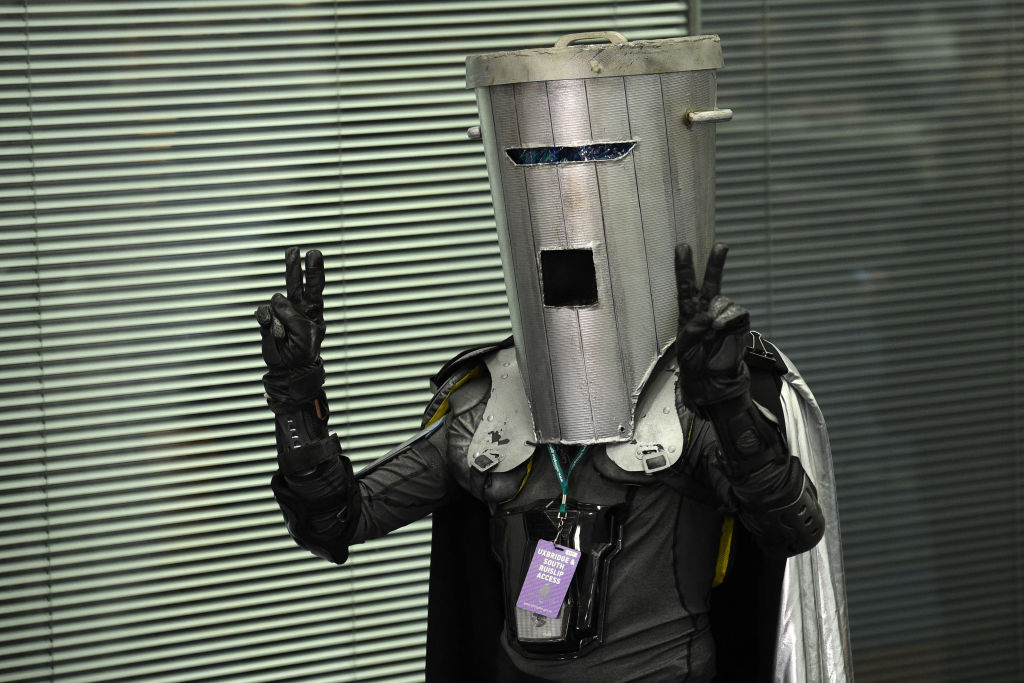
It’s the contest nobody has been waiting for. With all established political parties refusing to participate in Nigel Farage’s Clacton by-election, the Reform leader now faces a foe with whom he has more in common than he realises. Step forward Count Binface.
At first glance, the comparison seems absurd. Count Binface wears a silver bin on his head and campaigns on promises ranging from renaming landmarks to reducing the price of croissants. Nigel Farage wants to be — and may yet become — prime minister. Yet strip away the costume and it becomes easier to see how one candidate may have created the other.
Before he became the man who delivered Brexit and built Reform into Britain’s most formidable insurgent party, Farage was Westminster’s perennial outsider. He lost seven attempts to enter Parliament. For years, he was treated less as a serious politician than a colourful eccentric; in 2006, then-Conservative leader David Cameron dubbed Ukip a party of “fruitcakes, loonies and closet racists”. Television producers booked Farage because he made for good viewing. Opponents dismissed him as a publicity seeker and a grifter, as some still do today.
But Farage recognised before almost anyone else that, in the age of rolling news and social media, attention had become the most valuable currency in politics. Like his friend Donald Trump, he understood that outrage generated coverage, coverage generated relevance, and relevance generated votes.
It worked brilliantly. The serial outsider became one of the most consequential politicians of his generation. But victories have consequences beyond those intended. By proving that publicity could be converted into power, Farage helped accelerate the fusion of politics and entertainment. In doing so, he also helped create the conditions in which figures like Count Binface could thrive. Indeed, Count Binface is, in many ways, a form of late-stage Faragism.
The man behind the mask, Jon Harvey, first stood as Lord Buckethead (later changing his name due to a dispute with American filmmaker Todd Durham) in Maidenhead against Theresa May in 2017. Notable predecessors include Screaming Lord Sutch, who founded the Official Monster Raving Loony Party in 1982, erstwhile Tim Farron opponent Mr Fishfinger, and another candidate who appeared in the guise of Buckethead at the 1987 and 1992 general elections. Barring H’Angus the Monkey’s shock victory in the 2002 Hartlepool mayoral race, such jokers typically collect a handful of votes. While the idea of parody candidates is not new, the level of exposure afforded to Count Binface will take this form of politics to a new level.
When Charlie Brooker’s Black Mirror aired “The Waldo Moment” in 2013, in which a comedian who voices a foul-mouthed cartoon bear runs for political office, critics regarded it as one of the weaker episodes in the series. The idea that a spoof character could become a serious political force seemed too absurd to carry much weight. While the episode was not meant to be taken literally, it still provided a warning that politics itself was beginning to adopt the logic of entertainment. Elections would increasingly reward whoever could generate the next viral clip or headline.
That is the political world Farage mastered. But it is also the world that could come back to embarrass him in Clacton. Binface is undoubtedly a by-product of the same attention economy that Farage did so much to exploit. There is, of course, an important difference. The Reform leader always had a serious political project beneath the theatre. He wanted Britain to leave the European Union. He wanted to destroy the Conservative Party. Today, he wants to become prime minister. The stunts and the controversy were all means to an end. Count Binface dispenses with the end and keeps the means.
For years, Farage mocked Westminster for failing to understand how politics had changed — and he was right. However, innovations have a habit of escaping their inventors. The techniques which once made Farage uniquely disruptive are no longer unique. Instead, they have become part of the DNA of British politics, employed by everyone from young MPs to social media influencers and, yes, joke candidates in silver bins.
Barring divine — or perhaps intergalactic — intervention, Count Binface will lose the election. But what he has done is hold a mirror up to Reform’s leader. Farage spent decades turning British politics into a circus. It is fitting that, sooner or later, he should have to share the ring with the clowns.
Thomas Munson is a freelance writer and political commentator. He spent six years working in foreign policy and in government.
 TWMunson