









5 July 2026 - 4:00pm
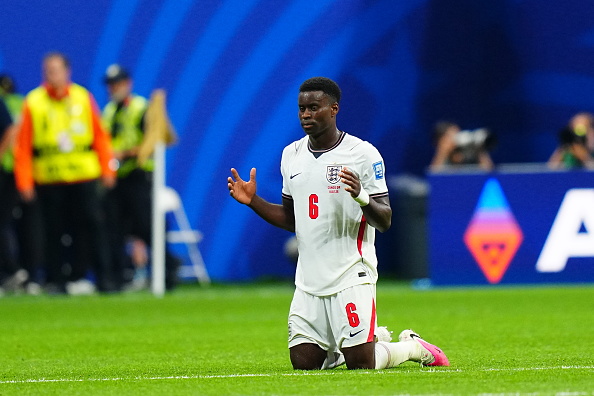
God is back from the dead, it seems. Specifically, Christianity is back at the 2026 World Cup. Other than goals, drama, penalties and dodgy VAR calls, one consistent feature of this tournament has been teams kneeling in prayer on the pitch before and after games. And it has been Christian prayer that has dominated, whether that be US player Mark McKenzie leading his national team in thanksgiving or DR Congo gathering in a circle to pray after their defeat to England.
And yet that’s not the full story. It has long been a feature that Brazilian and African teams prayed and invoked Jesus. To secular Western European eyes, that was culturally more expected. What wasn’t anticipated was how Western European teams have become re-Christianised, including England. Arsenal’s Premier League winners Eberechi Eze, Bukayo Saka and Noni Madueke are all visible Christians, leading the way in the England squad. They team up with pastor’s son Marc Guéhi, Marcus Rashford and Ivan Toney, who has the 10 Commandments tattooed on his back.
This is partly an immigration story. Guéhi was born in Ivory Coast, where only 12% of the population has “no religion”, with the rest split between Islam and Christianity. Eze, Madueke and Saka all have parents with Nigerian heritage from Yoruba and Igbo provinces that are predominantly Christian. Rashford and Toney have Afro-Caribbean roots. Just as the Church of England has survived in urban areas thanks to Afro-Caribbean and African immigration, so this team reflects a new England where Christianity is paraded unashamedly. Last week, Eze sounded a little like a Sunday School teacher when he gently chided a reporter who suggested a shaman had cursed Harry Kane before the Ghana game. Guéhi, when asked about Diego Maradona’s 1986 “hand of God” goal against England, replied that he hoped God’s hand would now be on England.
The English aren’t the only God squad, led by children of immigrants. Liverpool player Cody Gakpo is nicknamed “the pastor” for leading the Netherlands prayer group; some of Germany’s team prayed with opponents from Curaçao and Ecuador after their games, led by the team’s centre-back Jonathan Tah.
Graham Daniels, Director of Christians in Sport, was a football professional in the Eighties when confessing Christian faith meant ridicule and contempt and is now “astonished” at football’s Christian revival. Yet research his organisation published in May indicates that there are now Christians at 75% of professional football clubs and regular Christian gatherings among players at half of the Premier League clubs.
Daniel attempts an explanation. “In England there were a few players in the Eighties and Nineties such as Alan Comfort, Cyrille Regis and Gavin Peacock who were good players and good dressing-room colleagues and who bucked the trend, being openly Christian,” he says. “So within the game, optics [regarding Christians] changed.”
Whether Christianity is experiencing a mini-revival in Western Europe remains up for debate. Christian footballers may merely be part of more superficial noise than a substantive change. Yet having worked in football all my life and attended eight World Cups, Christianity has never been on display like this before. And with football the most popular and influential sport in the world, especially with young men, that might yet have radical implications for a secularised society.