









19 September 2026 - 8:00am
This week, China has ratcheted up its involvement in Middle Eastern politics. According to Reuters, Beijing has privately asked the Iranian regime to help rein in the Houthis after Saudi Arabia directly appealed to the Chinese government. Now, China wants to prevent the conflict from spreading further into Yemen and the Red Sea, affecting trade routes on which it depends. With the Straits of Hormuz and Bab el-Mandeb effectively closed for shipping, Beijing could be set to use its economic leverage.
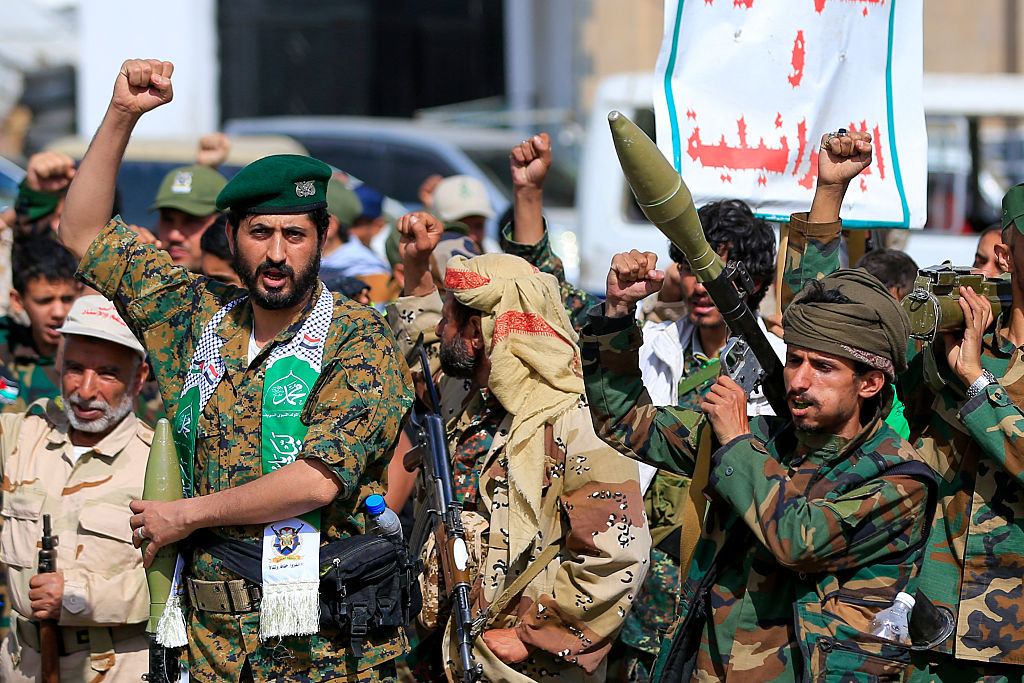
Together, these are the two maritime chokepoints for trade routes in the region — no land route offers comparable transport capacity. Now that the Houthis have advanced to strategic points on Yemen’s Red Sea coastline, they could effectively control the Bab el-Mandeb. So far, their threats are mainly directed at Saudi Arabia, which has been the Houthis’ adversary since 2015, but the group has not threatened to close all shipping. The Trump administration has said that the Houthis have promised to allow US ships to pass. Beijing seems to have a deal with them as well: in 2024, the Houthis told China and Russia that their ships could sail through the Red Sea and the Gulf of Aden without attack. But by targeting Saudi Arabia and risking the escalation of the war, the Houthis threaten one of Beijing’s most important Gulf trading partners, thereby presenting a dilemma.
Will China use its economic leverage to increase its diplomacy in the region? Beijing has been Iran’s largest trading partner for more than a decade and remains the main customer of Tehran’s oil. But its interests go well beyond Iran. Roughly half of China’s oil imports come from the region, and trade between China and the Gulf States is worth around $300 billion a year.
It is unclear whether Iran will act upon China’s request to help rein in the Houthis. The relationship carries some weight, but its influence has its limits. Two sources told Reuters that China is only one among many considerations, as Iran is shaped by competing strategic, economic and political priorities. Chinese officials did not issue any threats or exert any pressure on Tehran, according to Iranian officials. This is a marked contrast with US pressure tactics. Soft power is one advantage that Beijing may want to keep for as long as possible.
But what if Tehran declines to withdraw support for the Houthis, and the economic costs become more tangible for China? The Houthis may even reject Iran’s request. China may hope that its economic power in the region is enough to prompt a strategic rethink. But the Iranian regime could have a different strategic outlook, where economics is not the primary concern.
Tehran could be thinking, instead, that it can survive without Chinese trade or that economic survival is not actually a priority. If the Iranian regime were to adopt a narrative of martyrdom in which principles are considered more important than survival, no amount of pressure from Beijing could change that. This is the regime’s ultimate power move, one that resonates with deprived Shias elsewhere. As long as the Iranian regime’s long-term goal remains unclear, only assumptions can be made. Until the regime makes its priorities known, China and the rest of the world can only guess about when normal economic activity will be resumed.
This is an edited version of an article that first appeared in the Eurointelligence newsletter.