









23 September 2026 - 12:30pm
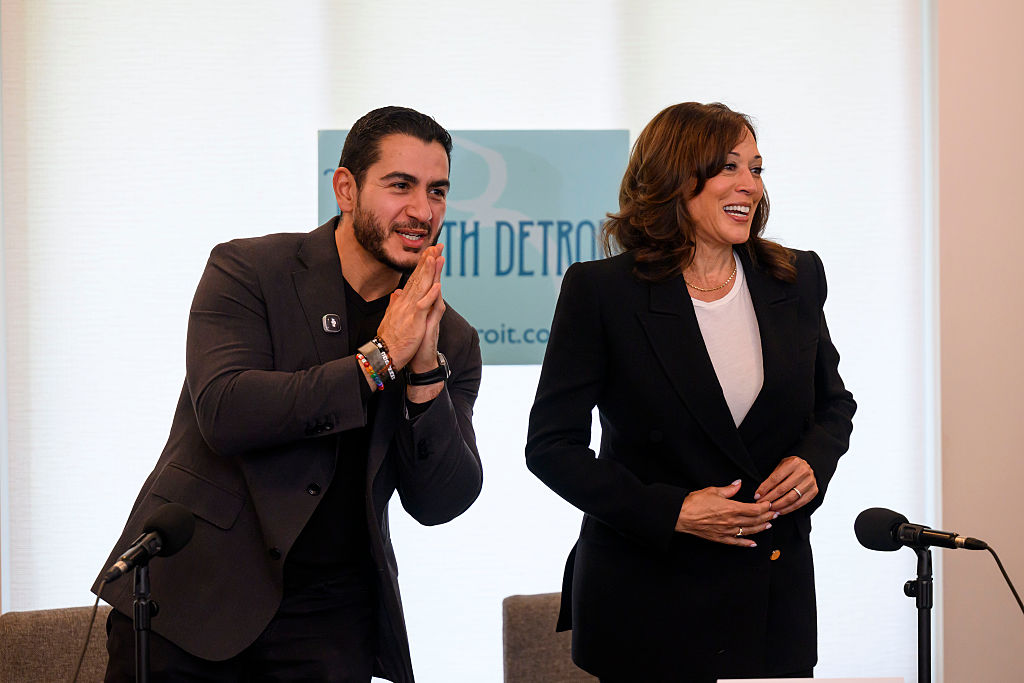
By his own account, Democrats’ Michigan Senate nominee Abdul El-Sayed is hosting Kamala Harris on the campaign trail to build a coalition that includes the former vice president and Bernie Sanders and “bring folks together”. Reading between the lines, Harris is in Michigan to help El-Sayed shore up support with black voters and establishment Democrats.
Bringing in Harris is a gamble for El-Sayed. Her favourability dipped underwater in the early days of the Biden administration and never recovered. According to RealClearPolitics polling, Harris has a favourability rating of only around 42% among registered voters. But it’s also true she has a much higher favourability among black voters. Back in 2024, it hovered at nearly 80% — much higher than Biden.
Polling shows El-Sayed struggling with black voters. That’s despite his broader popularity with younger Democrats and his ability to outflank Haley Stevens and Mallory McMorrow from the Left in a state where black voters are critical in Democratic primaries.
It’s possible that voters who are concerned that El-Sayed is too radical could be reassured by the presence of Harris. It’s also possible her presence repulses independent voters, who still question the Democrats who enabled the cover-up of Biden’s declining mental faculties.
Donors and activists aren’t quite sure if Harris is signalling a run in 2028. She made headlines after reaching out to Zohran Mamdani over the summer. El-Sayed, running on Medicare for All and endorsed by Bernie Sanders, has become a referendum on the political viability of surging democratic socialism. By joining him on the campaign trail, Harris is clearly making the point that El-Sayed is welcome in the Democratic Party, as Democratic pundits such as Michael LaRosa slam him.
If El-Sayed loses and Mamdani’s momentum stalls, Harris, who goes where the wind blows — see her notorious flip-flop on Medicare for All — may atone for the political errors of backing candidates aligned with democratic socialism. But for now El-Sayed is leading in a purple state such as Michigan, Mamdani is popular, and the size of the progressive “Squad” is set to double. Harris knows her best bet, whether she’s looking to run again or simply maintain influence, is to back the Leftists.
The bigger question is really for El-Sayed: does the unpopular former veep help or hurt an anti-establishment campaign in a swing state? Black voters have long been the most significant political obstacle for Bernie Sanders. El-Sayed knows he needs all the help in Detroit he can get, particularly in a midterm cycle where his success will depend on actually convincing people to go to the polls.
If the electorate favours Democrats, El-Sayed is probably correct to pay closest attention to shoring up support with those voters rather than worrying too much about turning independents off. And for Harris, she’ll be able to claim a small part in a big victory.
