









29 September 2026 - 4:15pm
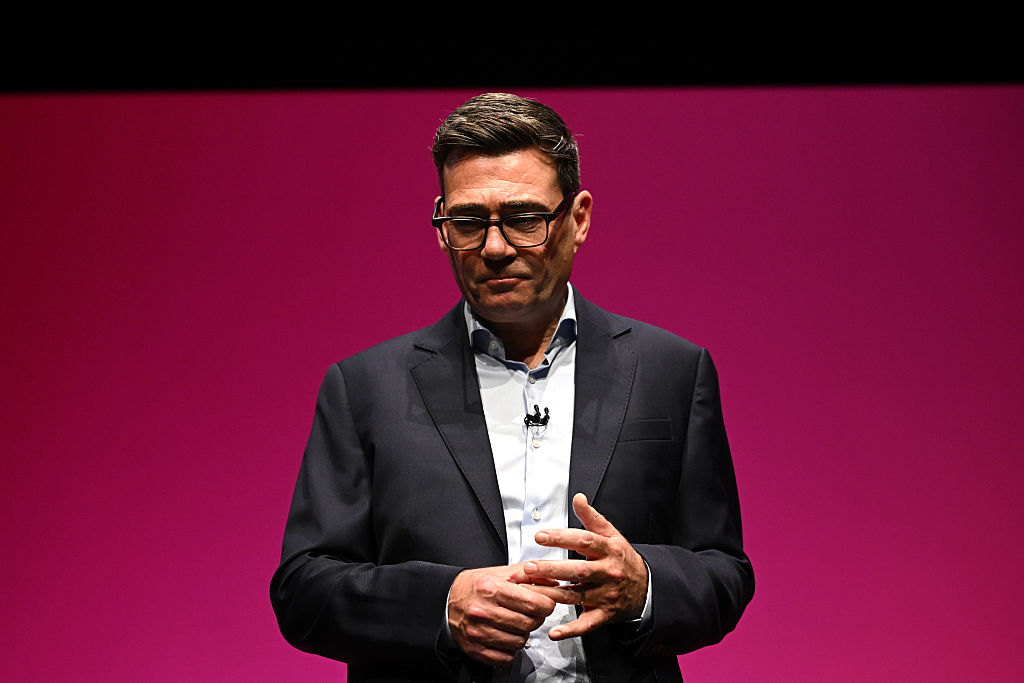
“Hope comes from honesty,” declared Prime Minister Andy Burnham in his speech to the Labour Party Conference this afternoon. We got lots of hope in the usual Labour litany of pledges to build council houses, strengthen tenants’ rights, tighten control over utilities and lower gas bills. But did we get the honesty?
Take his pledge on social care, which he had telegraphed over the weekend in his BBC interview with Laura Kuenssberg. In his speech today, he promised a universal social care system, to be funded by watering down the pension triple lock from 2030. This is a promising start, though Burnham’s commitment to reform rather than scrapping it entirely may not be sufficient to plug the current gap in funding.
Of course, taxes will need to rise if Britain is to move to an NHS model for social care. But as the Prime Minister was right to point out, those costs are already being borne by citizens paying private bills and by overburdened hospitals compelled to keep people in beds for whom no home care space is available. The question is not whether the country can afford such an ambitious attempt to lance a boil that has sickened successive governments — because it can. It’s whether the British public will agree to the wholesale fiscal upending that will be needed to finance it.
Some estimates place the cost of creating an NHS model of social care as high as £18 billion, though Burnham claimed at the weekend that it won’t be “that high”. To raise that sort of money, Chancellor John Healey would need to raise both VAT and income tax by 1p — something a majority of Britons oppose — though he could justify it by saying it is merely transferring a private expenditure to the public domain. Failing that, Labour would need to commit to cutting costs elsewhere. That’s where today’s triple lock pledge comes in — a move which Burnham acknowledged in his speech was politically risky.
The past financial largesse of all developed economies, which has swelled debt burdens immensely, is now starting to bite, driving up interest rates on government bonds everywhere. The UK is feeling this pinch harder than most, with an added premium on its bonds, because the country has come to be seen as a greater risk than its major peers after a series of governments have made promises they can’t deliver.
Did Burnham’s conference speech strike the right balance between hope and honesty? During the first part of the address, the part filled with hope, UK gilts fell in price. During the second part, where he began to hint at the contentious changes he would be willing to make to fund his pledges, such as his commitment to the triple lock or revisiting Brexit, gilts made back some of their losses.
Not everything to do with bond prices on any given day can be attributed to the statements a prime minister makes, since global events are driving bond markets right now. Still, it’s fair to say that for now, investors are willing to give Burnham the benefit of the doubt and the time to spell out his plans more clearly. But they’re not yet willing to give him a vote of confidence.
John Rapley is an author and academic who divides his time between London, Johannesburg and Ottawa. His books include Why Empires Fall: Rome, America and the Future of the West (with Peter Heather, Penguin, 2023) and Twilight of the Money Gods: Economics as a Religion (Simon & Schuster, 2017).
 jarapley