









28 October 2026 - 10:00am
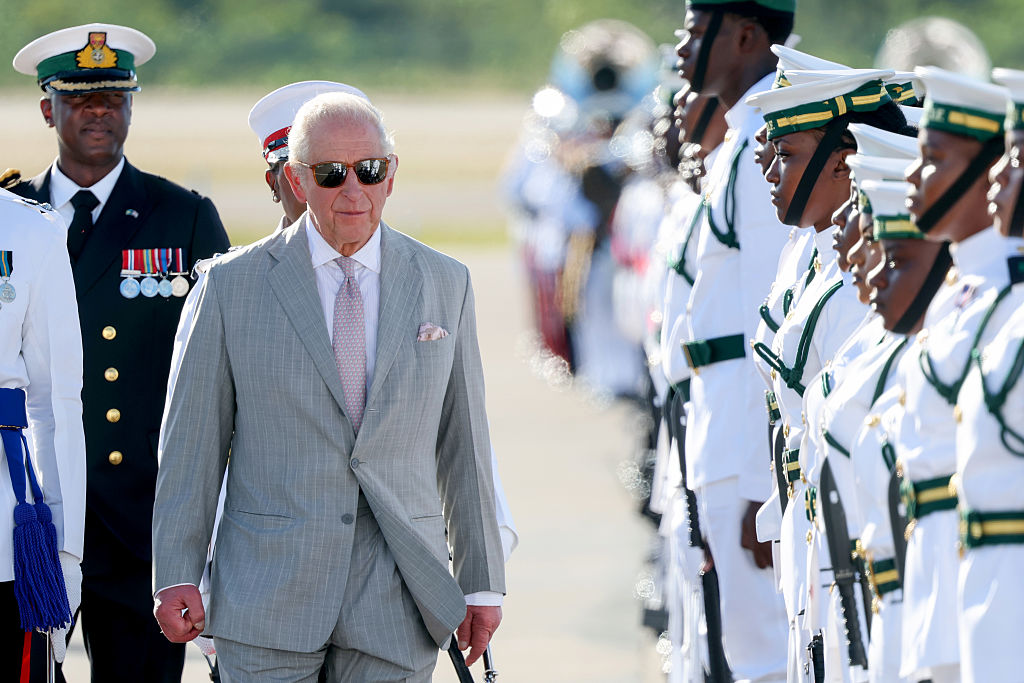
The clocks have gone back, Britons are preparing for the darkest time of the year, and the King has just started his tour of the Caribbean. The Commonwealth Heads of Government Meeting (CHOGM) will take place in Antigua and Barbuda in early November, and Charles is visiting the Bahamas and Guyana beforehand.
Inevitably, the thorny topics of reparations and slavery have been raised. All the countries on the royal itinerary are part of the Caribbean Community (CARICOM), which has made a collective demand for reparations from Britain. At present it has been made very clear that His Majesty will not accept such a demand, nor offer a formal apology for the slave trade. But there is a growing movement within the Commonwealth for the former imperial master to offer formal apologies and financial compensation, and to return cultural artefacts from British institutions. At the 2024 CHOGM, heads of government stated that serious discussion of reparations should take place. The desired direction of travel is easy to see.
British conservatives are rightly sceptical. But the increasing use of Commonwealth institutions for attempts to extract wealth and political concessions from London should raise broader questions about what exactly the association of countries is for nowadays.
The British Empire largely disappeared in the three decades after the Second World War. The Commonwealth grew out of the ongoing attempts, from the later 19th century onwards, to establish a more equal relationship between London and the old dominions of Canada, Australia, New Zealand and South Africa. In the age of decolonisation, it was repurposed as a brotherhood of nations: a way of maintaining the cultural, constitutional and legal links between former British territories, even when those nations were no longer politically subordinate to the United Kingdom.
Queen Elizabeth II, a keen supporter of the Commonwealth, stated in her 1953 Christmas message that the organisation was “an entirely new conception — built on the highest qualities of the Spirit of Man: friendship, loyalty, and the desire for freedom and peace”. As it turned out, this was more than a little optimistic, given the post-independence trajectories of many former British possessions, but it did reflect the egalitarian and democratic spirit of the times. And it is only fair to note that most Commonwealth members are now reasonably democratic, prosperous and free, after facing very difficult times in the immediate period after independence.
Nevertheless, the uncertainty remains. Over half a century since Britain withdrew from the Empire, it is hard to see precisely what we gain from the Commonwealth — as distinct from our military and diplomatic alliances with the CANZUK nations. Enthusiasts often appear to echo the grandiose liberal imperialist vision of the high Victorian age, in which Britain leads a family of closely allied nations into the sunlit uplands of liberal democratic Christian civilisation.
This is an attractive ideal, but a very poor model of how the world works in 2026. The UK is wracked by problems at home, economically sluggish and mired in self-doubt. Political sclerosis is exacerbated by rapid cultural and demographic change. In many important respects, we are no longer the country that won, ruled and finally yielded up the Empire, or even the country that launched the Commonwealth in the postwar years.
It is not at all improbable that a future British government would yield to Commonwealth demands for financial restitution, given the fanatical post-national and anti-patriotic ideology that has such a strong grip on our ruling classes. This possibility should focus minds, and temper sentimental fantasies about a collaborative post-imperial federation. It cannot be 1953 forever.
