









20 July 2026 - 1:00pm
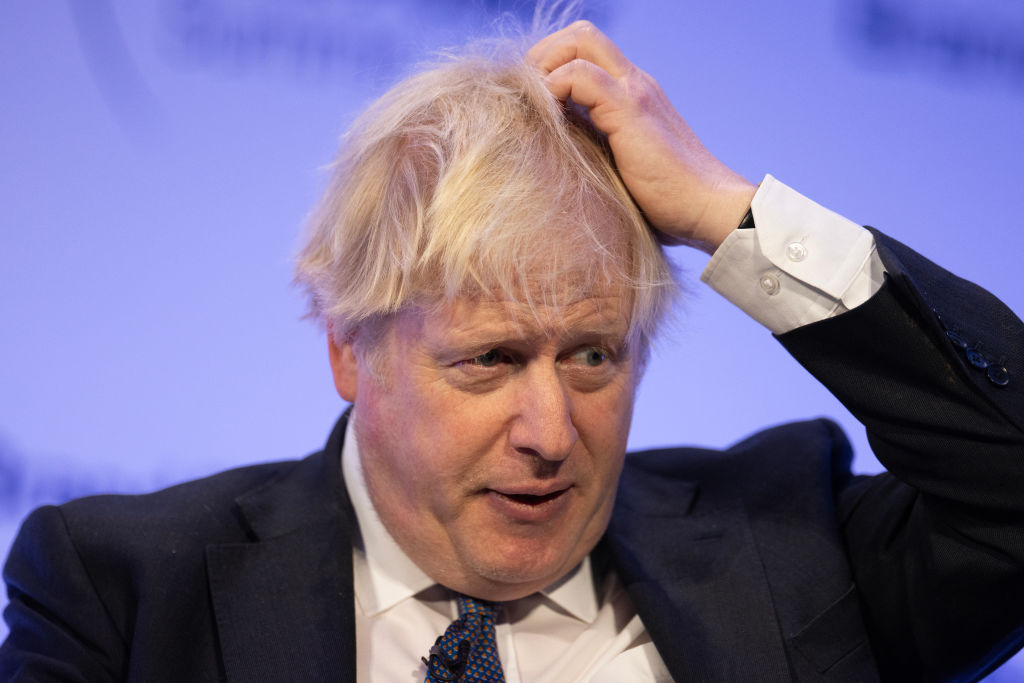
It is eerie to witness the return of Boris Johnson to semi-regular appearances on British screens, most recently in a Sky News interview with Trevor Phillips yesterday. Could rumours of his political demise have been greatly exaggerated? He suspects so, and that alone is enough to send shivers down the spine. Britain — now exhausted by a series of shambolic administrations — has to some extent forgotten the reasons it rejected Johnson, yet it has not forgotten the real damage that he wrought. The “Boriswave” has become the greatest roadblock on the former prime minister’s path back to power, so it should be no surprise that he spends much of his airtime nowadays litigating that series of decisions on immigration.
Johnson deploys a number of arguments in his defence, beginning with a statistical quibble, suggesting that post-Covid immigration numbers were artificially inflated by migration decisions delayed by the pandemic. This is ridiculous, given that gross long-term immigration only fell to 610,000 from a pre-pandemic 10-year average of 727,000. He then tries to deflect blame for migration numbers onto “nice Remain civil servants” who mistakenly assumed that Brexit would make Britain an unattractive destination, and argues that rules needed to be relaxed to provide labour across the economy and particularly in social care.
The immediate question raised — but unfortunately not asked by Phillips — is this: if Johnson knew, as he did, that civil servants’ advice would be biased by their mistaken assessment of Brexit’s consequences, did he adjust his evaluation of that advice accordingly? There is a more important mistake, however, that is revealed in this answer — the failure to challenge the basic assumptions on which Britain’s embrace of mass migration has been based.
Markets, including labour markets, clear when they find the equilibrium prices that match supply and demand. There is no such thing as a “labour shortage” because, like all normal goods, the demand for labour is always infinite. It is constrained only by the price. If supply and demand do not match, prices — in this case, wages — must rise until they do. Businesses do not want this, and will agitate for more immigration to increase the labour supply and suppress wages as they start to go up. But since there is no limit to labour demand, there is also no limit to demand for immigration. A government which is committed against mass migration can only ever succeed if it rejects this logic entirely, insisting that the labour pool remain fixed and accepting the equilibrium prices that result.
Perhaps more illuminating still is Johnson’s insistence on reframing the question from a discussion of immigration levels to one of control. To respond in this way is to dodge the question — perhaps the latent instincts of a former politician shining through, but also possibly a demonstration that Johnson is very much still in the game. He wishes to regain control of the political narrative on immigration, re-centring the notion of accountability and sovereignty in the abstract in order to assuage public concerns without having to actually bring down numbers.
In that attempt, Johnson shows the truth: while he knows that it is politically impossible to say so straightforwardly, he does not believe that his government made mistakes on immigration. In fact, he continues to make the case in favour of immigration, dismissing the admittedly unhelpful interventions of American politicians on the issue as “bollocks”.
For all that someone like Alastair Campbell might accuse Nigel Farage of “exploiting” the issue of immigration for political advantage, it is Johnson who is the profiteer par excellence, leveraging public concerns over immigration to his benefit without any intention to address the problem itself. Anyone tempted to consign that charge solely to Johnson and trust the Tory Party again on this issue should see interventions in the last two years by Priti Patel — Johnson’s Home Secretary, who still sits on the front benches — defending these choices in terms more straightforward than even her old boss is willing to use.
Those close to Johnson suggest he remains reticent to make a full return to politics, despite his belief that he could still be the most effective thorn in Farage’s side, preferring instead to feather his nest touring the American after-dinner speech circuit. But a boy who dreamt of becoming “world king” does not abandon those dreams lightly, and Johnson clearly senses opportunity in the chaos of today’s political landscape. Those tempted to indulge those fantasies again should remember what happened last time — even if Johnson himself seems not to.
