









2 Nov 2026 - 2:00pm
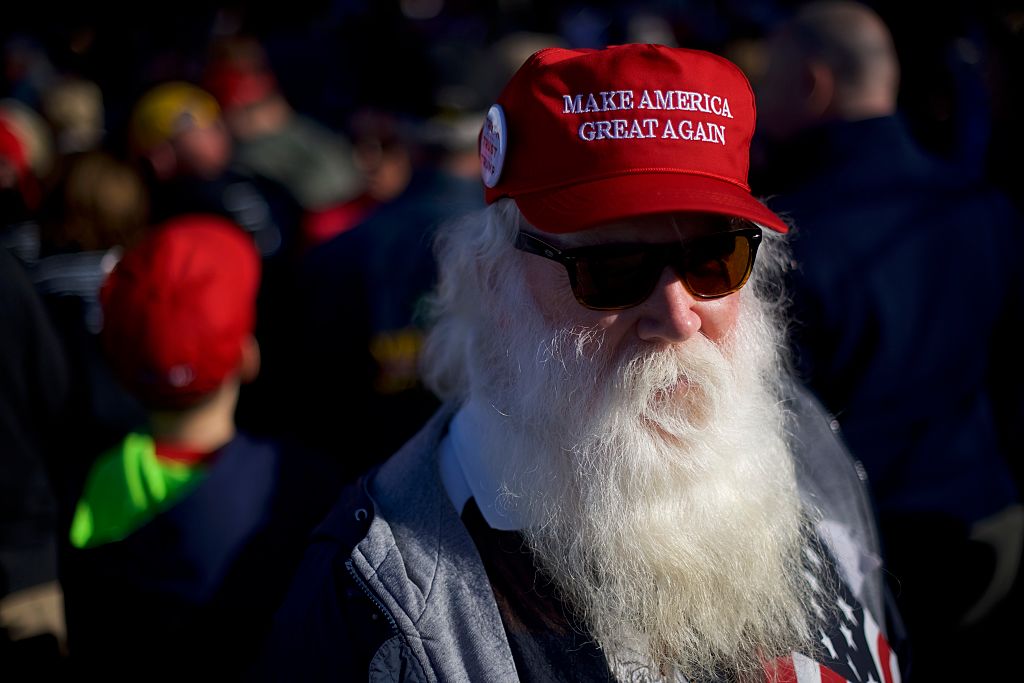
This week marks a decade since Pennsylvania’s Boomers decided the 2016 presidential election. Back then, Donald Trump’s rally-fuelled panache won over ageing Pennsylvanians whose cultural DNA was steeped in the Democratic Party but who had grown disillusioned with Barack Obama. Tomorrow, those same Boomers will help decide which party controls Congress.
Pennsylvania is home to America’s highest number of competitive congressional races, with nearly $100 million spent so far, in regions and counties that fuelled the state’s years-long realignment. It was older voters, who in their younger days had opted for Ronald Reagan in 1980 or Bill Clinton in 1992, who drove the Obama-Trump-Biden-Trump shift. Just four years ago, as the Philadelphia Inquirer found, party switchers had a median age in the mid-50s. In 2024, three of the four Republican congressional candidates were 50-percenters who were carried by Trump’s statewide comeback amid inflation and disdain for the Biden-Harris footnote.
Against this backdrop, with Pennsylvania’s over-65 population continuing to grow and the state ranking last in registered 18-year-olds, three groups of Boomers could decide the outcome of these congressional races.
There are the vintage Trump voters, who backed him when he descended the escalator in 2015. They live in the cities and boroughs long shaped by extractive industries and built by European immigrants, which have since experienced rapid demographic change, the disappearance of mid-sized manufacturers and the unravelling of social cohesion. They were drawn to Trump’s promise of economic populism at home and restraint abroad. A decade later, living on fixed incomes, they feel the cost of his administration’s war in Iran every time they open a household bill. Disillusionment, if not outright betrayal, could keep them from the polls.
Then there are the MAGA loyalists who — emboldened by Covid-era policies, outraged by wokeness, and fearful of the Democrats’ Leftward turn — view the Republican Party as their protector, however imperfect, just as their parents voted for the Democrats despite their own conservatism. Scattered between working-class regions and exurbia, they’re Facebook shut-ins, granting absolution to Trump in their pixelated torpor even as they diverge on policy.
In this cycle, both groups could be outnumbered by the unaffiliated or Republican-turned-Democratic voters in the state’s vast suburbs. They’re well-to-do people living in places such as Harrisburg’s West and East Shores and Greater Philadelphia’s central Bucks County. Under the “No Kings” banner, they view Trump as dangerously corrupt and undemocratic, and will opt for moderate or even progressive Democrats to extinguish whatever is left of the GOP in suburban Pennsylvania.
As it happens, the Boomers of these four congressional districts are in eastern Pennsylvania, which has experienced more change over the past decade than the rest of the state. In the south-central region’s 10th district, massive healthcare systems have proliferated, drawing an eds-and-meds voting base — and a growing South Asian population — that has flipped longtime Republican communities such as Hershey and Hampden Township.
In the 8th district, meanwhile, New York-born Dominicans — a voting bloc that shifted red in 2024 — comprise the majority of former coal region cities and towns. And in the Lehigh Valley-centered 7th district, manufacturers and logistics companies invest billions in a population-rich metro region that has become an extension of New York. Just south is Bucks County’s 1st district, once a suburban bastion of Catholic Philadelphia natives but now a transient hub of New York commuters who keep flipping local offices long held by the GOP.
This dramatic post-2016 transformation — a post-realignment reality — has partly led Democrats to outspend Republicans. Tuesday’s outcome could prove reminiscent of the 1990 midterms, when turnout was low, voters punished Republicans over not abiding by the “no tax” pledge, and the late Democratic governor Bob Casey only lost one county. It could also be a replay of 2006, when Republicans were wiped out by Bush-era anger over the Iraq War and GOP corruption scandals. Many Democratic voters that year later turned to Trump.
Either way, Governor Josh Shapiro, who is set to win handily on Tuesday, is hoping to win all four congressional seats, keep the state House, and return the state Senate to Democratic control for the first time since 1993. But as he eyes his own presidential prospects, the Governor — and whoever emerges victorious in his party — must reckon with the electoral map these races will leave behind. This race may be the last hurrah for the Boomers. It is Pennsylvania’s Millennials and Zoomers, a heterodox cross-section of voters who loathe both political parties, who will shape the state’s electoral future from 2028.