









13 Nov 2026 - 11:00am
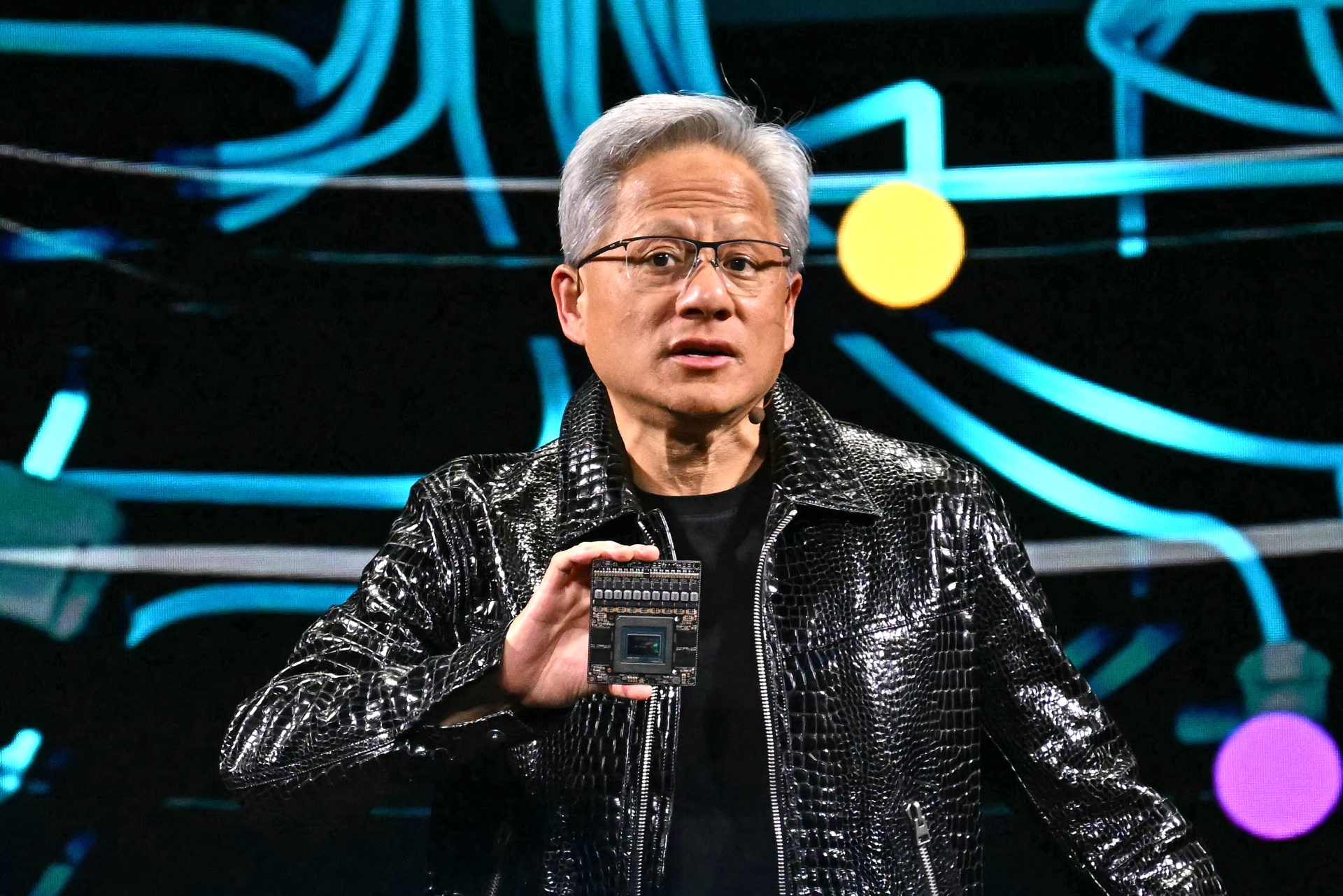
Recall the Nord Stream pipeline explosions of September 2022. We were told it was the Russians that did it. The story was widely believed, and retold, but came with no evidence attached — and this keeps on happening. There is a clear parallel with the Jensen Huang affair in that there is no available evidence, not a shred, that Alice Huang acted as a Chinese spy. Stories like these fall into a category immortalised by the American author H.L. Mencken: they are “neat, plausible and wrong”. In all such cases, we’d do better if we separate what we know to be true, from what sounds too good to be true.
The next step is not to speculate, but collect the available evidence. It is a hard fact that Huang resigned without the board of Nvidia having even completed an investigation.
Another hard fact, one that does not sit well with the honeytrap story is that, this January, China imposed import restrictions on Nvidia’s benchmark H200 chip, even though the US commerce department had by then already started to permit the exports of these cards. This is the part of the series of cards that is used predominantly for AI. China’s policy on AI chip imports has been restrained, as it encouraged companies like ByteDance, Alibaba and Tencent to import Nvidia chips, but at the same time also imposed a preference for domestic products.
We may never know whether Alice Huang is a Chinese spy, or merely a corporate fixer. The Hong-Kong based author Desmond Shum believes it is the latter by looking at Huang’s own history. As he notes, investigations into corporate records, court rulings and stock exchange disclosures show “Huang’s involvement in a series of complicated capital-market transactions”.
“The recurring pattern was the use of intermediaries and layered ownership structures that could separate the people appearing on transaction documents from those with the underlying economic interests,” Shum adds. “When Huang subsequently emerged as the public face of Megaspeed, a little-known Singapore company purchasing billions of dollars’ worth of Nvidia chips, she was just repeating the same business model she has perfected.”
So, with apologies to Richard Feynman, let us instead try to ask questions that at this point cannot be answered, as opposed to accepting answers that cannot be questioned. Here are two: could this really be a forewarning of some bad commercial news to come? Are sales about to fall off the cliff? The Nvidia share price has fallen by nearly a third from its peak in early October. Will we hear the interim CEO declare her shock when she looks at the books? Maybe we should take a deeper look at the small print of SEC filings by the tech industry, starting with Nvidia.
Or maybe, it is a national security story, but of a different kind? It may not be about the sale of goods, but the flow of information. Did Jensen Huang have any involvement in the flow of technology secrets to China? If that were so, the honeytrap story may just be a smokescreen.
While we cannot answer these questions, we do know that the honeytrap makes little sense.
So why do journalists keep on publishing unverified information? It is a rule of journalism that stories are based on at least two independent sources. This rule is violated, without exception, in stories based on security briefings. The always-anonymous sources could be political — defence ministers, national security advisers — or some deep-rooted figure inside the intelligence services. The journalists obviously cannot attribute such a source. They cannot even reveal the institutions from which the information originated.
When we read stories like this, we have to remember that the security services’ role is not to tell the truth, but to extract intelligence. Propaganda is part of their job. The Russians and Chinese do it in spades. Our side does it too. We must remain cognisant of what we don’t know, and beware those who believe what they read or hear without asking for evidence.
This is an edited version of an article which originally appeared in the Eurointelligence newsletter.
